
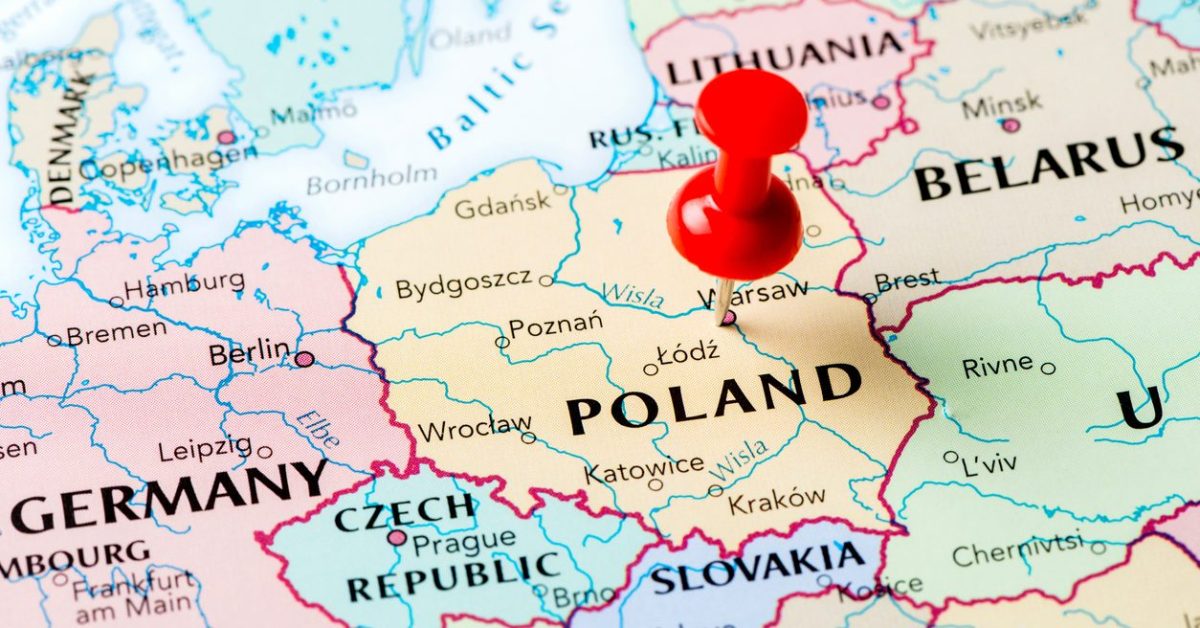
Poland has become one of Europe’s most important security players, but deep political divisions and shifting alliances are holding it back. The latest issue of Baltic Rim Economies explores the country’s evolving political, economic and security environment. The articles of the issue show a nation that is strong, ambitious and strategically essential, yet often unable to turn that power into political influence.
Alliances under pressure
For many years, Poland built its foreign policy on three main pillars: NATO, the European Union and close ties with the United States. According to Marta Prochwicz from the European Council on Foreign Relations, this system is now breaking down.
“Poland’s traditional foreign policy foundations – the unshakeable transatlantic partnership and equally stable EU–US pillars – are eroding”, she writes. As tensions grow between Washington and Brussels, Poland can no longer assume that its loyalties will naturally align. “Poland requires a comprehensive reassessment of its foreign and security policy framework”, Prochwicz warns.
Marta Prochwicz: From alliance harmony to strategic choices: Poland’s foreign policy reckoning
Rising power, fragile politics
At the same time, Poland’s military power is growing fast. Katalin Miklóssy from the University of Helsinki points out that by 2030 Poland’s defence budget could reach seven percent of GDP, with 300,000 troops. That would be the biggest standing army in the EU.
“Poles like to think big”, Miklóssy writes. She sees Poland as a “model” for a more conservative Europe that is emerging after years of crisis. But she also warns that unstable political coalitions could undo much of this progress. If the current government falters, she says, “the PiS is just waiting to roar back to power, even stronger.”
Katalin Miklóssy: A Great Power in the Making
Domestic conflict weakens Poland’s voice
Jan Zielonka, Emeritus Professor at the University of Oxford, is blunter. “Poland’s dire international standing stems from its conflict-ridden domestic politics”, he writes. The sharp divide between President Nawrocki on the right and Prime Minister Tusk’s centrist coalition means that “the notion of a common national interest is fictional”. Because of this, Poland has often been left out of key international meetings. “If you are not on the table, you are probably on the menu”, Zielonka notes.
Jan Zielonka: Poland punches below its weight
Tsveta Petrova from Columbia University also sees Poland’s domestic situation as the main reason it has lost influence. Once a bridge between East and West, it has become “a frontline bulwark – strategically vital, yet politically marginal”. Poland, she argues, must turn “competence at the front line into steadiness at home”.
Tsveta Petrova: Poland’s lost decade in Europe
Looking North for new partners
Several experts highlight a major change in Poland’s strategy: its growing focus on the Baltic and Nordic region. Jakub M. Godzimirski from the Norwegian Institute of International Affairs calls this “a sort of strategic innovation”. Poland still sees NATO and the US as central, but it is also building deeper cooperation with northern partners. “All Nordic and Baltic neighbours have become NATO members and must deal jointly with a growing Russian threat”, Godzimirski explains.
Jakub M. Godzimirski: Is Poland’s Turn to the North a strategic innovation?
Agnieszka Orzelska-Stączek from the Polish Academy of Sciences says that “the growing importance of the Baltic Sea region is not questioned” in Warsaw. Under its 2025–26 presidency of the Council of the Baltic Sea States, Poland has made security its top priority.
Agnieszka Orzelska-Stączek: Regional formats in Poland’s policy: the North Dimension
According to Kinga Dudzińska from the Polish Institute of International Affairs, the so-called Northern Policy is also about energy and innovation. “Energy independence and security of supply are crucial for the region”, Dudzińska writes. Nordic countries have already invested billions of euros in Poland’s economy, and cooperation on offshore wind and new technologies is expanding fast.
Kinga Dudzińska: Poland’s Baltic and Nordic Policy – The Direction for North
Strong but divided
All writers agree that Poland is essential to Europe’s security, but it lacks the unity and trust needed to shape Europe’s political agenda. Poland is the main transit route for weapons to Ukraine and the key defender of NATO’s eastern flank. Yet, as Petrova puts it, “How much voice Poland has will track domestic cohesion and its capacity to work with – not against – the EU’s core”. In other words, Poland’s challenge is not how to build power, but how to use it.
Read the whole issue: Baltic Rim Economies 3/2025: Developments of Poland’s political, economic and security environment
