
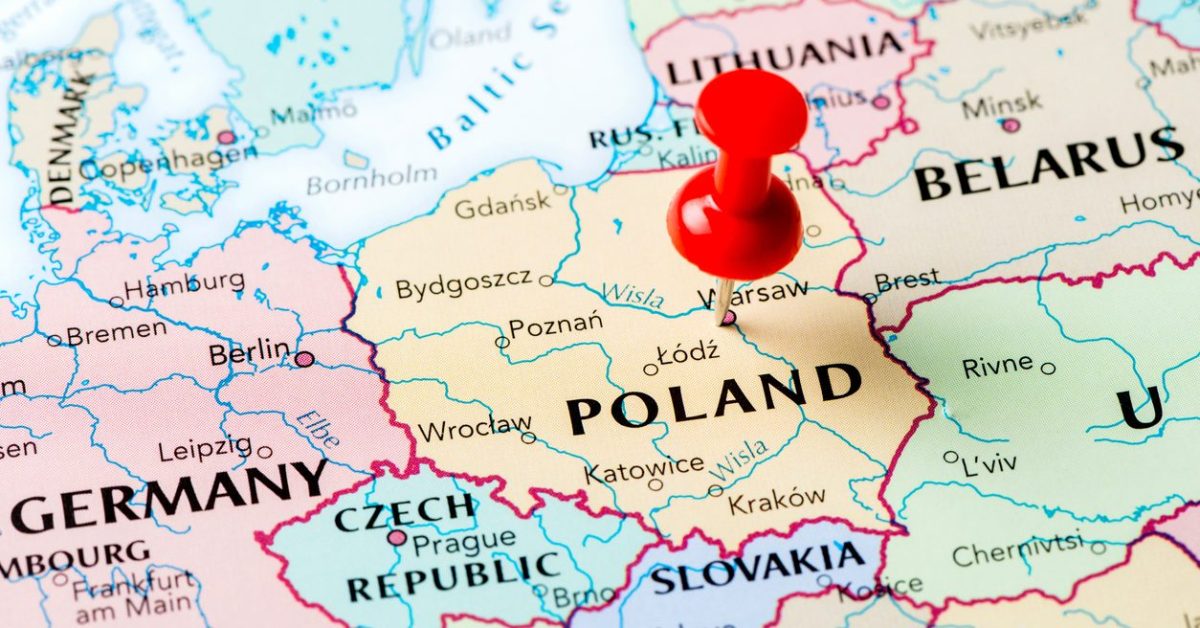
The Baltic and Nordic direction of Polish foreign policy became currently Poland’s Northern Policy. This play on words is not accidental, as it brings some linguistic issues. At the strategic level, the Northern Direction defines the spectrum of Poland’s activities in the Baltic Sea Region (BSR), with a broader semantically meaning.
The North, as a phrase encompassing Poland’s political activity, defines in practice a new/updated form of Poland’s presence in the Baltic Sea region. This is manifested in Poland’s effective cooperation with the Baltic and Nordic countries on the basis of shared priorities and interests. Therefore, cooperation in the NB8+ format has a broad common denominator – the security of the region, its integration and compatibility.
This perspective is perfectly illustrated by Poland’s current priorities within the framework of its presidency of the Council of the Baltic Sea States (CBSS) – since the 1990s, the most important format for political cooperation in the region. This is all the more so as the CBSS itself is currently in the momentum of its transformation and adaptation. This process alone shows the stage of reorganisation that the Northern Europe is undergoing.
Strategic Northern Priorities
Since 2022 Poland is increasing its involvement in BSR through active and effective participation and/or leadership in regional initiatives. Poland, along with other countries in the region – the Nordic and Baltic states – is adding a new quality to regional formats and strengthening Northern Europe’s visibility in NATO and EU.
Security: Poland unanimously supported Sweden and Finland’s membership in NATO, which significantly changed the security architecture in the BSR, although Russia’s presence remains a challenge (despite being excluded from most organizations in the region). Russia’s increased activity in the Baltic Sea prompted Poland to propose, at the NB8 summit (which was not so obvious and frequently practiced before) in Swedish Harpsund, in November 2024, the creation of a joint naval policing mission of the Baltic and Nordic countries to protect infrastructure and maritime security in the Baltic Sea. The need for enhanced resilience, critical infrastructure protection, and countering hybrid threats is also consistently emphasized.
Together with the Baltic states, Poland is determined to continue tightening EU’s sanctions policy against Russia and Belarus. From the outset, they have been adamant about abandoning Russian energy supplies as soon as possible (which the EU has announced for 2027).
Underlying these many actions is the key conviction of all Northern European countries that Ukraine must be still supported, especially after NATO’s unprecedented action of shooting down Russian drones that violated Polish airspace in September 2025.
Energy and Supply: Energy independence and security of supply are crucial for the region, not only for households but also for strategic sectors of the economy. Joint efforts to electrify industry and achieve energy independence from Russia are essential to ensure Europe’s long-term competitiveness.
All the more so, because according to estimates, 48% of the energy resources consumed in Poland are imported via the Baltic Sea, and this figure is expected to rise to 61% over the next fifteen years. As a result, energy infrastructure (gas and oil ports, GIPL and BalticPipe connections) is becoming increasingly important. Even more, with offshore in the Baltic Sea (only Polish company PGE plans to build two offshore wind farms with a total capacity of up to 2.5 GW by 2030). Moreover, seaports became game changer for the entire region due to changes in transport routes. They currently provide approximately 10% of the Polish state budget’s revenue from VAT, customs duties, and excise taxes.
The potential for economic cooperation should also be exploited and supply chains to be secured. The contribution of Nordic companies to the development of the Polish economy amounts to €15 billion in investments, €56.4 billion in mutual trade, over 200,000 jobs, and 1.3% of Poland’s GDP generated directly by Scandinavian companies operating in Poland.
Innovation and Environment: The development of new technologies is important for an efficient energy transition and ecological resource management in the BSR. This makes the protection of the Baltic Sea’s biodiversity and the prevention of ecological disasters (e.g., caused by the so-called shadow fleet) all the more indisputable. When Poland and Norway are developing joint initiatives in the field of carbon capture and storage (CCS), which is an important element of both countries’ decarbonization strategies, Poland together with B3 try to build the Baltic AI GigaFactory. This for digital sovereignty and the competitiveness of the European AI market with the US and China.
Energy Programme
The Polish Institute of International Affairs (PISM)