
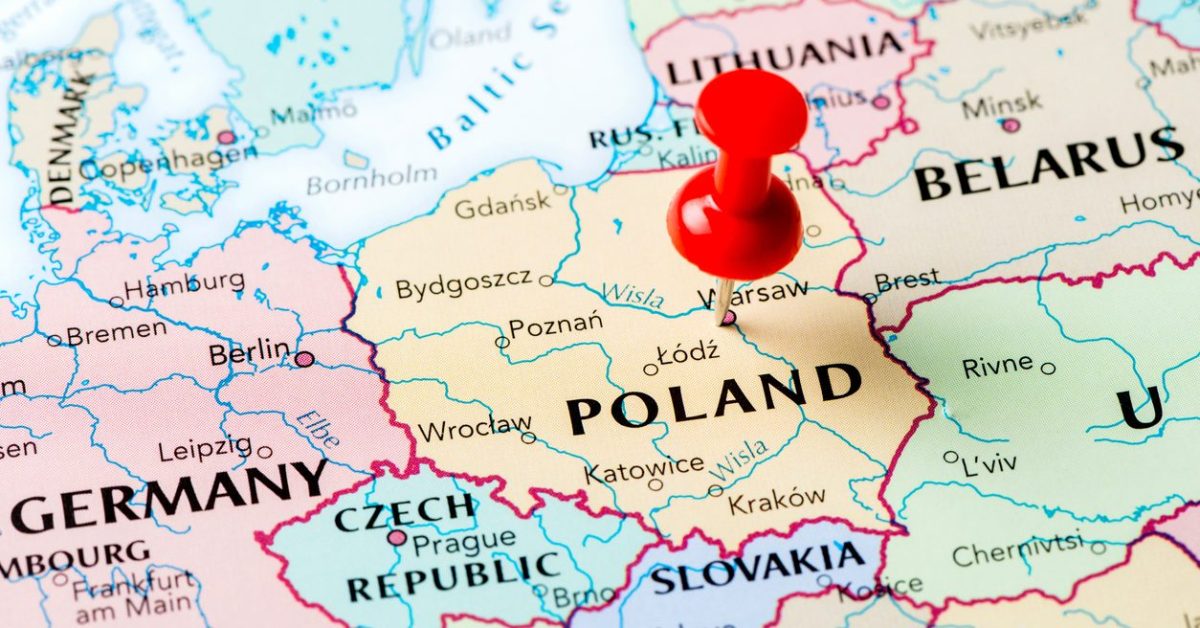
At the symbolic meeting in the White House in August eight European leaders discussed with President Trump the future of war and peace in Europe. Among them was Finland’s President, but nobody from Poland. Finland, like Poland has a very special experience in handling Russia and both states have bright and respected leaders, Alexander Stubb and Donald Tusk, the latter was President of the European Council and head of the PPE, the largest party in the European Parliament. Although average Finn is wealthier than average Pole, Poland has much higher GDP and spends much more on defence. [1] Why has Poland failed to sit at the table deciding the future of the old continent? As the old saying goes: “if you are not on the table than you are probably on the menu”, which means that interests and needs of those not actively involved in the decision-making process are likely to be ignored.
Poland’s dire international standing stems from its conflict-ridden domestic politics. If politicians from opposing parties insult each other rather than striking compromises, the notion of a common national interest is fictional. How can a country punch its weight if there is no consensus on such basic international issues as the war in Ukraine, European integration or relations with the Trump administration in the United States?
Of course, polarisation is a daily bread of contemporary politics, but in Poland polarisation assumed extraordinary proportions by any standards, including the Polish ones. The peculiar constitutional set up is largely responsible for that. Poland’s President has limited formal powers but is chosen in direct elections which offers him a powerful political leverage over the executive and legislation. (Unlike in Finland, all Poland’s Presidents were men, unfortunately). Since 2023 Poland’s government is formed by a coalition of the centre-left-and-right parties, but the President is from the opposite camp that can be labelled as illiberal right. The governing coalition was hoping that the presidential elections of this summer will result in the victory of their own man, but the opposite has happened. And so, the political ping-pong continues, not just regarding successive legislative proposals vetoed by the President, but also regarding Poland’s foreign policy. The President is formally a chief commander of the armed forces, and he has also some representative prerogatives in foreign affairs which can and often are misused. Moreover, President Trump clearly prefers an illiberal and Eurosceptic politician such as the new President Nawrocki over his political opponent, Prime Minister Tusk. Needless to say, Mr Tusk is more popular in the EU than Mr Nawrocki which further complicates Poland’s international standing.
We do not know who issued invitations to the historic meeting in Washington in August, but it is clear that the White House and the Berlaymont building in Brussels would have problems to agree on Poland’s invitee and Polish conflicted politicians may not be of much help. Poland’s President refuses even to endorse the foreign office’s candidate for the ambassador in Washington D.C. Where the list of European invitees compiled in Kiev, the choice would not be easy either. The former Poland’s President, Mr. Duda was a strong supporter of Ukraine, but the new President talks more about Ukraine’s historical crimes against Poland than about the current Russian crimes against Ukraine. Mr Tusk formally supports Ukraine’s struggle against the Russian invasion, but he refuses to contemplate sending Polish troops for a possible peace-keeping mission to Ukraine. His policies towards Ukrainian refugees residing in Poland are also increasingly half-hearted, to put it mildly. Under pressure of the illiberal right, Mr Tusk has even complicated Poland’s relations with Germany and the EU as such which only begs the question what Poland’s foreign policy really stands for.
True, foreign policies are often hostage to domestic politics, but one would think that Poland’s history and geography would temper domestic political infighting and make the elites behaving responsibly when it comes to the vital interests of their country. Unfortunately, the “Polish-Polish war” goes on with no prospect of happy ending. This is bad news not only for Poland, but also for Poland’s allies. Poland used to be an active if not enthusiastic member of both the EU and NATO, and gross of the Western assistance to Ukraine passes through Poland for logistical reasons. Poland’s historic contribution to resisting the evils of Nazism and communism should also be mentioned here. Today, as in the past, Europe needs Poland to fight the ghosts of nativist imperialism resurging in various corners of the old continent. If you have friends or colleagues in Poland, please tell them sternly: wake up folks and get your acts together because we need your precious contribution to peace and prosperity.
Jan Zielonka
Emeritus Professor of European Politics University of Oxford
UK
Visiting Professor
European Centre University of Warsaw
Poland
[1] https://countryeconomy.com/countries/compare/poland/finland
Jan Zielonka’s latest book ‘The Lost Future and How to reclaim It’ was published by Yale University Press in 2023.
