
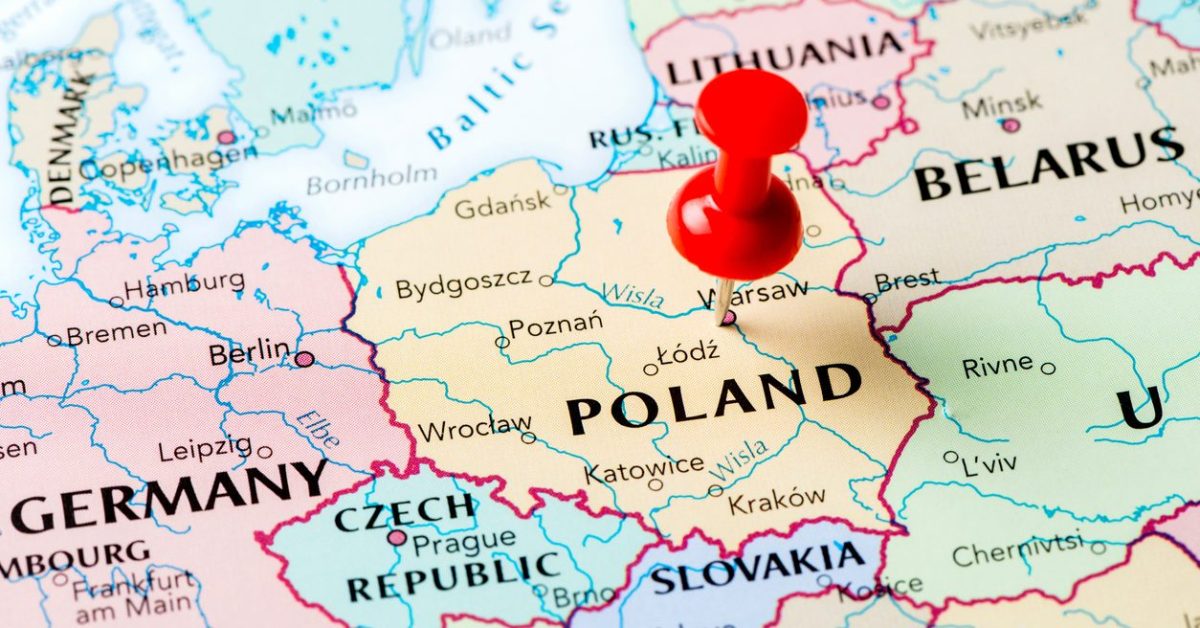
Warsaw’s Missed Opportunity: Domestic politics and Russia’s wars reduced Poland’s role in Europe to a frontline bulwark—strategically vital, yet politically marginal.
A country’s endowment can make it indispensable without making it an international leader. Over the past two decades, Poland’s position on NATO’s eastern flank guaranteed strategic relevance but not the authority to set Europe’s agenda. A decade ago, Warsaw had a real chance to become a regional leader—anchoring the post-communist regional bloc and shaping EU policy toward the east. Instead, a mix of Russian aggression and Poland’s own political ruptures left it as NATO’s buffer: essential to deterrence and logistics, yet too often excluded from the rooms where strategy is written. This article explains how that gap between importance and leadership opened—and why it has proved so hard to close.
In the early 2000s, Poland was emerging as a leader of the Central and Eastern European countries. As the biggest of the post-communist entrants to the EU, its economy was growing and its political class was confident. Poland cast itself as the east’s spokesman and the bridge between Brussels and the Eastern Neighborhood. Ukraine was its chosen cause—not just neighborly solidarity but a strategy to contain Russia.
During the Orange Revolution in 2004, President Aleksander Kwaśniewski personally mediated in Kyiv, helping Ukraine move forward in a decidedly democratic direction. That episode established Poland’s credentials as both principled and effective in the region.
Poland then moved to agenda-setting. With Sweden, it co-designed the Eastern Partnership (2009), embedding its eastern vision inside EU institutions and processes and making Ukraine’s Association Agreement the centerpiece. This was the high-water mark of Warsaw’s influence.
After Russia seized Crimea in 2014, however, high-level crisis diplomacy flowed through the Normandy Format—Germany, France, Ukraine, and Russia—with Poland conspicuously absent. Warsaw had warned correctly about Moscow, but it was no longer at the table.
Domestic politics compounded the damage. The Law and Justice (PiS) government from 2015 plunged Poland into grinding disputes with EU institutions over the rule of law. Poland stayed hawkish on Russia and supportive of Ukraine, but it lost the credibility needed to build coalitions inside the Union.
The full-scale Russian invasion in 2022 briefly restored Poland’s centrality. Geography made it indispensable: the main corridor for allied military assistance (not least via Rzeszów–Jasionka), a refuge for large numbers of Ukrainians, and the host to a permanent U.S. forward headquarters. All of that mattered—but it did not translate into agenda control in Brussels. Frictions with Kyiv over grain imports and over interwar historical disputes exposed the limits of Warsaw’s leadership: indispensability in logistics has not equaled political authority.
The return of Donald Tusk as prime minister in December 2023 appeared to offer a way back. He repaired ties with the EU and put security—and Ukraine’s EU accession—at the center of Poland’s 2025 EU Council Presidency. Defense outlays surged above 4% of GDP, among NATO’s highest. For a moment, Poland seemed ready to marry strategic weight and political legitimacy.
Then came another domestic reversal. In June 2025, Karol Nawrocki—a nationalist aligned with PiS—won the presidency, promising vetoes and confrontation with Brussels on core questions. Cohabitation returned, reform stalled, and Warsaw again found itself symbolically sidelined in Western councils.
The missed opportunity is clearer in regional perspective. Hungary isolated itself by aligning with Moscow; Romania became a steady Black Sea pillar without seeking continental leadership; the Baltics are moral leaders but too small to move EU strategy on their own. Only Poland had the scale to shift Europe’s center of gravity eastward—and squandered it through domestic rupture and frayed EU trust.
Looking ahead, Russia’s renewed focus on the Baltic–Nordic–Arctic axis underlines Poland’s paradox. As Moscow builds out the Northern Sea Route and maintains pressure from Kaliningrad, Poland is the keystone of NATO’s northern defense. The Suwałki Gap remains the alliance’s choke point. Yet with Finland (2023) and Sweden (2024) joining NATO, the political center of northern security is drifting toward Helsinki and Stockholm, where maritime and Arctic expertise reside. Poland again risks remaining the bulwark rather than the architect.
As the main corridor to Ukraine and the hinge near Kaliningrad and the Suwałki Gap, Warsaw remains central to Europe’s security. But credibility frayed in Brussels, divided government at home, and a northern security agenda increasingly shaped in Helsinki and Stockholm keep Poland near the action without consistently directing it. How much voice Poland has will track domestic cohesion and its capacity to work with—not against—the EU’s core. Poland thus seems to be at a crossroads, with three possible paths ahead. 1) Consolidation: domestic détente and steady rule-of-law repairs let Warsaw lock into a Nordic-Baltic compact, channel defense spending into EU programs, and shape Ukraine’s accession—Poland regains voice, not just utility. 2) Muddle-through: cohabitation drags on; Warsaw remains the indispensable conduit to Ukraine and the Suwałki Gap, but credibility wobbles and leadership is episodic, shared with Berlin, Paris, Helsinki, and Stockholm. 3) Slippage: nationalist retrenchment and renewed Brussels conflict shrink Poland’s say; memory, grain, and transit spats with Kyiv fester; Russia exploits the seams with hybrid pressure, leaving Warsaw protected by NATO but sidelined in EU strategy. Which scenario prevails will be decided by whether Poland can turn competence at the front line into steadiness at home and patience in coalition.
Tsveta Petrova
Lecturer, Political Science
Columbia University
USA