
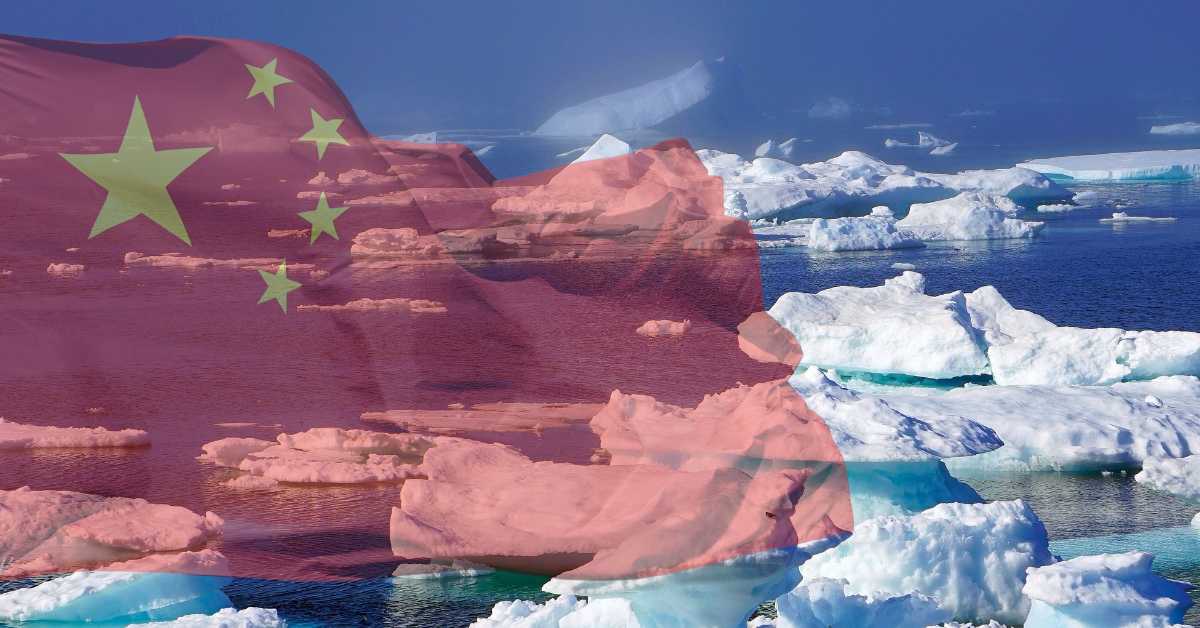
China’s growing influence extends far beyond its borders. As climate change reshapes the Arctic, new shipping routes emerge and global power competition intensifies, China’s role in the Arctic and Northern Europe has become one of the defining geopolitical questions of our time.
From Arctic governance and China–Russia cooperation to energy politics, global trade and Nordic relations, the latest issue of Baltic Rim Economies explores how China’s interests and ambitions are reshaping the North and the wider international system through nearly 40 expert contributions.
The Arctic as a strategic frontier
The Arctic serves as the central theme throughout the publication. Several contributors examine why the region has become increasingly important for China and how its ambitions are reshaping northern geopolitics.
In her article China’s Strategic Approach to the Arctic, Camilla T. N. Sørensen argues that China’s Arctic engagement is about much more than access to natural resources or shorter shipping routes. According to Sørensen, the region has become part of China’s broader ambition to secure leadership in emerging technologies and strategic industries, making Arctic influence a long-term national priority.
”"Securing China's presence and influence in the Arctic is not only about gaining access to resources and new shipping routes. It is also about ensuring leadership in critical innovation and emerging technologies, making the Arctic a long-term strategic priority for Beijing."
Camilla T. N. SørensenBRE 2/2026 – China's Strategic Approach to the Arctic
The changing geopolitical landscape is further explored by Reinhard Biedermann in the article China in a Fractured Arctic. His contribution examines how growing tensions between Russia and the West have transformed the Arctic from a region known for cooperation into one increasingly shaped by geopolitical divisions and competing interests.
The Polar Silk Road and China’s partnership with Russia
A second major theme running through the issue is the growing importance of Sino-Russian cooperation in the Arctic. In the article China’s Reviving Polar Silk Road, with Russia, Nengye Liu examines the renewed development of Arctic shipping routes and the role of the Northern Sea Route in connecting Asia and Europe. As traditional trade routes face new uncertainties, Arctic shipping is once again attracting interest from policymakers and businesses alike.
Elizabeth Wishnick approaches the issue from a broader geopolitical perspective. In her article China and the Arctic in the Shadow of the Iran War, she analyses how developments in the Middle East, global energy markets and sanctions have increased China’s interest in Arctic shipping and energy cooperation while simultaneously strengthening Russia’s position as China’s primary Arctic partner.
Security concerns reshape China–Nordic relations
The publication also explores how Northern European countries increasingly view China through a security lens.
In her article Securitization of China-Nordic Relations, Julie Yu-Wen Chen examines how geopolitical tensions, economic dependencies and security concerns are reshaping relations between China and the Nordic countries. The article highlights how cooperation that was previously driven primarily by economic and scientific interests is increasingly being assessed through questions of resilience, strategic autonomy and national security.
”"In the subsequent era, China’s growing economic power encouraged Nordic countries to view China primarily through the lens of opportunity and prosperity, often sidelining serious engagement with its political system and modes of governance. More recently, this economically driven perspective has been replaced by a steep learning curve focused on China’s potential risks to Nordic security and to Western liberal values."
Julie Yu-Wen ChenBRE 2/2026 – Securitization of China-Nordic Relations
Energy, currency and global economic power
Beyond regional politics, several articles consider China’s role in broader global transformations.
In the article China’s Northern Energy Politics, Yue Wang analyses China’s growing involvement in Arctic energy projects and its relationship with Northern Europe’s clean energy transition. The article highlights the complex balance between energy security, geopolitical considerations and long-term sustainability goals.
Meanwhile, in Chinese Debate on the Iran War and the Fate of the Petrodollar, Matti Nojonen examines an ongoing debate among Chinese scholars on whether the Iran war could accelerate the decline of the petrodollar system and create new opportunities for the internationalisation of China’s currency, the renminbi.
”"The question is not whether the petrodollar will weaken—that is inevitable. The real questions are different: When will global markets begin to trust the CNY? Do these new cross-border systems hold the key?"
Matti NojonenBRE 2/2026 – Chinese Debate on the Iran War and the Fate of the Petrodollar
Looking ahead: cooperation in a changing North
While many contributions focus on competition and security, the issue also considers future opportunities for cooperation.
In the end of the publication, in It is Time for a Northern-European-Canadian Community, Cécile Pelaudeix proposes stronger cooperation between Northern Europe and Canada in response to shifting geopolitical realities. The article offers a forward-looking perspective on how democratic northern countries could strengthen resilience and collaboration in an increasingly uncertain international environment.
Read the full publication
Baltic Rim Economies 2/2026: China provides a wide range of perspectives on China’s role in the Arctic and Northern Europe, covering questions of security, governance, trade, energy, technology and international cooperation. Together, the contributions offer valuable insights into one of the most significant geopolitical developments shaping the future of the North.
