
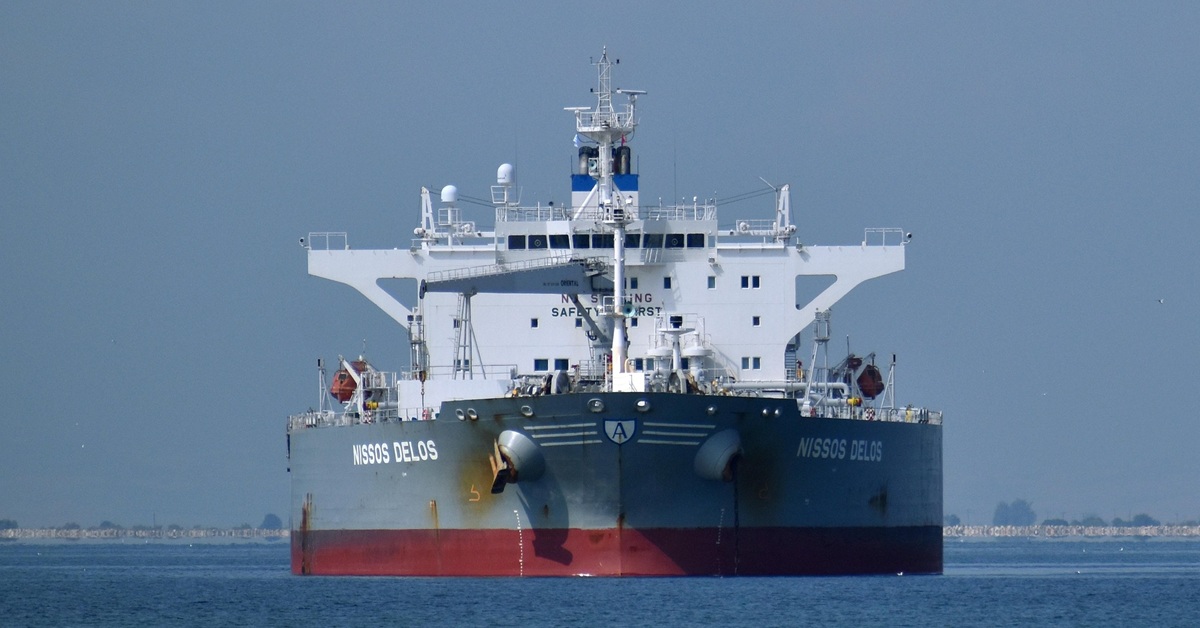
The protracted illegal Israeli and U.S. war on Iran has instigated a heated debate within China on the fate of the petrodollar. The participants are prominent scholars from influential Chinese research institutions.
The petrodollar system originated from a 1970s U.S.-Saudi agreement that priced global oil sales in dollars in exchange for U.S. military protection and weapons sales. For Arab oil states, it provides security guarantees and lucrative dollar reserves to recycle into U.S. assets. Most importantly, it has guaranteed global demand for the U.S. currency, funded U.S. deficit spending, and reinforced dollar hegemony.
The Iran war has called into question this perpetual motion machine, threatening the dollar’s position in world trade and offering China an opportunity to strengthen the CNY as a medium of global exchange. If China succeeds, it would mean the end of America’s most crucial strategic asset, ending U.S. global leadership in both trade and politics. As Cao Yuanzhang from Tsinghua University notes: “Without petrodollar recycling, the monetary issuance foundation and financial foundation of the U.S. will be shaken.”
One group of scholars, like Zhao Jianming from the Shanghai Institute of International Studies, argue that the protracted Iran war and the Iranian toll at the Strait of Hormuz that must be paid in CNY are shaking the petrodollar’s position and future. Others, like Shen Shouhai from China University of Petroleum, sees the Iran war as more of a catalyst for the petrodollar’s longer-term weakening.
The underlying reason for the Gulf states’ gradual shift to the petroyuan is trade volume. China today buys four times more oil from Saudi Arabia than the U.S. Hao Nan at the Charhar Institute notes a structural mismatch: most Gulf oil flows to East Asia and China, yet the monetary and security architecture remains anchored in the Atlantic order. Meanwhile, Iran’s drone swarms have destroyed most U.S. capabilities to protect its regional allies, leading states to question the petrodollar agreement—it has failed to deliver security, and the U.S. alliance itself has become a security risk.
Chinese scholars classify motivations to de-dollarize into two categories: 1. Coercive substitution: countries under heavy sanctions, such as Iran and Russia, cannot trade in USD. 2. Risk hedging: countries deliberately diversifying away from dollar dependency. For instance, the UAE—the most dollar-integrated Gulf state—is exploring options to settle oil trade in CNY, while 45% of China’s oil purchases from Saudi Aramco are already settled in CNY.
Stuck at the Window of Opportunity
Zhou Xiaochuan, former Governor of the People’s Bank of China, stated that the Iran war has created an unprecedented opportunity for CNY internationalization. He added that the constant “weaponization of USD” has eroded trust in the dollar, making it time to internationalize the CNY as an alternative. Yet Zhou and most scholars emphasize the domestic obstacles and global hurdles that hinder this process.
Scholars identify three main structural obstacles. First, strict capital account controls prevent the free movement of capital, limiting CNY’s role as a global investment and reserve asset. Second, Beijing constrains CNY’s convertibility and value, preventing it from becoming a true reserve currency. Third, China’s bond and equity markets lack the depth, transparency, and legal predictability of U.S. markets. As one scholar put it, global markets do not trust the petroyuan, but treat it as a “currency of strategic necessity”—a hedging option.
Scholars agree that we will not see any rapid downfall of the petrodollar, but rather a natural “pluralization” of preferred currencies of exchange – a process in which CNY will have a major or important role.
As part of CNY internationalization, scholars highlight the usage of new Chinese cross-border payment systems. CIPS (2015) is the primary platform for CNY clearing but still relies on SWIFT for messaging. mBridge (2024) is a blockchain-based rapid transaction mechanism. Digital CNY (e-CNY), launched in 2025, is in multiple trial phases. BRICS Pay (2024) was created to counter possible U.S. sanctions and has drawn broad interest from emerging economies.
The question is not whether the petrodollar will weaken—that is inevitable. The real questions are different, and answers remain elusive: When will global markets begin to trust the CNY? Do these new cross-border systems hold the key? As Zhao Jianming notes, the current Iran war, in scale and intensity, will profoundly change the world: the geopolitical security structure will undergo reorganization, while the erosion of the petrodollar directly affects the sustainability of U.S. fiscal policy, opening the prelude to great power competition in international capital flows.
Matti Nojonen
Professor of Chinese Society and Culture
University of Lapland
Finland
matti.nojonen@ulapland.fi

Mr. Nojonen’s article Sino-Russian Relations, the Ukraine War and Trump as a Challenge: The Eventual Test of ‘No-Limits Friendship’ can be freely downloaded from the following site: https://link.springer.com/book/10.1007/978-3-032-11892-9
Back to Table of Contents