
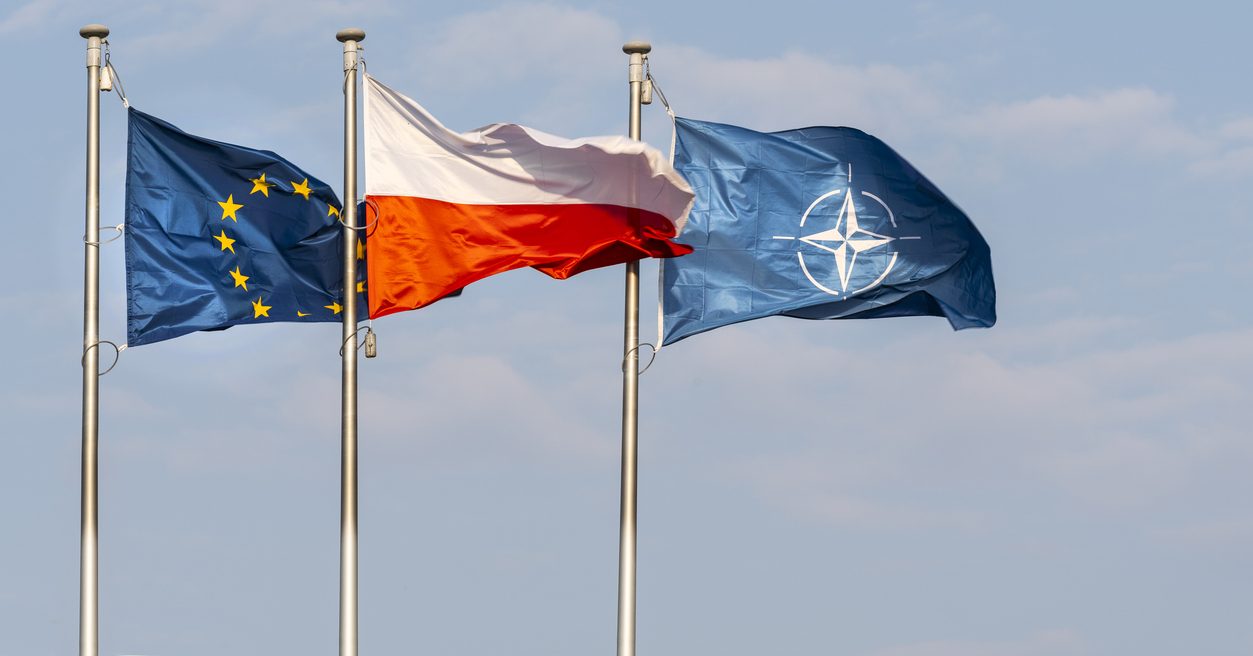
Russia’s ongoing war against Ukraine and growing global instability have pushed Poland to the centre of Europe’s security debate. Once seen as a cautious eastern flank ally, the country is now one of NATO’s most heavily armed members and a major political player in the region. But experts writing in the latest Baltic Rim Economies point out that Poland’s growing military strength comes with new dilemmas. The country lies between Washington and Brussels, defence and economy, unity and division.
Unprecedented military expansion
Few doubt Poland’s determination to become Europe’s strongest military power. “There is no doubt that Poland is currently undertaking its greatest effort in decades to build a modern armed forces”, writes retired Lieutenant General Andrzej Fałkowski, former Deputy Chief of the Polish General Staff.
He notes that by 2030, Poland could “have more tanks than France, Italy, and the United Kingdom combined”. With record-high spending of 4.7 percent of GDP and large-scale acquisitions from the United States and South Korea, “the main goal of these efforts is to ensure the security of its citizens and deter potential aggressors”.
Andrzej Fałkowski: Unprecedented strengthening of Polish defence
A powerhouse with limits
Since Russia’s full-scale invasion of Ukraine, Poland has transformed itself into what Kai-Olaf Lang from the German Institute for International and Security Affairs calls “a security provider and an emerging political big-league player”. Defence spending now exceeds four percent of GDP, and Warsaw has taken the lead in supporting Ukraine and bolstering NATO’s eastern flank.
However, Lang warns that Poland’s new prominence “did not necessarily turn into more political significance”. Relations with both Ukraine and the United States have grown more complicated, and “new uncertainties with the US have emerged” as Washington reorients toward the Indo-Pacific. The key challenge, he argues, is for Poland to “combine its US and its European dimensions of foreign and security policy”.
Balancing hard power and resilience
While Poland’s rapid armament strengthens deterrence, it also exposes weaknesses in civil defence. Veronika Slakaityte of the Danish Institute for International Studies describes Warsaw’s challenge as “the balancing act of Polish defence”.
“Poland’s rapid military build-up has enhanced its strategic standing but exposed the limits of a defence model built primarily on hard power”, Slakaityte writes. The country’s civil protection system and shelters lag behind NATO standards, and only “public preparedness and sustainable procurement” can prevent overextension.
The government’s “Eastern Shield” project and new civil protection laws show progress, but Slakaityte stresses that “its deterrence posture now lies not merely in its arsenal, but in its ability to integrate military strength with societal resilience”.
Veronika Slakaityte: The balancing act of Polish defence
Filling gaps and facing new threats
Russia’s September 2025 drone attacks on Polish airspace were a wake-up call. “The attack on Poland shows that Russia has found a gap, which it is likely to continue to exploit”, warns Wojciech Lorenz from the Polish Institute of International Affairs.
Poland’s massive weapon modernisation may not be enough against cheap, mass-produced drones. “Combating such threats will require Poland and other allies to develop cheaper, mass-produced anti-drone systems”, Lorenz argues. “The proper combination should provide the capability to destroy hundreds of enemy drones at a relatively low cost.”
Wojciech Lorenz: Poland needs to fill the gap in its defence potential
Confronting the Russian threat
According to Zdzisław Śliwa from Wrocław University, Russia’s military and hybrid aggression make Poland’s role as NATO’s “gatekeeper” indispensable. “The Russian threat will stay, and there is consensus among Polish politicians and the population that she cannot be trusted”, he writes.
Śliwa highlights that defence policy must include both the military and civil sectors. “Defence spending must be treated holistically to develop an effective national defence system”, he argues, calling for unity across political divides to ensure continuity in security decisions.
Zdzisław Śliwa: Poland: Facing the Russian threat
“Do the right thing”
For Marek Menkiszak, Head of the Russian Department at the Centre for Eastern Studies, Russia’s provocations show that “the Kremlin’s broader goal is to dismantle the European security architecture”. He insists that “decisive action is not just necessary — it is urgent”.
“Poland has long sought to set an example in the face of this threat”, Menkiszak writes. “We have entirely severed our dependence on Russian energy, strengthened our borders, and invested heavily in defence.” Yet he also warns that Western “war fatigue” must not slow support for Ukraine, which remains central to Europe’s security.
Marek Menkiszak: Do the right thing: A Polish view of the Russian threat
A frontline power in search of balance
The articles in Baltic Rim Economies paint a clear picture: Poland is no longer just a frontline state but a regional power reshaping Europe’s security landscape. Yet its success depends on finding balance — between defence and resilience, the United States and Europe, and political ambition and domestic unity.
As Lang concludes, “In order to become a stronghold on the Eastern flank with political clout in Europe, Poland will have to find ways to combine its US and its European dimensions of foreign and security policy”.
Read the issue: Baltic Rim Economies 3/2025: Developments of Poland’s political, economic and security environment
