
The Arctic region is not high on China’s strategic agenda. China has a long-standing record of engagement in Arctic scientific research, institutional cooperation, resource extraction and navigation. As a global power, China establishes an economic, political and security-driven strategic foothold in all the world’s regions. This approach allows China to influence regional agendas to further its interests and acquire the knowledge and network to swiftly increase or decrease its engagement in future should its interests change.
For the past two decades, China has worked hard to establish an Arctic profile as a benevolent power that not only promotes its own interests. Beijing also claims to pursue the common interests of states and societies. China has plugged into regional needs for funding for climate and environmental research, allowing it to position itself as an Arctic player with legitimate regional interests. Seemingly benevolent policies such as opening research stations and participating in negotiating a ban on commercial fishing in the Central Arctic Ocean have been used to strengthen China’s strategic interests in becoming an insider of regional activities and negotiations. Its position has allowed China to learn how to operate under extreme environmental Arctic conditions, test dual-use equipment such as uncrewed underwater vehicles and sonar systems, conduct dual-use surveillance and acquire knowhow from other Arctic nations.
China’s region-wide engagement has been pursued alongside a comprehensive military, economic and scientific strategic partnership with Russia. Despite the war in Ukraine, Russia has not scaled down its commitment to develop its Arctic region from the Barents Sea to the Bering Strait. The Northern Sea Route connects Russia to China, encouraging the two countries to cooperate on developing the energy and shipping potential of Russia’s Arctic coastline. The route also facilitates expanding military-strategic collaboration to benefit their economies while posing a hard power threat to the United States and its allies.
China is a critical enabler of Russia’s force posture across the Arctic, contributing the financial and technological muscle that allows Russia to establish a credible deterrent against NATO allies and partners. In the Bering Sea part of the Arctic, China and Russia conduct joint operations, such as joint strategic bomber patrols and joint China Coast Guard and Russian Border Service patrols, in and near US and Canadian waters and airspace. Beijing and Moscow have also established base-sharing arrangements below the Bering Sea entrance to the Arctic at the Sea of Okhotsk.
In the Barents Sea part of the Arctic in the European High North, Beijing prefers that Russia poses a hard power threat to the US and its NATO allies rather than establishing a military presence of its own, which would require major resources and attention. China is engaged in plenty of other hotspots that are more immediate concerns for its own markets, such as the Taiwan Straits, the Korean Peninsula, the South and East China Seas, Central and South Asia, and the South Pacific. Consequently, Russia-China cooperation in the European Arctic is mainly dual-use. For example, in September 2025 China-controlled container line Sea Legend launched the first direct shipping path via the Northern Sea Route. The container route is commercial but will allow China the option to conduct intelligence, surveillance and reconnaissance operations and transport military cargo across the Arctic. Russia’s state corporation Rosatom and China’s NewNew Shipping are also building five ice-class container ships for year-round operation on the Northern Sea Route from 2030. This project exemplifies the mounting hybrid challenges stemming from the two countries’ economic and strategic cooperation.
In addition to cooperating on shipping along the Northern Sea Route, Russia and China are building an extensive seabed-to-space sensor network. This will challenge the ability of US and allied submarines to remain undetected.
Furthermore, China’s presence is slowly spreading across the Arctic as it strengthens its military cooperation with Russia. In September 2024, China participated in Russia’s Ocean 2024 naval exercise with four warships and the fifteen aircraft, and the two countries held the joint naval and air exercise Northern/Interaction-2024 (or North-Joint 2024) during which the Chinese military participated in operations at the Bering Sea end of the Arctic and in the Sea of Japan. Such Russia-China exercises have focused on anti-submarine warfare, air defense, anti-uncrewed aerial system operations, and anti-sea drone warfare.
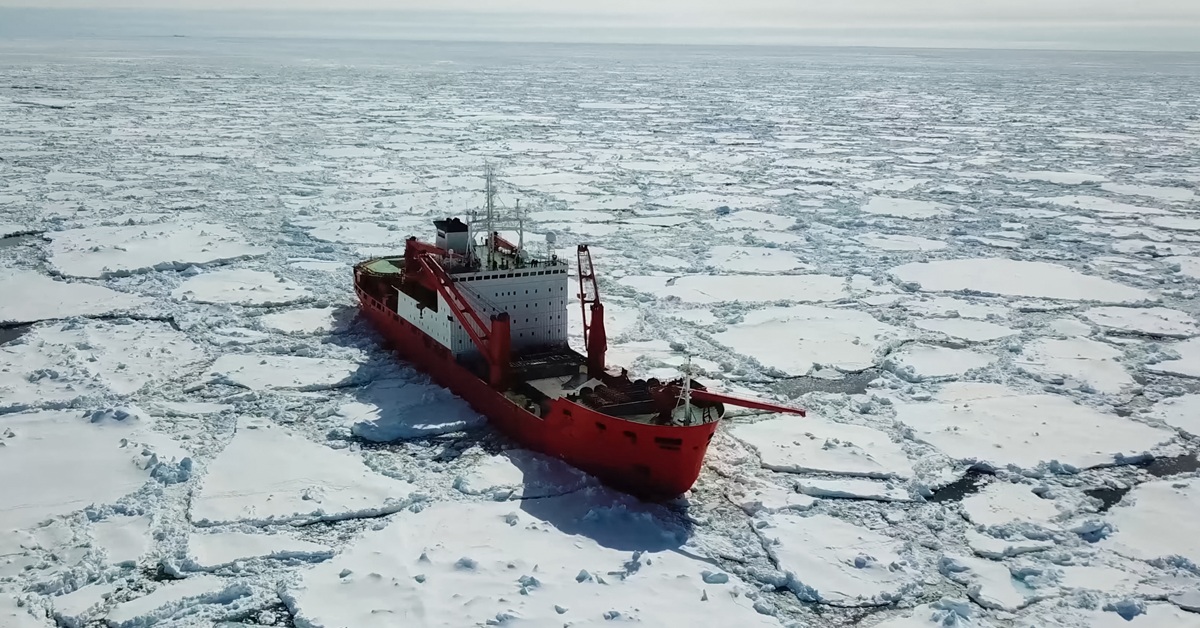
While working closely with Russia to secure its economic and strategic interests in the Arctic, China acquires capabilities and establishes a foothold so that it can operate independently across the region and build a military presence in case its priorities change. At present, Beijing operates three heavy domestically built icebreakers.
Liselotte Odgaard
Senior Fellow
Hudson Institute
USA
