
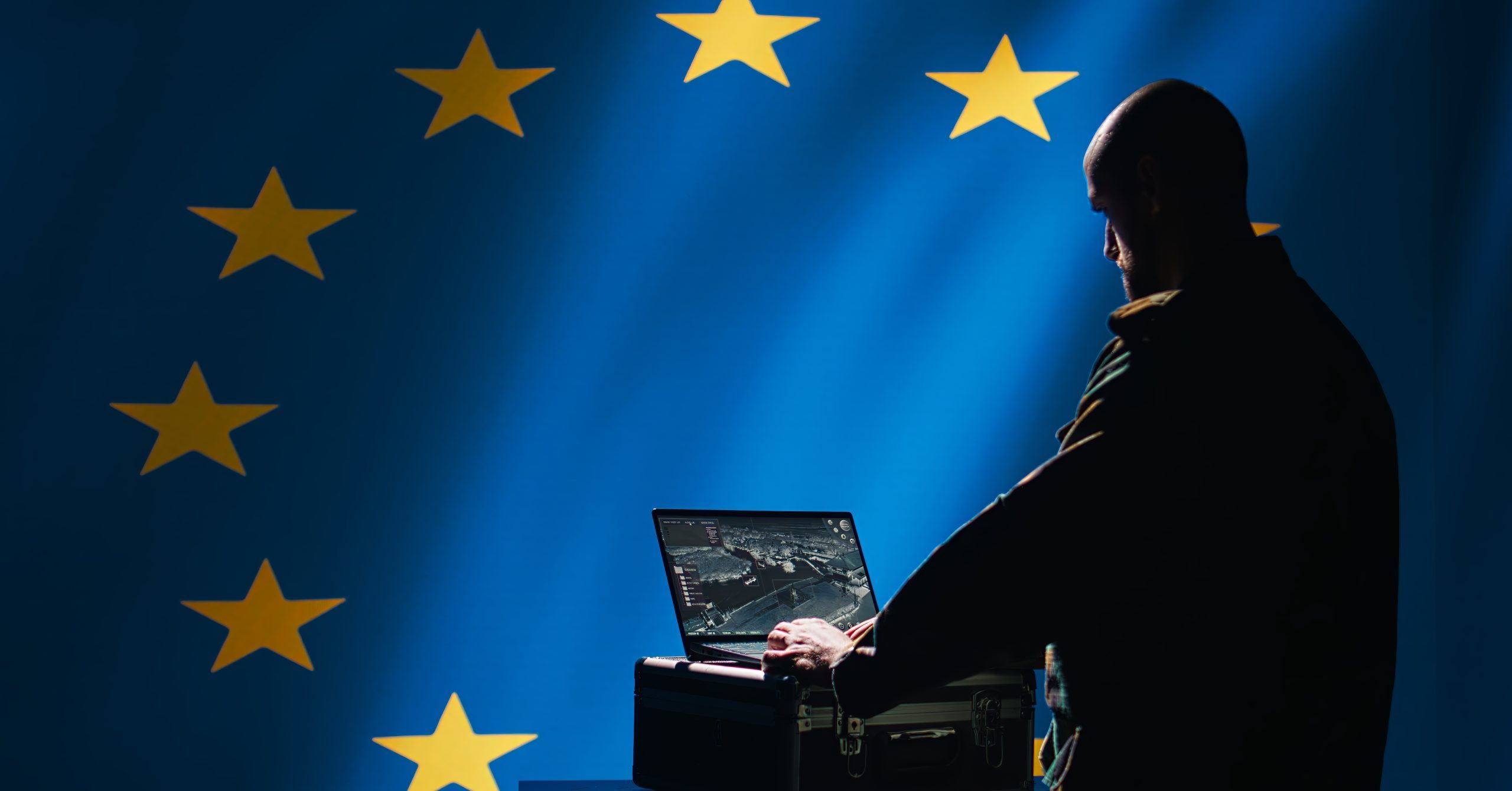
Baltic Rim Economies 1/2026 highlights how intelligence and foresight have moved to the centre of security policy in Europe and the Baltic Sea Region. A changing geopolitical environment and growing uncertainty require decision-makers to have improved situational awareness, analysed information and the ability to anticipate future developments.
The articles in the issue underline how intelligence has become an increasingly integral part of political decision-making, international cooperation and strategic leadership.
The European Union as a geopolitical security actor
Ilkka Salmi, Deputy Director-General for Security at the European Commission, examines the European Union’s transformation from a technocratic executive into a geopolitical security actor. According to Salmi, the EU’s ability to respond to security threats requires stronger intelligence cooperation, enhanced information sharing and strategic foresight. Intelligence is playing a growing role in EU decision-making, particularly in managing hybrid threats and cross-border crises.
Europe’s responsibility and the transformation of the transatlantic relationship
The transformation of Europe’s security environment is analysed by Hannu Himanen, former Ambassador of Finland to Moscow, who reflects on Europe’s responsibility for its own security at a time when the transatlantic relationship is more uncertain than it has been for decades. According to Himanen, Europe must strengthen its strategic thinking and its capacity to anticipate long-term developments.
Richard J. Kilroy Jr. (Coastal Carolina University, USA) also addresses the changing transatlantic relationship and the impact of domestic political developments in the United States on European security. Together, these contributions emphasise the importance of foresight in a context where long-standing security policy assumptions no longer hold.
- Hannu Himanen: Westlessness to helplessness? The liberal order is Europe’s to save
- Richard J. Kilroy Jr.: Can the Transatlantic alliance survive the Trump presidency?
Intelligence in support of decision-making
Several contributors address intelligence as a foundation of national and regional security. Mats Löfström, Member of Parliament and member of the Finnish Parliamentary Intelligence Oversight Committee, examines the role of intelligence in supporting decision-making and security in the Baltic Sea Region. Joseph Wippl (Boston University, USA) analyses the relationship between intelligence and national security from a broader international perspective.
In addition, Juha Martelius, Director of the Finnish Security and Intelligence Service (SUPO), and Kari Laitinen, Senior Specialist (SUPO), explore the relationship between information, intelligence and national security, as well as the challenges of decision-making in a rapidly changing security environment.
- Mats Löfström: Intelligence as a pillar of security in the Baltic Sea Region
- Joseph Wippl: Intelligence and National Security
- Juha Martelius & Kari Laitinen: Information, intelligence and national security
Regional cooperation in the Baltic Sea region
A regional perspective is provided by Edvilas Raudonikis, who examines Nordic-Baltic (NB8) cooperation from the perspective of security policy and intelligence. According to Raudonikis, regional cooperation and trust-based information sharing are essential for maintaining stability and security in the Baltic Sea Region.
Foresight as part of security policy
In the latter part of the issue, several authors deepen the discussion on the role of foresight in security policy. Christoph O. Meyer (King’s College London, UK) reflects on why intelligence-based foresight does not always influence decision-making, while Toni Ahlqvist, Jari Kaivo-oja and Linda Räihä (University of Turku) examine foresight as a tool for managing complex crises and uncertainty.
- Christoph O. Meyer: Why intelligence-based foresight has lacked impact
- Toni Ahlqvist: Future uncertainties, emergence and context: On interface of strategic foresight and intelligence studies
- Jari Kaivo-oja: Interfaces between intelligence research and foresight research: Promoting fruitful interfaces
- Linda Räihä: Foresight and intelligence: Sides of the coin
A comprehensive overview of intelligence and foresight
Baltic Rim Economies 1/2026 provides a broad overview of how intelligence and foresight have become central elements of security policy in Europe and the Baltic Sea Region. The contributions highlight that sustainable security requires strategic thinking, effective intelligence cooperation and the ability to anticipate future threats.
Read the full publication: Baltic Rim Economies 1/2026: Intelligence & Foresight
