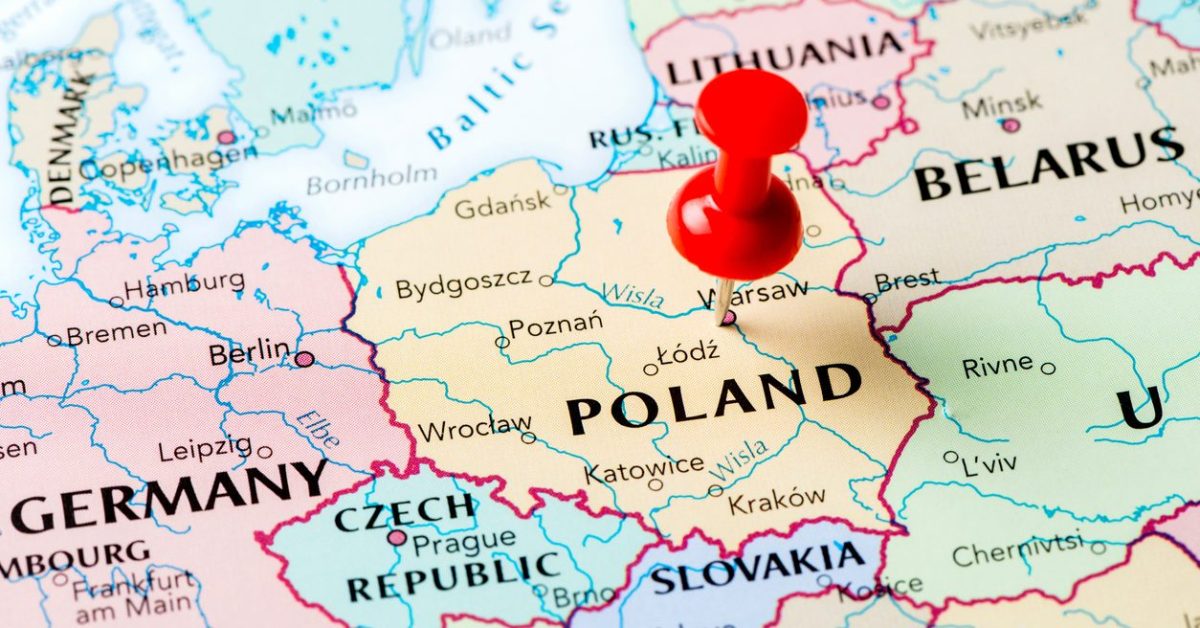
Poland has been shaping the European development in the 21st century gradually but profoundly. The key to Poland’s rise is, ironically, its continuous disappointment with the Union’s slow and rigid decision-making. Milestones towards the new international status appeared through major European crisis moments by out-of-the-box innovations. After the Russian attack on Georgia in 2008, the Polish administration proposed the Eastern Neighbourhood Programme. The new initiative recycled Józef Piłsudski’s Prometheus strategy from the 1920s, aiming to bring light of freedom and fire of national awakening to small nations that had fallen under Soviet rule. This old idea was revised for EU-purposes with the ambition that by investing to democratic development of countries between the EU and Russia, they could be anchored to Western values, away from Russian influence. The next step in transforming the EU foreign policy emerged in 2017 when after a long struggle the Visegrad Group and its regional leader, Poland could wreck successfully the EU’s refugee policy on mandatory quotas. Poland was again in the limelight in the border clashes in late 2021, when Belarus forcibly herded refugees across the border. When the Polish government pushed back those seeking to enter the country, the EU became more permissive. Encouraged by the Polish example, other border states enacted similar “push back” laws in preparing for the future, including Finland.
The most far-reaching impact on the EU of all, however, was the military reform initiated already in 2018, when Poland’s constant warnings about Russia fell on deaf ears in the EU, in the aftermaths of Crimea. Polish parties arrived at a consensus that it was necessary to be self-reliant in defence since the NATO could not be fully trusted due to its weakest link, Germany with traditionally cordial Russia-relations. Frustration drove Poland to carry out a comprehensive reform by increasing defence budget over the years near to 5 percent of GDP, modernized military infrastructure and invested into new armaments for all types. The Polish defence industry began to flourish and expand, as an important economic side effect. After Russia invaded Ukraine in February 2022, all input to the military accelerated even further. According to current plans, by 2030 defence budget could reach 7 percent of GDP, the army’s manpower would increase to 300,000, the biggest standing army in the EU. Poland is rapidly becoming Europe’s strongest military force, and it is a very good news for Finland because regional security in the Baltic Sea area is priority for Poland.
But Poles like to think big. Especially when remembering the two centuries long Polish-Lithuanian Commonwealth that covered one million square kilometres and had 11 million inhabitants. It was one of the largest European powers of its time, comprising the Baltics, Belarus, Ukraine and extending deep into Russia. Poland has sought to restore its old greatness by revisiting once again a remarkable interwar idea, the Intermarium, an alliance of the countries between the Baltic and the Black Sea. Now, it is Trimarium, adding the Adriatic to the security zone with using the EU framework and acceptance as relevant scenario in defence against Russia. Poland has another strength that most EU states envy: the traditionally good relations with the United States, regardless of who is sitting in the White House or in the PM’s office in Warsaw. The US has provided an extra security guarantee on the top of the NATO – as a bilateral deal.
There is only one obstacle to Poland’s path to become a truly great international power, and that is the “Snow White and the Seven Dwarfs” phenomenon. When PiS came to power in 2015, its leader Kaczyński followed the Hungarian path in centralizing power. However, with Donald Tusk’s 13-party grand coalition, Poland was supposed turning a new page. In the eastern EU member states, national-conservative, EU-critical parties have grown into the largest political forces in their countries. Against them, the opposition consists right-wing and left-wing parties, who have withered into small factions. In other words, they must cooperate to come to power. But the problem of the dwarfs is that when they finally succeed in their only common goal, ideological differences resurface in the everyday decision-making. And that can be fatal, because the PiS is just waiting to roar back to power if coalitions fail, even stronger. The outcome of this summer’s presidential election was warning sign of the rising and aggressive Snow White, ready take advantage of the dwarfs’ occurring weakness.
Yet, maybe Poland is, after all, showing again a model. The last European parliamentary elections in 2024 EU testified that conservative and nationalist parties have generally won. In Poland, three parties together won 47 out of 53 MEPs: the barely moderate conservative Civic Platform (Platforma Obywatelska, PO), the national conservative PiS, and the far-right Konfederacja. The latest European development indicates that we are entering a new conservative era, and Poland is ahead of the current trend. This highlights its potential to lead this new version of Europe.
Katalin Miklóssy
Jean Monnet Chair
University of Helsinki, Aleksanteri Institute
Finland
katalin.miklossy@helsinki.fi