
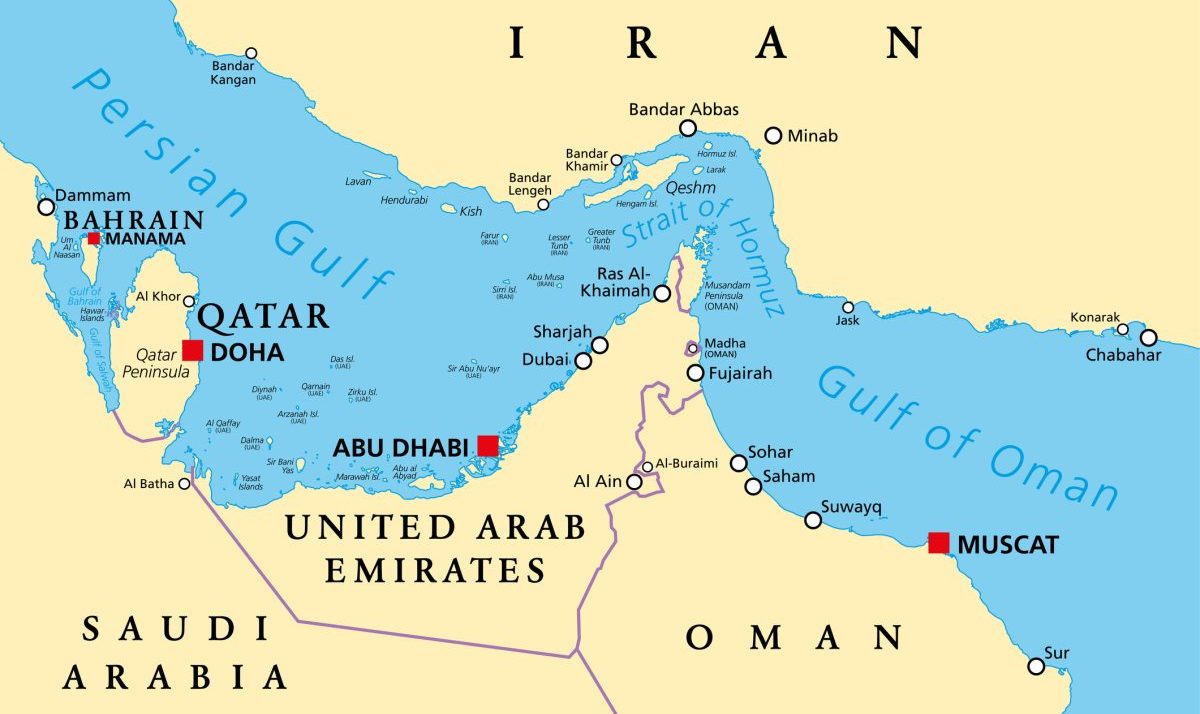
Will the interruption of Persian Gulf shipping reinforce the priority of the Arctic for China? Since achieving observer status in the Arctic Council in 2013, China has sought to expand its presence in the Arctic, even referring to itself as a “near-Arctic state”. While clearly not a part of the region geographically, China has been eagerly exploring investment and shipping opportunities. These ventures have largely been unsuccessful with the exception of the Russian Arctic.
In 2013 China invested in LNG in Yamal in the Russian Arctic, acquiring a 20% stake in Yamal LNG (Russia’s first Arctic LNG project), and later a 19.9% stake in Arctic LNG2, which is supposed to focus on the Chinese market. After sanctions made it impossible for Russia to obtain western technology for these projects, a Chinese company stepped in with turbines for gas liquefaction for Arctic LNG2. China received 22 shipments from Arctic LNG2 in 2025, despite US and EU sanctions on the project.
Three quarters of Yamal LNG went to the EU in 2025, but new sanctions the bloc imposed will require Russia to find Asian clients within the next year. According to the Centre for High North Logistics, even if all the Yamal LNG is redirected to Asia, inadequate transportation capacity and longer shipping times to Asia will mean that Russian Arctic gas exports will be cut in half.
Russia is now China’s second largest supplier of LNG after Qatar, though imported LNG still occupies a relatively modest position in China’s energy mix—approximately 2% of its energy demand. To avoid sanctions on companies with international exposure, China has dedicated the southern port of Beihai to receiving Russian gas from Arctic LNG2 via its shadow fleet.
Since enthusiastically announcing plans to develop the Polar Silk Route running from China through the Northern Sea Route to the European Arctic, China has gradually expanded the number of its container transits from 2 in 2020 to 14 in 2025. Most notably, in October 2025 the Chinese vessel, the Istanbul Bridge, sailed along this route to the United Kingdom for the first time, reaching the port of Felixstowe in 20 days, half the time of a Suez Canal transit. China and Russia are collaborating in the construction of ice-class container ships and training polar navigation experts to support shipping through the Northern Sea Route.
Although Putin and Xi Jinping talk about the potential for Arctic cooperation, many obstacles remain. Russia desperately needs investment in its Arctic region, but Russian officials chafe at the “Polar Silk Road” terminology—where Russia is relegated to a thruway for China’s polar ambitions. China has welcomed opportunities to provide technology for the Yamal LNG projects, though sanctions have led to project delays.
Sanctions also have limited Chinese participation. New entities like the Hainan Yangpu NewNew Shipping company were created to limit sanctions to less internationally exposed Chinese companies. This company was implicated in a cable-cutting incident in the Baltic Sea along with a Russian entity, highlighting the safety risks of new players in a fragile region, as well as the potential risks of Sino-Russian collaboration in hybrid actions against western interests.
There are no signs that Russia plans to make China an equal partner in the Arctic. This is a sensitive region for Russia—home to an array of military bases, 80% percent of its gas production, and amounting to 10-15% of GDP. The Arctic is integral to Russian state identity and Russian officials were among the most skeptical of China’s original bid to join the Arctic Council and claim to be a near-Arctic state. Even when faced with dwindling options, Russia intends to remain China’s gatekeeper to the Arctic.
The problem for China is that it lacks alternative partners in the Arctic. After joining the Arctic Council , Chinese companies energetically sought investment opportunities in the European Arctic. Many of these efforts stalled or failed, however, due to counterproductive policies and statements by PRC officials and growing concern within Europe over technological competition with China.
At the same time, the EU increasingly saw Chinese investment as an economic security threat, by 2019 terming the PRC a “systemic rival.” This meant that the EU now views PRC investments in in the Arctic in critical minerals and scientific cooperation with “dual-use” potential from a security lens. Indeed, Chinese policymakers, including PLA officials, frame the polar regions—and the space and undersea technology for their exploration and development—as “new strategic frontiers.”
One benefit of the “new strategic frontiers” language that PRC officials currently use in referring to the Arctic, is that it reduces China’s need for Arctic partners—space and undersea technologies enable China to access the Arctic with greater autonomy, from above and below. However, Russia is loath to relinquish its role as gatekeeper to China’s use of its Arctic maritime space. To the contrary, Russia is doubling down on a legal rationale for maintaining control over the Northern Sea Route. Despite grandiose plans for infrastructure development in the Russian Arctic, no ports or rail lines have been built to date and Sino-Russian Arctic exercises have been confined to the North Pacific Arctic and the Baltic Sea.
It is possible that the closure of the Strait of Hormuz increases interest in China in investing in Russian Arctic energy and shipping, though Russia may be more reluctant to provide the discounts that China has been seeking due to the high price of oil. One lesson of the war in Iran is that straits can easily be closed at high cost. The Bering Strait, only 82 km in width, is equally vulnerable in this respect, and may not provide the desired respite for Chinese shippers.
Elizabeth Wishnick
Senior Research Scientist in China Studies
CAN
USA

Elizabeth Wishnick is the author of the China’s Resource Risks Substack. These views are her own.
Back to Table of Contents