
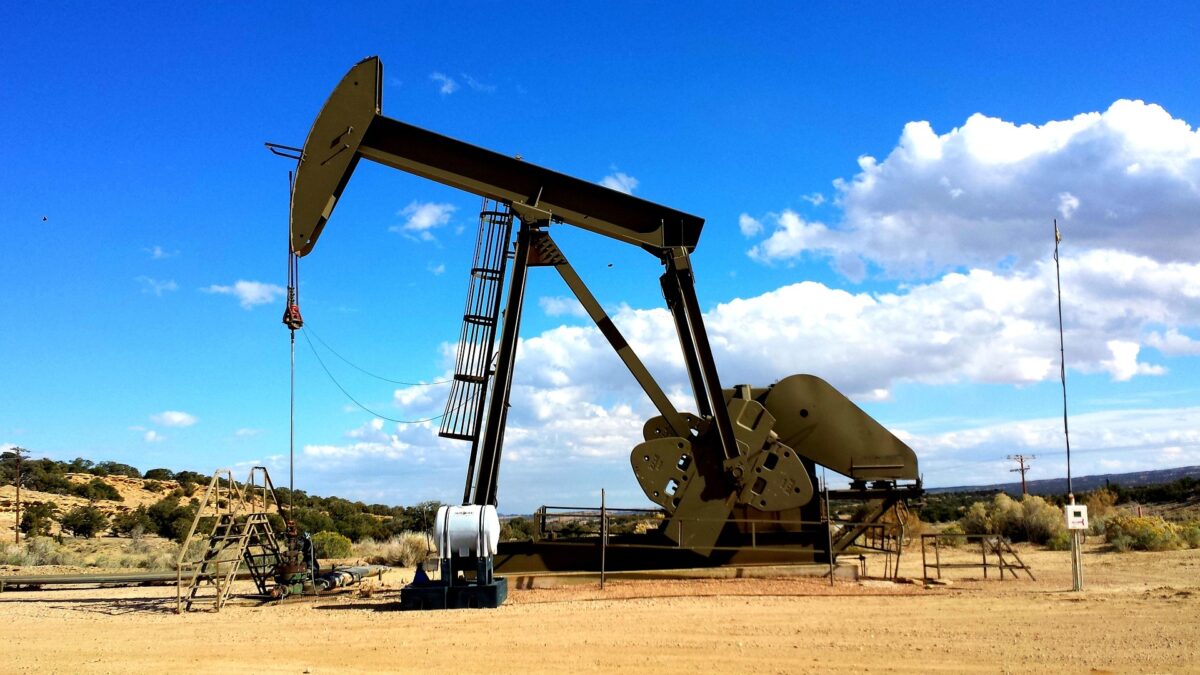
Since the beginning of the 2020s, we have seen a shift from a peak in climate policymaking towards a green backlash in many countries. The inauguration of Donald Trump as the 47th president on January 20, 2025, has caused massive changes in global trade and geopolitics but also triggered a series of climate policy rollbacks around the world. During his second presidency, denying climate change has taken center stage in his political strategy. He launched an all-encompassing campaign that can be summarized with two of Trump’s favored slogans: Fight the “new green scam” and “Drill, baby, drill.”
The Republican majority in both houses of Congress has enabled Trump to make swift progress in abolishing the climate policies of his predecessor, Joe Biden. For example, in July 2025, Congress passed the One Big Beautiful Bill Act, a law that, among others, initiated severe budget cuts in the environmental and climate areas. Trump’s government quickly eliminated tax credits and funding for electric vehicles, wind, and solar energy projects.
The number of executive orders Trump signed during his first year and a half in office is very high, but some of his initiatives sadly stand out: The repeal of the USA’s climate targets of 61% to 66% by 2035, the stop of the licensing of new wind energy projects on public land and waters, the order to halt the enforcement of state and local climate laws, the rollback of environmental justice programs, and a series of fossil fuel and deregulation directives that aim at accelerating domestic oil, natural gas, and coal production while dismantling standards for clean air and greenhouse gases (GHG) such as methane and other pollutants.
Trump’s administration attacks the very foundations of U.S. environmental and climate policy. Perhaps the most prominent evidence for this is the Executive Order of February 2026 that made the U.S. Environmental Protection Agency (EPA) repeal the Endangerment Finding, the legal basis that allows the EPA to regulate greenhouse gases (GHGs) in the first place. While this endeavor is being legally challenged, all EPA GHG regulations, such as vehicle emissions standards, are suspended until a court orders otherwise.
President Trump has removed climate protection from the remit of all executive agencies. He is implementing this by restructuring and realigning the executive agencies (such as the EPA or the National Oceanic and Atmospheric Administration (NOAA)) and by placing his loyal supporters in key executive positions, most of them deniers of human-induced climate change. Governmental websites and official documents were cleaned of the term “climate change” and often communicate fossil fuels (e.g., “beautiful clean coal”) as the best solution for increasing energy demand and prices.
In the USA, since 2025, a systematic erosion of climate science has been carried out by the government. Many academics and scientists are facing threats of defamation and unemployment. Long-standing institutions like the Wilson Center or the National Science Board have been closed down, and research funding across all climate- and environment-related fields has been cut.
The notion of “America First” and Trump’s attack on multilateralism are also shown in the USA’s withdrawal from international cooperative initiatives such as the International Renewable Energy Agency, as well as the stop of international climate policy and development funding (e.g., for the UNFCCC, IPCC, USAID).
The social and environmental costs of Trump’s policies are tremendous and already showing: In 2025, overall GHGs rose for the first time after the previous downward trend, driven by higher electricity generation and coal, and, e.g., sales of electric cars fell by 4% (vs. global increase: 20%). Trump’s anti-climate tactics are unprecedented and difficult to fix, even if the next president comes from the Democratic Party. They have disrupted his predecessors’ attempts to green the U.S. economy and will likely cost jobs, drive up energy prices, and ultimately leave the emerging field of clean technologies to China.
”"Trump’s anti-climate tactics are unprecedented and difficult to fix, even if the next president comes from the Democratic Party."
These developments have also reinforced efforts from environmentalists, scientists, the Democratic Party, and even some industrial groups to mount resistance against Trump’s political endeavors, most importantly, by suing the Trump administration in countless cases in court. The surge in energy prices has triggered societal dissatisfaction. In spite of Trump’s rollback, investments in clean technologies are expected to reach record levels of 180 billion USD in 2026, and renewable energies have still grown in 2025 (e.g., solar power +34%). The USA’s dropout from international commitments such as the Paris Agreement is dramatic, but at the same time has the positive effect that the USA cannot block or dominate negotiation agendas, like, e.g., in the G20. All eyes are now on the U.S. midterm elections in November 2026, which could dampen Trump’s majority in Congress and make his legislative endeavors more difficult.
While transatlantic “climate” relations have been volatile for the past 25 years, animosity has reached a new dimension under Trump’s crusade for geopolitical “energy dominance.” His constant threats to impose new tariffs or to stop gas exports have left the EU on edge and created an atmosphere of aggression and antagonism. Even cooperative attempts such as the EU–USA deal on LNG seem to lack reliability. The bottom line of this is more global uncertainty and instability. Yet, maybe a positive outcome of Trump’s second presidency is an “awakening” of the EU and hopefully a new strive towards a strong, independent Europe with new, more diverse, global partnerships.
Dr. Charlotte Unger
Senior Research Associate
Institute for Sustainability at GFZ
Germany
Charlotte.unger@rifs-potsdam.de
