
In the autumn of 2025 the government of Europe’s largest industrial economy found itself asking a foreign power for car parts. Germany’s economy minister Katherina Reiche contacted China’s commerce minister Wang Wentao to press for a resumption of chip exports. Her ministry called carmakers and electronics firms to a crisis meeting.
The cause was Nexperia, a Dutch chipmaker owned by China’s Wingtech, which the Dutch government had seized on 30 September under a Cold War-era law. Beijing – predictably – replied by holding back the chips finished in Nexperia’s mainland factories. Within weeks Europe, the world’s most branded regulatory power, discovered that its car industry depended on components completed in plants it did not control, in a country that had just decided to stop cooperating.
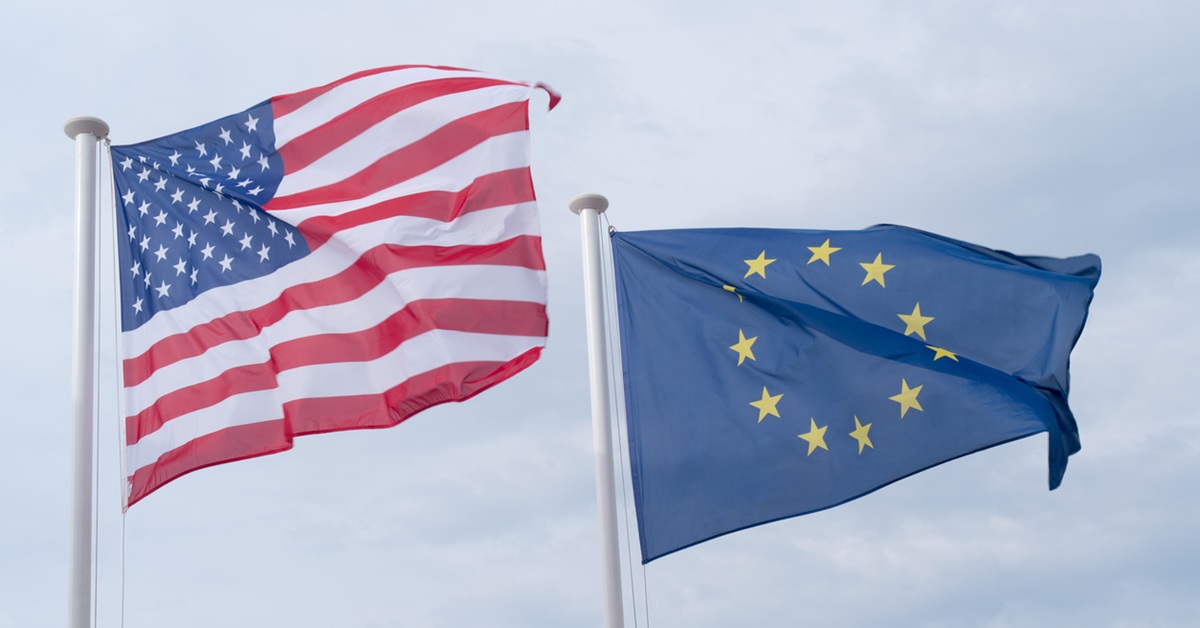
Then the crisis ended, but relief did not come from Brussels, Berlin or The Hague. It came from Busan, where Donald Trump and Xi Jinping met on 30 October and agreed a truce, after which Beijing began letting the chips move again. Europe’s industrial emergency was settled as a side clause in someone else’s bargain. Brussels was a line item in a deal it did not negotiate, its vilified in Trump’s new National Security Strategy.
”“Europe's industrial emergency was settled as a side clause in someone else's bargain.”
That lesson matters more this autumn than last. China’s suspended rare earth controls, which could return on 10 November, hang over every European factory that depends on a magnet. Americans vote in the midterms on 3 November. In December Washington hosts the G20 meeting in Miami. Across these three dates, there is a risk that Brussels remains an anxious onlooker to a street fight between two local bullies, one who boasts of calling the police but never does, fearing he might have to skip work to spend time at the precinct. One such bully has called for ‘cultivating resistance within European nations to Europe’s current trajectory’.
Europe is proficient in drafting new strategy documents and grand speeches to create more cautionary tales. It can diagnose, but not prescribe. Create, but not implement. Ursula von der Leyen’s State of the Union address on 16 September mentions China five times but steers clear of agency and concrete countermeasures, such as, for example, targeted access restrictions to European know-how to China or invoking the Anti-Coercion instrument.
But one has to be a hopeful soul to even hope that change will come from Rue de la Loi. A more realistic approach – for businesses and policymakers in both Brussels and Washington – would be to learn from the examples of Central and Eastern European (CEE) countries and embrace cautious transatlanticism. In other words, Europe should see as much good in a bully and continue seeing US businesses and like-minded policymakers as an indispensable ally, while the latter should clench their teeth, accept compromises and look beyond a short-term business model that comes from tangoing with China. EU countries to the right of Berlin can offer a lesson.
Take nuclear fuel. For decades, the Soviet-designed reactors of five EU states ran entirely on Russian fuel. Then an American company, a Swedish factory and a handful of Central European utility providers did something deeply unfashionable. They built an alternative slowly, through engineering, licensing and long contracts. Westinghouse contracted to replace Russia’s TVEL at the Czech Dukovany plant and signed with Slovakia’s operator. This spring, even Hungary said it was ending two decades of dependence on a single supplier, with the first Westinghouse reload at Paks due in 2028.
Defence follows the same pattern. The Polish state-controlled firm WZE now makes components for the Patriot system’s interceptors to American standards, with its first deliveries to the United States due in 2027. Polish factories are becoming part of the American arsenal rather than merely its customers.
What did these cases have that Nexperia lacked? Three rather dull things. An alternative producer existed before the crisis. Governments and utilities guaranteed the demand that made building it worthwhile. The political coordination came first, instead of in a panicked round of phone calls once the parts ran out. None of this required a grand theory of strategic autonomy – it required contracts.
The scaffolding to repeat this at scale already exists, at least on paper. Brussels and Washington signed a critical minerals memorandum in April and promised pilot projects before the year is out. Poland and Lithuania have signed minerals frameworks with Washington, and Estonia, which already hosts a magnet plant in Narva, is negotiating one. Paper, however, is the catch. The memorandum is non-binding, the price floors that would make Western production viable remain proposals, and the EU still sources 98 per cent of its rare earth magnets from China.
Here American politics, usually a source of European anxiety, provides an opening. The midterms will not settle the tariff war. In North Carolina, the Democrat Roy Cooper promises to roll tariffs back while his Republican rival embraces them. On supply chains, however, Washington is unusually united. Republicans and Democrats co-sponsor critical minerals bills, and the Republican senator Todd Young put the case bluntly last autumn. ‘We literally cannot produce our defense goods without access to rare earth minerals’, he said.
Europe should build on the issues that will survive any election result. Tariff policy can change with each new Congress. The need – and business case – for magnets and interceptors will not.
Three things should therefore happen before Miami. First, Brussels and Washington should launch at least one price-floor pilot and place it in CEE where soil is already fertile. Second, both sides should turn their promise of August 2025 to act together against export restrictions by third countries into a standing mechanism before 10 November, so that the next Nexperia meets a joint response instead of a flurry of strong words. Third, Poland should use its seat in Miami to present the region’s record, from nuclear fuel to missile components, as the template.
For three decades, advice on how to modernise travelled mostly from west to east. On supply chain security, the lesson now runs the other way.
Arslan Suleymanov
Independent Researcher; Member of the Working Group
United Europe e.V.
Austria/Germany
contact.arslans@gmail.com
