
Wherever one looks, in Europe, the Middle East, and Asia, Washington’s alliance network is in visible crisis. Although we can ascribe some elements of this crisis to structural dynamics of international relations; its common denominator and driving force are the Trump Administration’s egregious strategic malpractice. Neither is this malpractice confined to President Trump. Indeed, it is equally visible at the Pentagon which also owns considerable responsibility for starting a war against Iran with no strategic plan, insufficient magazine depth, insufficient logistical preparation, inadequate defense of U.S. bases in the Gulf, and without sound intelligence assessments or preparation of the battlefield.
The signs of Washington’s reckless and thoughtless undermining of alliances that have buttressed U.S. interests, values, and world order for decades appear everywhere. In the Middle East the Administration’s misdeeds go beyond those cited above. Washington and Jerusalem attacked Iran without prior warning to or consultation with America’s allies in the Gulf. Thus, they had no time to prepare and paid a serious price for their vulnerability by being targeted by Iran and suffering serious economic losses. Worse, the war began with no prior notice while they were negotiating with Iran. Therefore, not only are they increasingly frustrated with Trump, but they now must also contemplate the wreckage of their fundamental security formula. No longer can they rely on American guarantees or U.S. policy so they have begun forming their own regional security association. The Mecca pact uniting Turkey, Saudi Arabia, and Pakistan, whether or not it is an anti-Indian or anti-Israeli formation, clearly betrays Saudi alarm that it cannot count on Washington and therefore must fill the ensuing security vacuum on its own with other partners. Indeed, there are now reports that the signatories might invite Iran to join the pact.
Similar strategic malpractice is equally present in Asia. Washington has hitherto ignored North Korea’s ongoing conventional and nuclear buildup, alliance with Russia, and China’s acquiescence in these trends. Trump’s sudden announcement of a desire to meet Kim Jong-Un, another gesture made without preparation, was quickly and not surprisingly rebuffed by Pyongyang. But this malpractice hardly ends here. Trump rashly intimated to Chinese President Xi Jinping that defense of Taiwan and arms transfers to it are negotiable. Therefore, after their May 2026 summit, China intensified maritime pressure suggesting a potential encirclement or blockade of Taiwan. Further south, China has increased pressure on the Philippines, seized Antelope Brief in the South China Sea, and fortified it, making it into another military base. Likewise, Russia continues developing its “quasi-alliance” with China, adding to China’s threats against Japan. Washington responded tepidly to these developments and speeches by Administration officials highlighting U.S. strategy did not reassure Asian governments about its commitment to their defense.
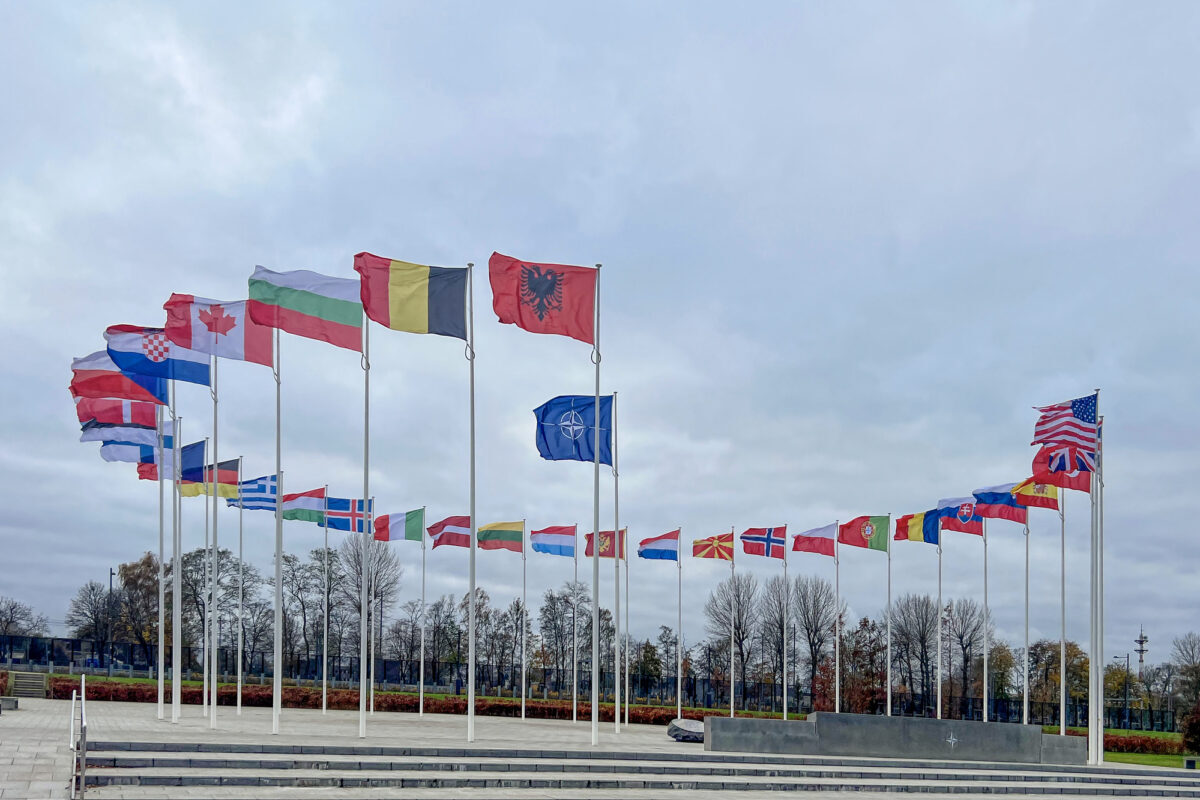
Meanwhile NATO evidently has no plan should a joint Sino-Russian offensive take place in both Europe and Asia, underscoring further Western malpractice that also typifies U.S. policy in Europe. Trump’s main achievement, forcing Europe to increase defense spending, came about by bullying and insults, undermining mutual trust. Then he seriously threatened to attack Greenland, leading Denmark to block runways there. Then the Administration unilaterally announced troop withdrawals from Europe and again berated NATO allies who had not been consulted as required by the Washington Treaty for not supporting the war with Iran.
Lastly the Administration just sent a questionnaire to NATO members demanding answers to the following questions. In particular, the questionnaire contains the following questions:
- whether the country publicly supported US foreign policy;
- what restrictions it placed on the use of its bases by the American military;
- whether it buys weapons and other equipment from American defense companies;
- whether it opposed rules that restrict contracts with American manufacturers;
- Is it ready to support the Administrationʼs approach to international policy — to act “strongly, clearly, and quietly” (a reference to the statement of Pentagon chief Pete Hegseth).
Separately, Washington also wants to know its allies’ position on American military operations in the Middle East. E.g. the Administration asks whether countries are prohibiting use of their bases for strikes against Iran and whether they will lift such restrictions. Washington also wants to get confirmation of alliesʼ defense spending and whether they are buying American weapons rather than preferring European manufacturers. Meanwhile the Administration regularly attacks the EU and Canada, undermining not only inter-allied cohesion, and trust, but also economic competitiveness.
Finally, the Administration continues to chase the fantasy of an accord with Moscow over Kyiv’s head and without its participation, presumably in return for illusory economic deals with Moscow. While Russian officials claim that Washington “demonstrates a readiness for ‘constructive dialogue’ and an ‘understanding of Russia’s position’”; the Administration has curtailed military assistance to Kyiv, e.g air defense interceptors like the Patriot air defense system. Consequently, Russian missiles continue to pulverize Ukraine’s civilian infrastructure while Putin claims that Moscow is winning and will only negotiate on its terms. Thus, the Administration, has failed to bring peace to Ukraine and in another act of egregious strategic malpractice, undermined Ukrainian and European security.
The ubiquity of this incompetence demonstrates that this is what passes for policy in Trump’s Washington. No amount of intellectual contortions by Trump’s defenders — and there are many such examples — can rebut the fact that virtually every policy undertaken by this administration has weakened the U.S., its allies, and their alliances. Not surprisingly initiatives like the Mecca pact, Japan’s upgraded ties with Asian states from South Korea to India and Australia, enhanced Nordic-Baltic cooperation or the Franco-British Northwood Nuclear Declaration share a common apprehension that Washington’s misconceived policies expose them to greater threats than ever before. These “middle powers” have no choice but to act this way and perhaps these initiatives might hold the line against Moscow, Beijing, Pyongyang and Tehran for some time. But if the chief watchman for security quits his post, the other guards ultimately labor in vain.
