
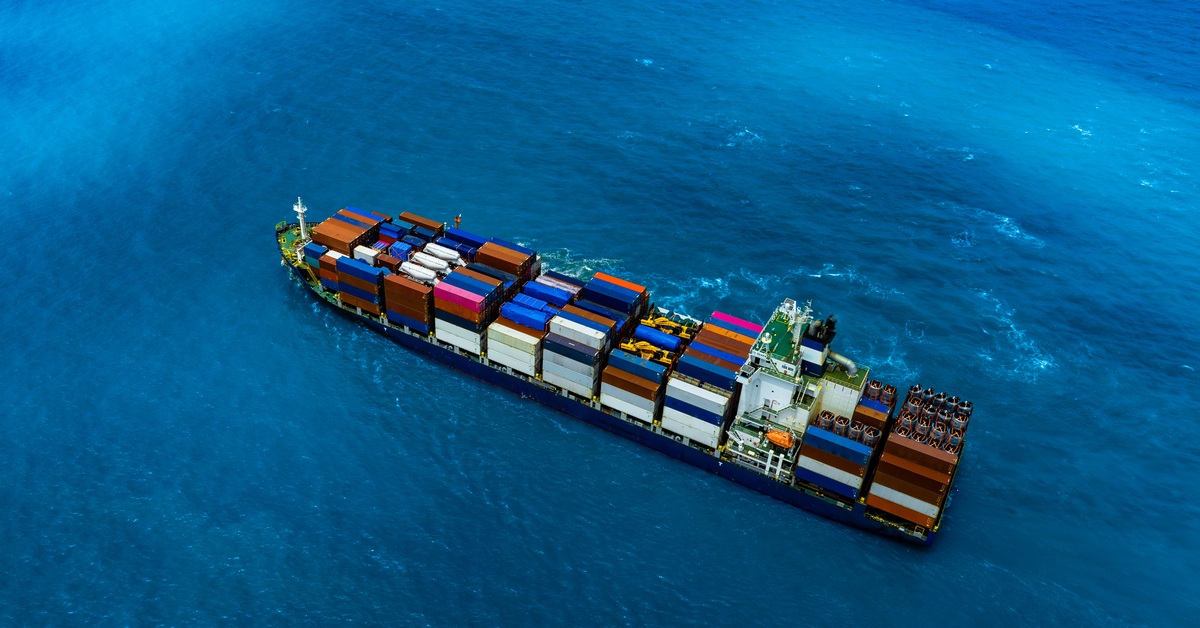
China’s maritime activity is subordinated to the country’s strategic objectives. This stems from the adopted economic policy assumptions, and secondarily from political ones. In this concept, the Baltic Sea is treated as an important sea body, but currently it is not considered strategically significant. This is primarily a consequence of the suspension of the Polar Silk Road (PSR) project, which has resulted in this basin being treated solely as a shipping route. A route with maritime transshipment hubs ensuring uninterrupted trade in goods. This situation should be considered a temporary solution, and the factors that will reshape the Baltic Sea in Beijing’s policy will be the situation in the Arctic region and the level of implementation of the Russian concept of the Trans-Siberian Transport Corridor and Great Nord Sea Route (GNSR). It is, in fact, an investment that contributes to the economic development of the Russian Arctic and Far East and expands transit opportunities through the Arctic-Indian Ocean connection. The Polar Silk Road concept and China’s Arctic policy itself should be viewed as a potential for deepening the economic dependence of the Russian Federation and making Siberian investments dependent on the scope of economic cooperation with Beijing. Less prominent, but equally important, strategic goals include potentially gaining access to the exploitation of inanimate resources and economic and political influence in the Arctic, as well as influencing Russia’s energy export policy through the Indo-Pacific. The operation of the Trans-Siberian connections, and in particular the Saint Petersburg-Arkhangelsk section, limits the possibility of controlling Russian economic processes, as it is a project connecting the country with European transport systems via the Baltic Sea Motorways. These conditions mean that the Baltic Sea will continue to be perceived by the Chinese authorities in a strictly geopolitical, rather than regional, context. The importance of individual countries in the transport system ensuring exports to the European Union will play a key role in Baltic policy. The Federal Republic of Germany will establish its status as the most important partner, utilizing elements of the Motorways of the Sea system (the Rostock and Sasnitz terminals) and the transport system connecting them to the Duisburg AG Logistics Centre. Poland’s role as a transit country (Stryków Logistics Centre and container terminals in Gdańsk and Gdynia) will increase due to its connections with continental Europe, the Nordic countries, and the United Kingdom. However, the scale of the use of Russian ports in the eastern Baltic Sea, in particular, will be a political game. The Chinese authorities will emphasize their alternative role, thus limiting Russian plans to use Russian transport systems and ports as transshipment and distribution points for Chinese exports. The issue of the rules for Chinese shippers’ use of the Northern Sea Route and GNSR will likely also be addressed, which will sanction the Polar Silk Road’s status.
In light of these conditions, it should be emphasized that China’s use of the Baltic Sea for shipping complements its land-based transportation systems. However, incorporating Baltic routes into a system of “efficient, safe and effective transport routes” poses a political challenge. These include both the economic necessity of integrating Russian imports and internal transport into the China-Europe transport system, as well as the political and economic significance of the planned Arctic-Indian Ocean link. Arctic activity, including the return to the PSR, will become a tool for influencing Russia to limit the importance of these instruments. These actions will likely modify the role of Baltic Europe in Chinese policy. China’s strategic interest will be political stability, limited to the uninterrupted operation of the Eurasian transportation system. For this reason, any expansion of the American presence and the mere increase in its political influence in the region will be viewed as a challenge to China’s export policy. This factor means that Beijing will also support Russian actions aimed at legitimizing that country’s influence in the region and playing a significant role in the navigation control system. It should therefore be assumed that the region’s role in Chinese policy will remain a result of achieving two political goals: relations with the Russian Federation and expanding cooperation with Germany and Poland. With respect to Russia, the goal will be to achieve independent organization and management of shipping through the Arctic basins and to achieve economic dominance in this country, allowing for the imposition of a formula for conducting cargo transport via intra-Russian land routes. With respect to the Baltic states, the goal will remain to ensure the uninterrupted operation of land transport systems due to political factors and to gradually expand the scale of use of transshipment hubs to create political and economic ties between these countries. A new objective, dependent on the functioning of the Russian “shadow fleet”, will be to establish relations with the Kingdom of Denmark regarding Baltic shipping. In this context, the state of Danish-American relations may be used.
Piotr Mickiewicz
Professor, Head of the Department of Strategic and Security Studies
Gdansk University
Poland
piotr.mickiwicz@ug.edu.pl
Back to Table of Contents