
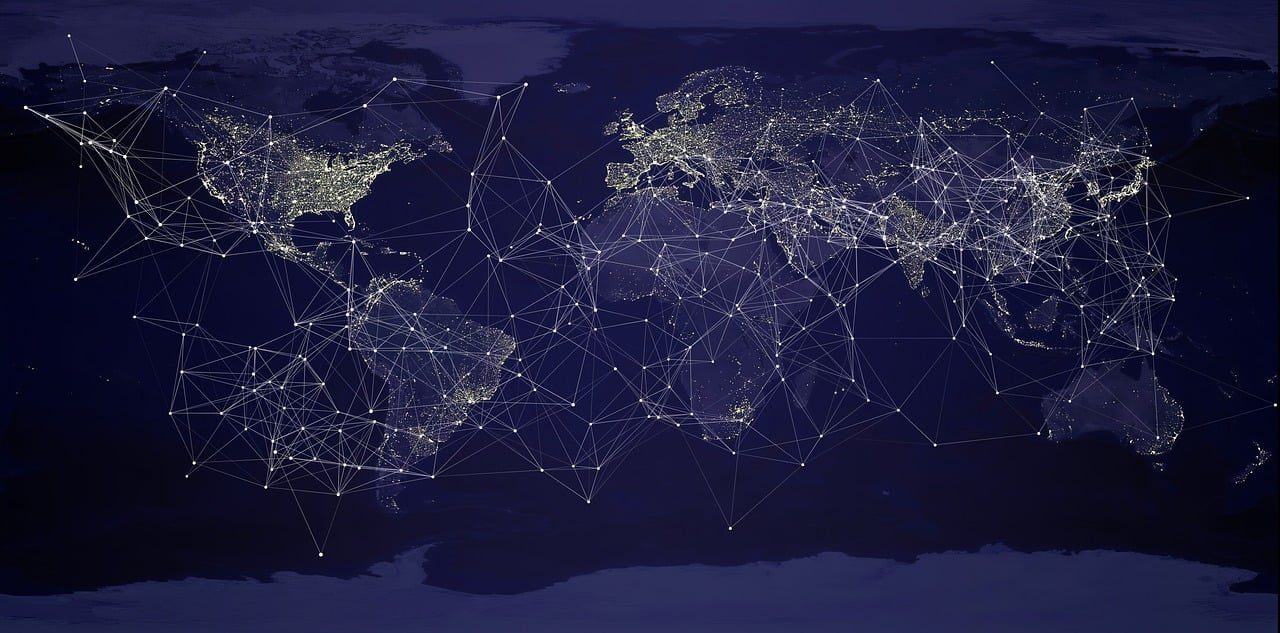
The Baltic Rim states confront renewed geopolitical pressure and hybrid threats, while managing the social effects of increasingly distorted information space, digital interconnectedness, and intensifying individualization. The contemporary socio-technological era is shaped by fluid identities, continuous connectivity, and accelerated flows of produced, curated, and mediated information contents in a plethora of platforms and services by various individual, commercial, and state-related actors.
Although democratic institutions remain formally intact, representative democracy is increasingly strained in its legitimacy among younger generations. Many perceive institutional politics as remote and detached from their lived and mediated realities. Among other factors, this disconnect introduces vulnerabilities for societies deep within the cognitive and information domains.
As the psychological and communicative foundations of democracy erode, attack vectors multiply and branch into the fine-grained details of individual and group identities. External influence operations and internal polarization infiltrate the very pathways through which meaning and belonging are constructed.
Digitalization thus presents a double-edged sword. Well-designed infrastructures and channels can boost transparency, expand inclusion, and strengthen legitimacy enhancing resilience against manipulation through belonging and cohesion. However, poorly designed systems and lack of facilitation may instead accelerate fragmentation, emotional contagion, and adversarial identity formation thus exposing exploitable vulnerabilities at the cognitive and information domains.
The core challenge lies at the intersection of cognition, communication, and security. To strengthen regional democratic resilience, we must ask: how are exploitable vectors at the cognitive and information domains of warfare to be identified, modeled, and countered in practice in the current socio-technological era?
Ideology and Identity as Cognitive Capital. Rather than viewing ideology and identity merely as targets or vulnerabilities, they should be understood as cognitive capital—reservoirs of narrative, motivation, and cohesion. A robust cognitive security posture depends in addition to shielding on nurturing resilient identity architectures capable of absorbing narrative stress without splintering.
The Citizen-Centric Socio-Cognitive Model (CCSCM) [1] offers a framework for understanding how cognition, social structures, and mediated environments interact in shaping societal participation. CCSCM enables describing citizens through the internal, activity, and external layers, which are permeated by various influence vectors that reside in the information domain. CCSCM highlights the feedback loops between individual sense-making, collective identity, and institutional communication.
CCSCM suggests that citizens are socio-cognitive agents, situated at the confluence of internal processes, social interaction, and various medias and systems. Ideological and identity variance, under this view, is not chaotic noise but cognitive diversity, the substrate of pluralistic yet integrative reasoning and deliberation.
Synthetic aperture polling analogy: Multi-Lens Sense-Making. To mitigate the vulnerability implications and threats through informed decisions and contingencies, polling and public sensing in information space must evolve beyond static snapshots. A more potent analogy is synthetic aperture sensing: just as a SAR satellite builds high-resolution images through multiple passes at varying angles, so too must citizen sentiment be probed through shifting framings and perspectives without neglecting the temporal domain.
By varying moral, emotional, pragmatic, and value as well as identity-based lenses, one composes a synthetic aperture in the cognitive and information domains, generating a layered image of societal perception. This enables early detection of latent fractures or emerging alignments before they harden into damage such as polarization or apathy.
Citizen Intelligence as a Democratic Resilience Tool. An emerging frontier in this field is CITINT (Citizen Intelligence) [2] i.e. intelligence activities performed by individuals, NGOs, and civil networks. This represents a shift in issue ownership: intelligence has become distributed and participatory rather than state-centric. CITINT can be viewed through the CCSCM lens.
At the internal layer, where activities such as information appraisal and consolidation, and identity formation reside, the CITINT activities contribute to developing cognitive faculties that in bigger picture strengthen resilience and decrease the susceptibility for external influences.
At the activity layer, citizen involvement in data collection and interpretation strengthens agency and supports individuals to resist manipulative narratives. Moreover, at the activity layer, citizens move from passive sensing and content consumption to active engagement, for instance in curating, analyzing, and publishing information.
At the external layer, institutional systems and platforms mediate how citizen-generated insights are evaluated and integrated, and how the feedback loops are implemented, and how – if at all – the CITINT activities are facilitated.
In effect, CITINT can function as both a barometer for developments in the information domain, and as instrumentation for empowering the citizens. In the Baltic Rim context, building integrated infrastructures where citizens, institutions, and technologies co-produce understanding can be a promising path forward. Rather than outsourcing vigilance, citizens can be empowered as custodians of cognitive resilience and co-actors in the information and cognitive domains of defense.
Possibly the resilience of Baltic Rim democracies will increasingly be won or lost not in parliaments or military domains, but in the cognitive terrain of perception, meaning, knowledge, identity, and control of narrative. The challenge is strategic and resides at cognitive and information domains: how to secure the democratic mindscape in an environment where beliefs and meanings constitute the operational terrain?
The CCSCM provides a scaffold for integrating cognition, participation, and mediation. Combined with CITINT, it points toward an ecosystemic model of cognitive security rooted in proactivity, inclusion, and shared agency.
If the Baltic Rim states adopt orientations of this nature, they may function as a prototype for democratic durability in the age of contested meaning. The task ahead is not simply to oppose distortion but to design societies capable of shared understanding: societies that know themselves in complexity, together. Especially in areas where nations and individuals partially share identities, but have significant cultural, historical, or societal differences, models and frameworks that aim for cohesion, constructiveness, and integration should be explored to facilitate common resilience.
Embedding such frameworks for cognitive and information domains within Baltic policy practice would not only safeguard democratic integrity but also provide a replicable model for enhancing cohesion and resilience.
Iikka Pietilä
PhD
Finland
[2]CITINT as presented in reference in first footnote.
Back to Table of Contents
