
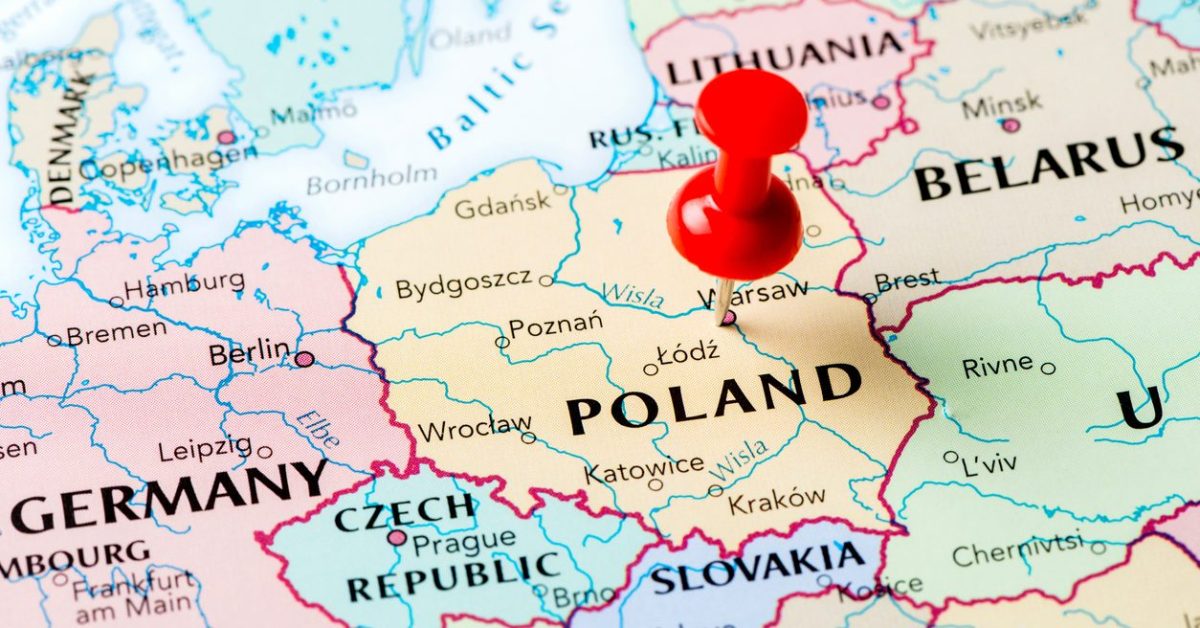
On the night of September 9-10, around twenty Russian drones violated Polish airspace, flying over both Ukraine and Belarus. Some were intercepted and destroyed by Polish and allied aircraft. While the material damage was minimal, the incident marked the most serious provocation from Russia against Poland to date. It underscored the escalating nature of Russian aggression in Europe, which, though primarily aimed at Ukraine, is not confined to its borders. Moscow’s intentions were clear: to intimidate Polish society, sow divisions among European political elites, expose the vulnerabilities of NATO and the European Union, and dissuade us from our steadfast support for Ukraine. Though the immediate result was the opposite—uniting Poland and Europe, and reaffirming the allies’ commitment to Kyiv—there is little reason to believe the Kremlin will desist in its attempts to test our resolve.
This provocation serves as a stark reminder of the nature of the Russian threat: direct, persistent, and systemic. Moscow’s ambitions extend far beyond territorial gains in Ukraine, or even the strategic subjugation of its sovereign neighbor. The Kremlin’s broader goal is to dismantle the European security architecture, undermine NATO, weaken the EU, and establish a security buffer zone across Central and Northern Europe. It seeks to push the United States out of the continent and drive a wedge between Europe and its transatlantic partners. This is part of a larger Russian vision for a new global order, one in which Russia, in alliance with China, seeks to marginalize Western influence and create a world more amenable to authoritarian regimes.
Russia’s brutal war on Ukraine, with its widespread devastation and staggering toll in human lives, is the most important but not only front in a broader conflict being waged against the West and its allies. Increasingly, Moscow’s tactics—ranging from massive disinformation campaigns and cyberattacks to political assassinations, sabotage, and the weaponization of energy and migration—defy the conventional notion of “hybrid warfare.” In Russian strategic culture, the lines between war and peace are intentionally blurred, with the aim of demoralizing, destabilizing, and ultimately neutralizing the adversary. The Kremlin’s actions place us, by its own design, in a de facto state of war with Russia. In such a reality, decisive action is not just necessary—it is urgent.
Poland has long sought to set an example in the face of this threat, demonstrating its resolve. Our strategy has been multifaceted: First, we have entirely severed our dependence on Russian energy, halting imports of crude oil, natural gas, coal, and petroleum products, while diversifying our energy sources. Second, we have bolstered our borders with Russia and Belarus, foremost by building physical barriers and surveillance systems to counter hybrid warfare and armed provocations. Third, we are investing heavily in defence—our military spendings set to reach $55 billion in 2026, or 4.83% of GDP—and our strategy emphasizes deterrence, with a focus on acquiring capabilities able to inflict significant losses on Russian and Belarusian forces. Fourth, we are strengthening our cooperation with NATO, the EU, the United States, and the United Kingdom, as well as with regional partners, especially likeminded, such as the Nordic and Baltic states, the Czech Republic, and Romania. Finally, Poland remains unwavering in its logistical, military, political, and economic support for Ukraine.
Despite growing war fatigue in some Western states, it is essential to remain focused on the right course of action. This requires rapidly fortifying our own defense capabilities and resilience, expand – especially military – support for Ukraine, to shift the momentum of the conflict. Additionally, there is an urgent need to intensify significantly economic sanctions on Russia, raising the cost of its war efforts. The Baltic Sea region plays a pivotal role in this strategy. Legislative changes and expanded physical capabilities are needed to counter Russian threats, including those posed by the so called shadow fleet operating in the Baltic Sea. Closer collaboration among Baltic Sea states could produce synergies, enhancing collective security and mitigating risks to military, economic, and environmental stability.
Marek Menkiszak
Head of The Russian Department
The Centre for Eastern Studies (OSW)
Poland