
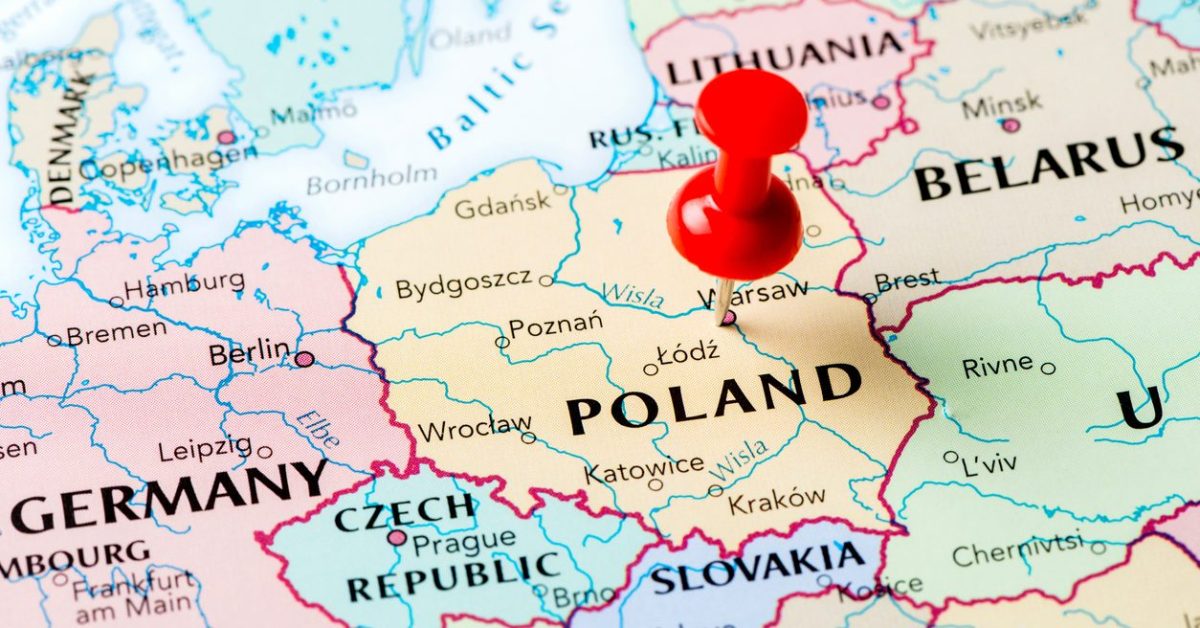
The geopolitical positions and regional security priorities of NATO members have been crucial to the Alliance’s transformation since the end of the Cold War. Thus, Türkiye and Poland are prominent countries that strategically complement each other on different flanks of NATO. While Poland assumes the primary role in the Alliance’s Eastern front against the Russian threat, Türkiye is tasked with addressing security concerns in the Middle East, Black Sea, and Eastern Mediterranean in the southern region. Recent years have seen both countries augmenting NATO’s deterrent capabilities through increased defence expenditures and active roles within the Alliance. When the mediation initiatives and defence industry contributions of Türkiye are considered in conjunction with Poland’s direct military engagements and its hosting of NATO forces on its territory, a strategic bridge is built between the eastern and southern flanks of the Alliance.
Black Sea has maintained its importance in terms of security activities since the Cold War period. The Turkish Straits are gates that open the Black Sea to the Middle East; thus, NATO assigned Türkiye as the power in its southern flank to monitor the Black Sea and mitigate potential risks in the region. NATO’s 2023 Vilnius Summit features a notable focus on the Alliance’s Southern flank, which is viewed in NATO documents as a key frontline in the Alliance’s struggle against Russia, Iran and China. The report, released in May 2024, highlights three key points regarding the region: Russia’s role in fueling regional instability and tensions; the threat to NATO’s maritime security posed by Russia-Iran cooperation; and China’s growing influence on military and naval forces, as well as its control over ports. Thus, Türkiye’s importance for NATO for regional security and stability is steadily increasing as the second most significant military power of the Alliance, also allocating its defence spending to 2.09% of GDP as of 2024, representing an increase of approximately 39%, aligning with NATO’s criteria, which made a substantial contribution to burden sharing within the Alliance.
On the other hand, Poland possesses a deep prudence against external threats, since Nazi Germany and the USSR occupied it in the 20th century. Russia’s 2014 annexation of Crimea caused a shift in Poland’s defence policies, but the real turning point came with the full-scale invasion in 2022. The country’s historical memory and geopolitical proximity to Russia have led it to adopt rapid and radical defence policies in the aftermath of the war. As of 2024, Poland had the highest defense expenditure among the NATO countries, allocating more than 4% of its GDP to defense in 2024. It aims to increase this ratio to 4.7% by 2025, which would leave all allies behind, including the US. Poland has emerged as the most significant logistical and operational centre in the Eastern flank of the US and NATO. The US Army V. Corps Forward Command in Poznań, the Aegis Ashore missile defence site in Redzikowo and the massive equipment storage facilities in Powidz are significantly boosting NATO’s deterrence capacity in the region. Moreover, the logistics centre in Rzeszów (POLLOGHUB) facilitates the transit of 80% of aid to Ukraine.
Both countries are strategically crucial for NATO by their positioning on either side of the Alliance, each with its own distinct priorities. However, the common point that the two countries share in NATO is being the most critical allies against the Russian threat. Poland, due to its geographical location, is the most critical NATO country that Russia could target after Ukraine. It has a dual role as both a front line and a strategic buffer zone for Europe’s defense. On the other hand, Poland’s aspiration to be Europe’s largest conventional army by 2035 is essential not only in relation to Russia but also in terms of the balance of power within NATO. Therefore, this military capacity makes it a natural candidate for critical roles such as NATO Land Forces Command (LandCom). Positions of this kind, which Türkiye has traditionally dominated due to its superior land power, may become a new arena of competition. This situation creates a new power dynamic that could mean both cooperation and competition for the two countries. However, there is cooperation rather than competition between them in defense. Poland and Türkiye have a trade capacity of approximately $12 billion and aim to increase it to $15 billion. Poland signed an agreement with Türkiye to purchase 24 “Bayraktar TB2 UAVs”; this is important since it marked the first time a NATO member country had purchased UAVs on this scale. The agreement was also considered a turning point in the acceptance of Turkish defense industry products by NATO. After the Russian invasion of Ukraine in 2022, this purchase became more meaningful, as TB2s were proven systems in terms of both deterrence and operational effectiveness. This sale strengthened Türkiye-Poland relations not only diplomatically, but also through defense industry cooperation, and Poland views Türkiye as more than just an NATO ally- a reliable partner. Moreover, during its EU Council Presidency from January to July 2025, Poland adopted the motto “Security, Europe!”; Donald Tusk’s visit to Türkiye in March 2025 highlights how Poland also considers Türkiye a strategic ally for the EU’s defense structure. Consequently, the technology sharing and cooperation between the two countries opens a new dimension within NATO, and a strategic rapprochement in Türkiye-Poland relations.
Esra Ağralı
Ph.D.
Faculty Member – Political Science and International Relations
Istanbul Medipol University
Türkiye