
Introduction
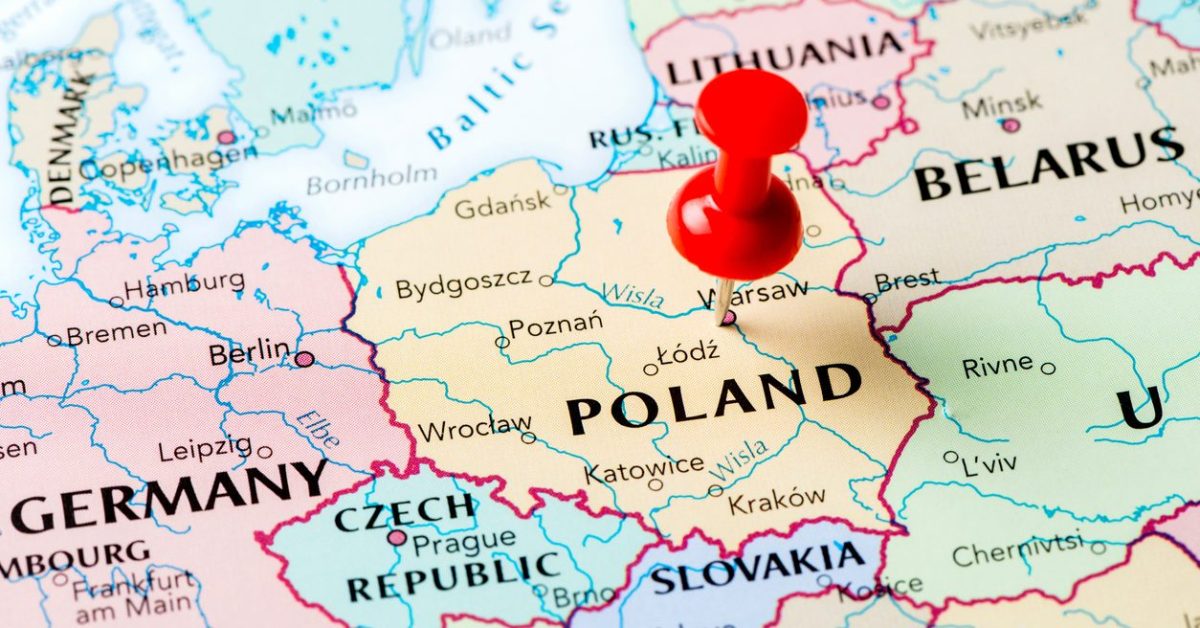
The Russian full-scale invasion of Ukraine and political instability in Belarus have created high migratory pressure on the EU’s Eastern border. Poland has been considered a frontline state, bordering Russia, Belarus and Ukraine. This position challenged Polish migration and asylum policies, as it became a target of several hostile attempts by neighbouring states. Poland is also a destination for more than one million Ukrainian refugees and several Belarusian exiled dissidents.
In this framework, it is not surprising that the Polish government, currently led by Prime Minister Donald Tusk, frames migration with national security concerns. The key objective is to protect the borders and security of Polish territory. The protection of people and borders was also a Polish priority for its Presidency of the Council of the EU in 2025.
The current policy aims to respond especially to threats of instrumentalised migration, experienced by all European countries sharing borders with Russia and Belarus. Since 2021, the governments of these states have facilitated migration movements to pressure and destabilise the EU and individual member states. In Poland, instrumentalised migration is framed as a hybrid threat and a strong common European response is demanded. Most arrivals in the Eastern Polish border have been Afghans, Syrians, Turks and Iraqis.
European Union Framework
In recent years, the EU has received around one million asylum applications annually. Poland is not among the key destination countries for refugees in the EU area. However, it hosts the second largest number of Ukrainian refugees. Since 2022, Ukrainians have had the right to temporary protection in the EU area.
The new EU Pact on Migration and Asylum was adopted by the European Parliament and Council in 2024. The adoption of the Pact equipped the EU with new operational instruments to address the changing migration realities in Europe. It is legally binding and expected to enter into force in 2026. Poland has strongly resisted the implementation, especially the so-called mandatory “solidarity” mechanism referring to the relocation of asylum seekers from member states under migratory pressure. The EU has acknowledged the special situation of Poland and its considerable “burden-sharing” of Ukrainian refugees.
Poland has also struggled with the free movement regulations of the Schengen area. In July 2025, Poland reinstated temporary border checks along the borders with Germany and Lithuania in response to public concerns over irregular migration. The decision was related to tightening border procedures in Germany and the fear of receiving back undocumented and illegally entered migrants. Even if the numbers are not significant, political posturing on stricter migration policy is essential for governments in both countries.
Taking back control?
Even if Poland is not a key destination for asylum seekers, in 2024, the number of applications has increased remarkably, with over 15,000 people applying for asylum. The main countries of origin include Ukraine, Russia and Belarus. However, there are also applications from Africa and the Middle East, especially on the Belarusian border.
In 2024, Poland adopted a new migration strategy, “Taking back control. Ensuring Security. Poland’s Comprehensive and Responsible Migration Strategy for 2025-2030”. The comprehensiveness refers to different regulations for various migration categories: students, workers, family members, and refugees. The key objective is to control foreigners’, especially asylum seekers’ access to Poland. The strategy also aims to streamline migration processes and create an effective return system. The new legislation also includes the possibility of withdrawing refugee status. However, legislation includes exceptions to protect vulnerable groups.
Poland experienced more than 30,000 attempted border crossings from Belarus in 2024. According to the government, people came from 51 different countries, with the greatest numbers from Ethiopia, Eritrea, Somalia and Syria. Consequently, Poland aims to make the border “impenetrable” by creating a buffer zone and a temporary ban on entry to prevent illegal crossings. Several civil society organisations have also reported on pushbacks along the border.
Anti-immigration sentiments and weakening standards
The changes in Polish legislation continue to implement a strict migration and asylum policy. They respond to the increasing anti-immigration sentiments in the country. This also influences the Ukrainian refugees, as nationalists demand decreasing their benefits and services.
At the individual level, the reported pushbacks endanger the right of individuals not to be returned to countries where they could face prosecution, torture or inhumane treatment. Hence, Polish policy also contests the norms of international, EU and human rights law. Also, activists who help migrants at the border are punished, which restricts the space for civil society.
Poland’s refusal to implement common EU policies undermines efforts to create a homogenous EU-wide migration framework. Country-specific exceptions also decrease the credibility of common Schengen border regulations. Overall, the weakening standards influence the EU’s image as a human rights defender.
Hanna Tuominen
Jean Monnet Professor
Centre for European Studies
University of Helsinki
Finland
hanna.t.tuominen@helsinki.fi