
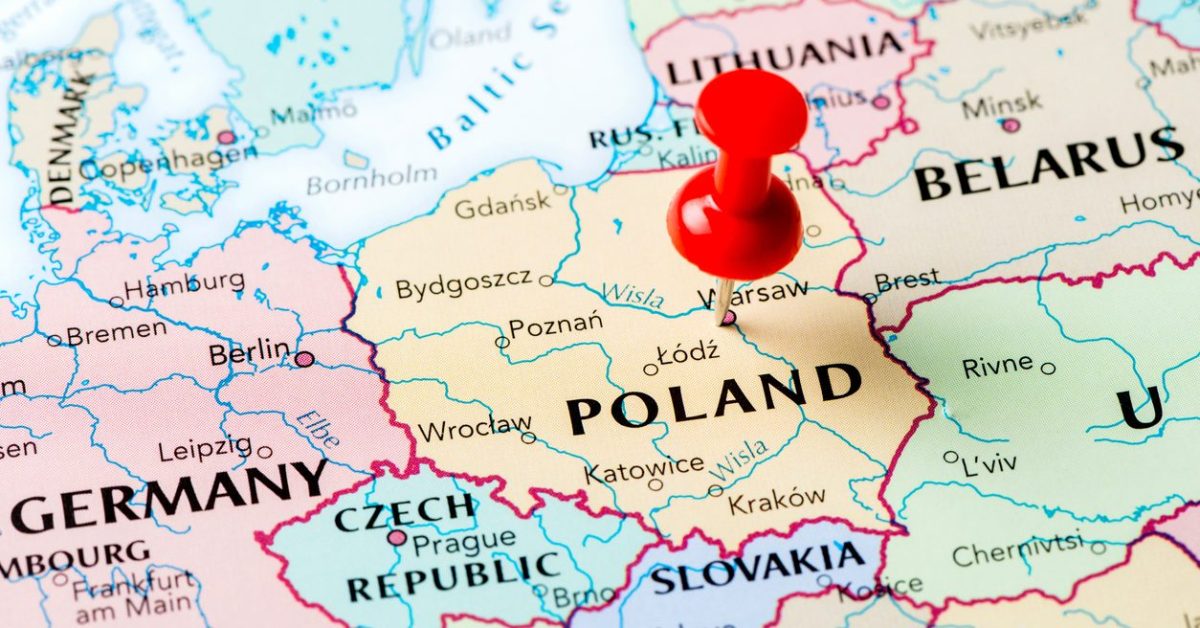
Poland’s transformation over the past three decades has been nothing short of extraordinary. Once a post-communist state grappling with high unemployment and emigration, Poland has transformed into both an economic powerhouse and a key military actor in European security. Today, Poland ranks as the 20th largest economy in the world and displays the fastest economic growth in the EU.
In Poland, the threat from Russia is fully understood. The country is modernizing its armed forces with determination, which is supported by its strong economic performance. In 2025, Poland is spending 4.7% of its GDP on defense—with plans to reach 5% in 2026—making it the top NATO spender relative to GDP and setting a new benchmark for European defense. Experts suggest that only a few European armies—such as those of Poland, Finland, and Türkiye—are currently equipped to fight a war resembling the one in Ukraine.
The foundation for Poland’s success was laid in the early 1990s, when it transitioned from a centrally planned economy to a market-based system. The reforms, though painful, created a resilient private sector and opened the country to foreign investment. EU accession in 2004 accelerated growth, bringing in generous cohesion, agricultural, and recovery funds that modernized infrastructure and boosted competitiveness. Poland has been highly effective in using the EU subsidies to develop the country.
Poland’s economic output has more than tripled since the early 2000s. Cities like Warsaw, Kraków, Wrocław, and Gdańsk have become hubs of innovation, finance, and logistics. Finnish companies have found the Polish market attractive and invested significantly. For example, Nokia employs around 7,000 people in Poland—roughly the same number as in Finland—mainly in R&D. ICEYE is a standout example of Finnish-Polish cooperation, born from an Erasmus exchange at Aalto University. Founded by a Finnish and a Polish student, the space technology start-up has grown into a leading high-tech company which has attracted strategic investments from both the Finnish and Polish governments.
Unemployment in Poland, once among the highest in Europe, is now at historic lows. The country has shifted from being a source of emigration to a destination for immigrants—bringing both opportunities and challenges. Like many European societies, Poland must balance integration efforts with public concerns and cultural sensitivities. At the same time, it faces a serious demographic challenge, with one of the lowest birthrates in Europe.
Poland’s proximity to Russia and Belarus makes it a critical frontline state for NATO. The country has become the main logistics hub for military and humanitarian aid to Ukraine, with over 80% of supplies transiting through its territory. When the time comes, Poland will be central to Ukraine’s reconstruction efforts, acting as a logistical gateway and a valuable knowledge base on Ukraine.
The Russian drone incursion into Polish airspace in September 2025 underscored Poland’s strategic vulnerability and its readiness to respond. Multiple drones violated Polish airspace, prompting a coordinated NATO response and the activation of Article 4 of the alliance treaty. The response showcased the operational capabilities and political unity of both Poland and NATO. It was also a serious wake-up call of the urgent need to develop defenses against drones.
The Baltic Sea region plays a vital role in Poland’s strategic posture. Poland has significantly increased its cooperation with the NB8 countries due to shared perceptions of the current European security situation, strong support for Ukraine, energy cooperation, and the need to build regional resilience.
Poland is currently chairing the Council of the Baltic Sea States (CBSS). Poland aims to enhance the protection of critical infrastructure—especially undersea cables and energy networks—against sabotage and hybrid threats such as GPS jamming and spoofing. It also supports countering the Russian shadow fleet. With all members now part of NATO, the CBSS can serve as a complementary forum for discussing regional security issues, including joint patrols, ship inspections, and mandatory insurance reporting for vessels in the Baltic Sea. These issues are of critical importance to all Baltic Sea states.
Poland is keen to learn from Finland’s strong civil defense system and comprehensive security model. Both countries face hybrid attacks at their borders, including the use of instrumentalized migration by Russia and Belarus. As frontline states, Poland and Finland share a common threat assessment and benefit from working together on solutions.
Poland’s dual rise—economic and military—positions it as a key player in shaping Europe’s future. While internal political tensions and fiscal challenges persist, Poland’s commitment to European defense, economic resilience, and NATO cohesion remains strong. From its transformation in the 1990s to its emergence as a thriving economy and one of the leading nations in the EU and NATO, Poland is an increasingly important strategic partner for Finland.
Päivi Laine
Ambassador
Embassy of Finland Warsaw
Poland