
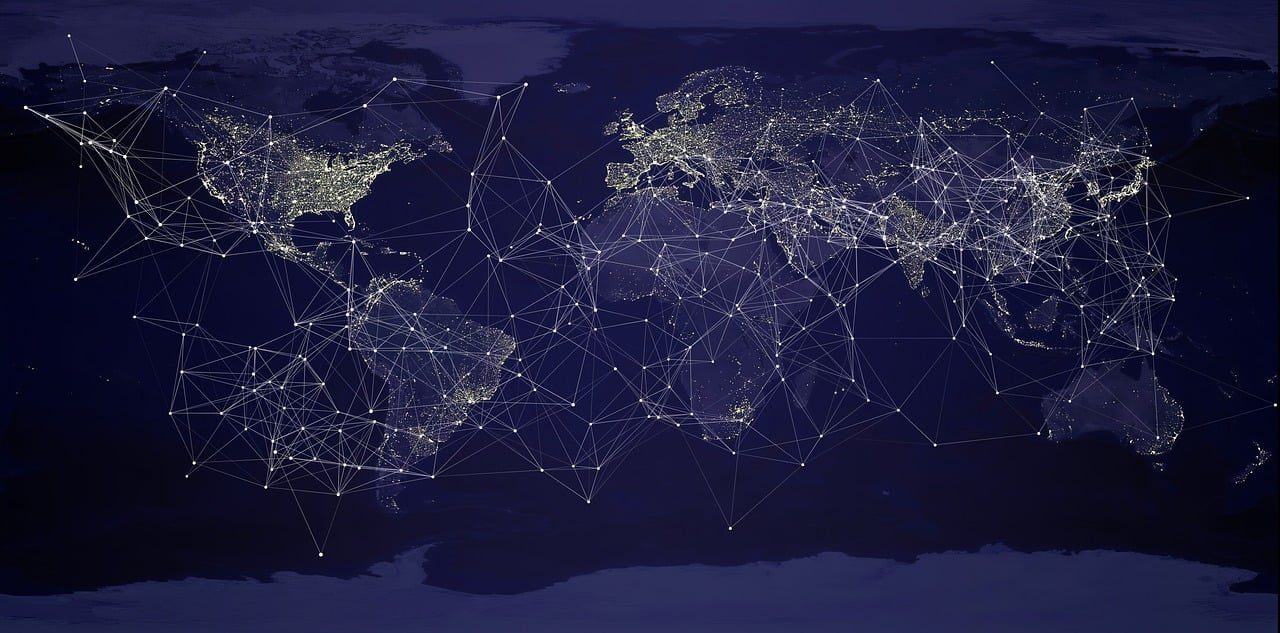
In global trade, geography has always set the stage but today information decides the performance. Naval theorist Alfred Thayer Mahan’s 1890 insight that power rests on command of trade routes still applies, yet the nature of command has shifted. More than ever, resilience is built not only via command and control but also via successful and precise risk prediction and mitigation at scale.
To illustrate the change, imagine a typical case: The leadership team at a Finnish high-technology manufacturer followed early reports of rising tension near a set of industrial towns in western Ukraine, an area known for producing wiring harnesses used across the automotive and electronics sectors. When fighting later intensified, several factories were forced to shut down. Inside the company, the news triggered a series of reasonable mitigation actions.
Crucially, the interpretations about the impacts were correct. But they were reached after the disruption was already unfolding.
This reveals a central weakness in how organisations today understand external geopolitical risk. The limitation is rarely a lack of intelligence or analytical skill. People inside organisations routinely make sophisticated, multi-dimensional sense of events. The real constraint is timing. Many organisations still form their situational understanding after the event, when costs have already begun to accumulate.
Unlike traditional analytics systems that rely on fixed parameters, artificial intelligence (large language models) can help to recognize emerging patterns in unstructured sources. Artificial intelligence is a poor forecaster, but it excels in inference: at connecting context, linking a customs regulation update in one country with freight delays elsewhere, or identifying sentiment changes that may precede price shifts. Their strength lies not in replacing human judgment but in extending its horizon. When combined with existing logistics and sensor data, they enable early identification of developing issues.
It is understandable that companies historically responded to geopolitical risk reactively. But today, with the aforementioned tools, the probabilities of such disruptions and their likely operational impacts can be estimated far more precisely than most assume. Prediction markets, structured inference systems, and large language models now make it feasible to assign auditable probabilities to emerging developments—such as policy shifts, port slowdowns, sanctions, and regional protests—before they fully materialise.
This shifts organisational sensemaking from explaining what has already happened to evaluating what is becoming more likely. Instead of multiple interpretations emerging only once disruption is visible, the organisation can observe a common probability signal as it changes. A shared probabilistic frame becomes a shared language.
Our work at Aie (whyaie.eu) applies this principle: we calculate comparable probabilities for external risks affecting specific supplier groups and sourcing categories, enabling organisations to judge alternatives on a common scale.
For the Baltic Rim, where supply chains are exposed to chokepoints in energy, shipping, and cross-border logistics, this shift is strategic. A shared pre-event situational picture allows companies to reroute shipments, hedge exposures, and adjust commitments before avoidable crises occur.
The next phase of trade resilience will depend on how effectively Baltic rim nations combine physical and informational infrastructure. Ports and ice-class vessels remain essential, but essential are also systems that interpret global supply risk signals in real time. Investing in predictive capacity is not a technological luxury; it is a strategic necessity, akin to coal, radar, or meteorological intelligence in earlier eras of maritime modernization.
As global trade faces new volatility, the Baltic region stands at the frontier. Geography defines potential; insight defines power. Predictive capabilities, supported by artificial intelligence inference, are becoming the operating doctrine for resilient trade. Just as radar once extended the vision of navies, predictive capabilities extend the vision of economies, turning uncertainty into a manageable variable rather than an unknown unknown.
Aie (whyaie.eu)
Finland

Senior Geopolitical Analyst
Aie (whyaie.eu)
Finland