
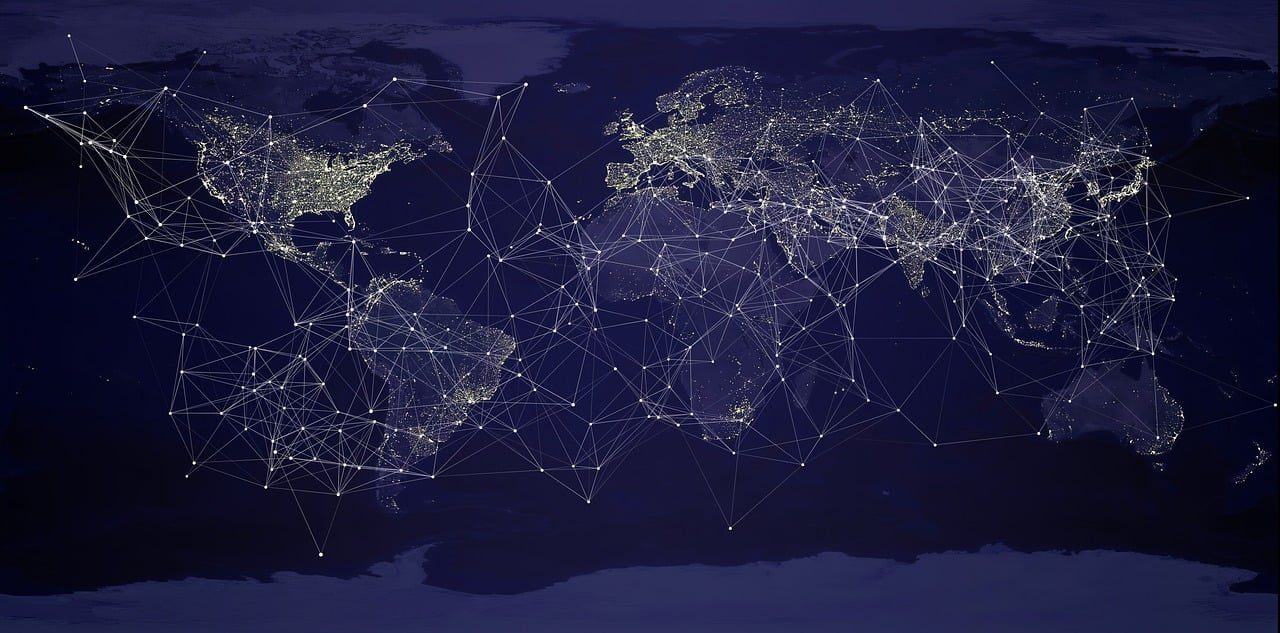
Building upon the UK’s flagship foresight publication of Global Strategic Trends [1] there is the recognition that the global security environment is subject to a set of powerful, interacting drivers. These include intensifying competition among major powers, the growing influence of regional and non-state actors, demographic shifts, technological innovation, climate change, and increasing inequality. Each act both independently and in combination with others, accelerating or counteracting trends in ways that are often unpredictable and contradictory. The result is a future operating environment that is more volatile and contested but also more interconnected and ambiguous than ever before, defined by complexity, uncertainty, and rapid transformation.
Technological change is therefore both a driver and a disruptor within this environment, where boundaries between state and non-state authority are anticipated to become increasingly porous. This trend is being driven by the proliferation of open-source information, the commercialisation of intelligence services, and the widespread availability already of advanced technologies such as sensors, AI, and data analytics with quantum and ASI on the horizon. All of which are transforming military capabilities and the very character of conflict through the democratisation of intelligence, which refers to the increasing accessibility of intelligence capabilities—collection, analysis, and dissemination—beyond the exclusive domain of nation-states. The advent of commercial satellite imagery, open-source intelligence platforms, and powerful analytical tools has widened the playing field. Corporations, non-governmental organisations, activist groups, and even individuals can now access and exploit information that was once the exclusive preserve of national intelligence agencies. Defence planning in the future operating environment must therefore account for the influence and potential partnership—or opposition—of such non-state actors, including commercial and third-sector entities.
The abundance of data and the proliferation of information sources through such democratisation present both opportunities and challenges. On one hand, the availability of open-source and commercial intelligence can enhance situational awareness and enable more informed decision-making. On the other hand, the sheer volume of information increases the risk of decision paralysis, confirmation bias, and the inadvertent or deliberate spread of mis- and disinformation. This will have profound implications for defence policy and alliance structures, where the need for verification and trust in intelligence will remain in tension with the desire for speed and agility, as actors seek to exploit fleeting opportunities in a rapidly changing environment. In turn, there will be significant consequences for the security and conduct of operations and the protection of sensitive information both now and in the future.
Forces will need to be designed for agility, redundancy, and the ability to operate in environments where information is contested, resources constrained and attribution difficult. In response the line between state and non-state authority will continue to blur, as states outsource functions to commercial actors with independent capabilities who can provide cheaper, more appropriate and timelier rebuttal and surge capacity. The rapid advancement and diffusion of core AI systems across all domains will enable this further, with the ability to trawl, process and aggregate a myriad of data sources, both structured and unstructured, and draw insights that would have been beyond previous human capability. Constraints will be more through ethical and legal considerations (such as privacy and GDPR legislation) than technical limitations which less scrupulous actors/regimes will capitalise upon. Although arguably ceding power to private entities, such an approach enables states to better focus critical specialist resources on the intelligence capability demanded by governments to underpin national security decisions at the highest classification.
In summary, the democratisation of intelligence and the growing influence of non-state actors present both challenge and opportunity for future security. The combination of such information proliferation along with wider accessibility through AI systems is set to reshape the integration and interoperability of defence and security. Whilst fundamentally the principles remain unchanged, the speed and efficacy of an increasing suite of information tools offers the promise of enhanced situational awareness, faster decision-making, and more effective coalition operations. Perversely it also introduces new risks related to fragmentation, trust, and control as well as the spread of unverified and mis-information – with the need still for assured national assets with specialist tradecraft.
Neil Rawsthorne
Head Strategic Foresight
Defence Futures and Force Design
UK Ministry of Defence
UK
