
When President Woodrow Wilson announced in 1917 that the United States would enter the First World War, he had to persuade the American public that this dramatic reversal was necessary. Only the year before, the Democratic president had campaigned under the slogan “He kept us out of war”, attempting to bring the European belligerents to the negotiating table. Because Wilson refused to identify an ultimate culprit for the war, the gesture provoked particular outrage in Britain and France.
Behind Wilson’s reversal lay a growing distrust of Germany. The country had effectively fallen under the rule of conservative generals. It had launched unrestricted submarine warfare, threatening American shipping.
Yet Wilson was not merely a practitioner of realpolitik. He was driven by a broader progressive vision resting on two central pillars: the right of nations to self-determination and a system of international cooperation. These universalistic ideas found their institutional expression in the League of Nations, which became the central system of collective security established after the First World War. The United States itself, however, never joined the League. The Republican-controlled Senate feared that membership would strengthen the president at the expense of Congress and permanently draw the country in European conflicts.
Wilson’s outlook came to be associated with American exceptionalism: the belief that the United States occupied a unique position as the guardian of international order. Although American foreign policy in practice often fell far short of high-minded idealism, the country continued – at least rhetorically – to justify its power through universal values and principles such as liberty and democracy.
Even in 2015, former vice president Dick Cheney titled his book Exceptional: Why the World Needs a Powerful America.
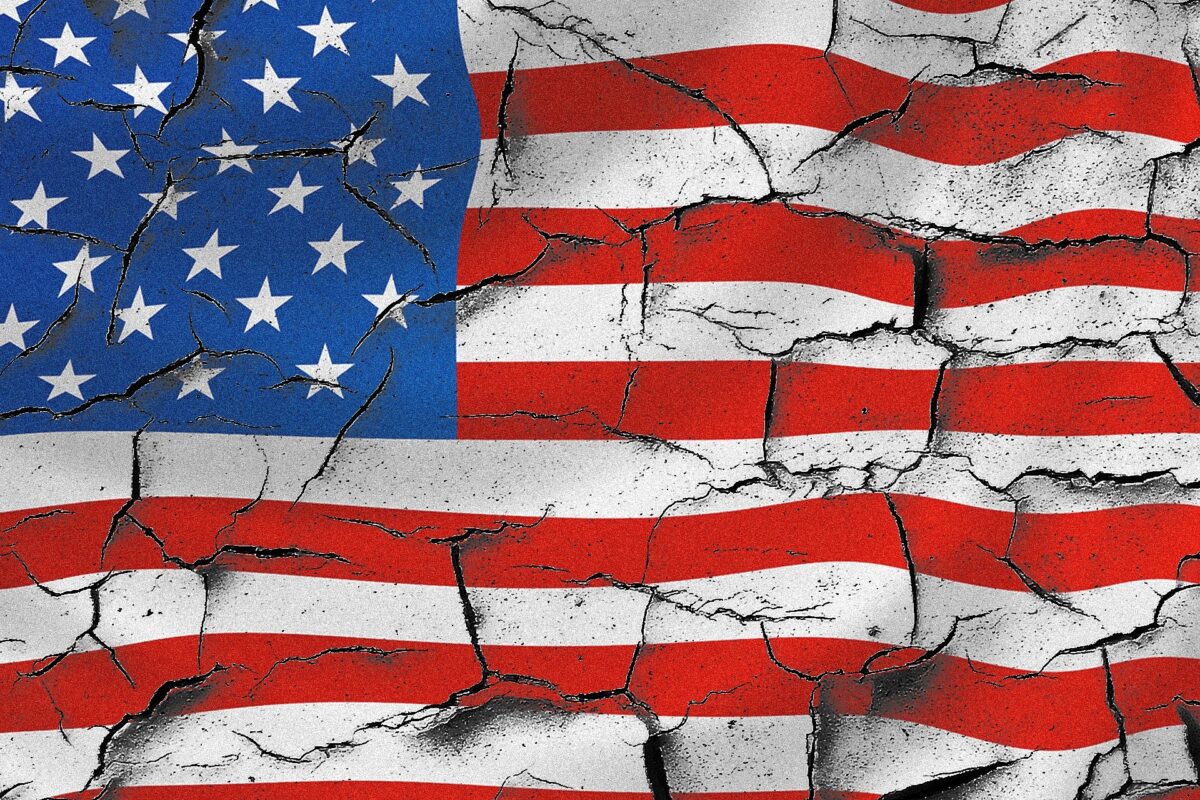
Does the present disorder mark the end of American exceptionalism?
Donald Trump’s “America First” politics is steeped in nostalgia for a lost age of greatness. Yet its deeper ambition is almost the reverse: to relieve the United States of the burden of being exceptional: to turn it into a country like any other, with no claim to moral supremacy and no obligation to police the world.
In this sense, MAGA is a grand project of normalization. Trump is its national therapist, offering America a simple reassurance: you no longer need to be exceptional. You can be normal.
Some trace the death of American exceptionalism back to Trump’s first term. The U.S. pulled out of the Paris climate agreement, walked away from the Iran nuclear deal, and announced it was leaving the World Health Organization. But these moves still came wrapped in a rhetoric of truth-telling: climate change was a hoax, the WHO was hiding what it knew about the coronavirus’s origins. Trump’s second term doesn’t bother with the pretense – decisions no longer need justifying. Period.
Think of the AI-generated video Trump shared on social media, depicting a rebuilt Gaza where tourists gather around golden statues of Trump while bearded belly dancers perform nearby.
There is no longer a great lie, no final mask waiting to be torn away. There are only old masks covered by new ones.
Maybe that’s why satire is losing its grip too. Saturday Night Live keeps parodying scenes from the Trump administration, but the sketches don’t land anymore. When power’s own performance is already shameless and grotesque, satire loses its purpose: it has nothing hidden left to expose. The sketch just repeats what power has already put on display itself.
But if Trumpism rejects the Wilsonian idea of an American mission, exceptionalism itself has not disappeared. It survives in the assumption that the United States should remain exempt from the constraints it imposes on others. Alliances can be treated as commercial contracts, international agreements as optional and economic power as a licence for unilateral action. Other countries must take American interests into account, while the United States owes them no comparable obligation.
”“The exceptionalism of mission is giving way to an exceptionalism of exemption.”
This is exceptionalism but stripped of universalism. The United States no longer claims a special right to lead because it embodies values shared by humanity. It claims a special right to stand apart because it is powerful enough to do so. The exceptionalism of mission is giving way to an exceptionalism of exemption.
The contradiction is that this transformation may weaken the power on which it depends. Trump’s foreign policy is directed above all at containing China, yet his methods erode the alliances and institutions that make American influence global. The dismantling of USAID is one example. The widening rift with Europe may become another. Trump wants to weaken China, but in doing so he is also weakening the United States.
The question, then, is not simply whether American exceptionalism is coming to an end. We should ask what kind of exceptionalism is taking its place. Trump may be ending the belief that America must be exemplary without challenging the belief that it is entitled to exceptions.
Timo Miettinen
HCAS Fellow
Helsinki Collegium for Advanced Studies
University of Helsinki
Finland
