
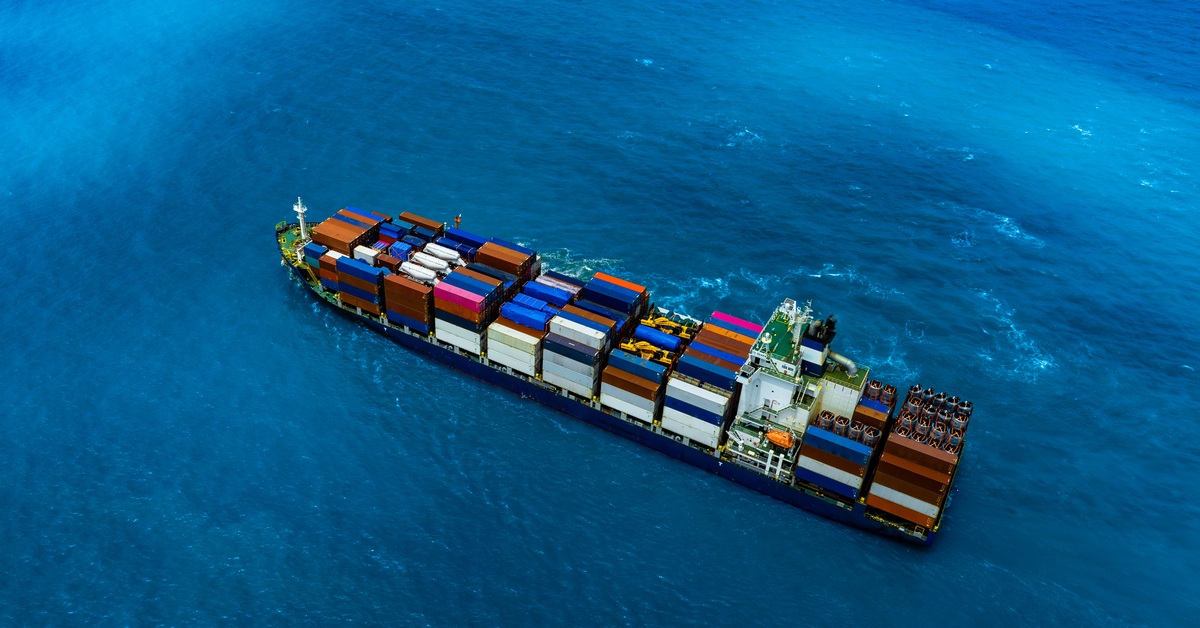
Maritime transportation is crucial for life and business around the Baltic Sea. However, the transport sector emits greenhouse gases such as carbon dioxide (CO2), which significantly contribute to the climate crisis. To address this challenge, shipping and port operations must transform to become environmentally, economically, and socially sustainable. Ports play a key role in reducing CO2 emissions and advancing this transformation.
A cross-border partnership of Finnish (including Åland), Swedish, Estonian, and Latvian organizations is tackling sustainability in ports through the Interreg Central Baltic project Sustainable Flow. Led by Satakunta University of Applied Sciences, the partnership includes Fintraffic VTS, Åland University of Applied Sciences, the Swedish Maritime Administration, the Swedish Confederation of Transport Enterprises (TPF), Tallinn Technical University/Estonian Maritime Academy, and the International Transport Development Association. Together, they bring extensive scientific and practical expertise on ports and sustainability. Seven pilot ports are actively involved, aiming to develop a decision-making tool that offers practical solutions for reducing CO2 emissions in ports and other intermodal or multimodal transport systems.
There is an old saying that once you have seen one port, you have seen only one port—every port is unique. This is certainly true of the Sustainable Flow pilot ports:
• Port of Rauma, Finland
Owing to significant container terminal investments, Rauma has become the largest container port on Finland’s west coast. Shore power and crane power connections are among the reforms supporting its sustainable development.
• Port of Pori, Finland
Pori’s large port area supports the wind power industry, and this role is expected to grow as demand for renewable energy increases.
• Port of Mariehamn, Åland
Primarily a passenger port with minimal cargo operations, Mariehamn faces the 2030 shore-side electricity mandate for ships, necessitating both grid upgrades and new energy generation solutions.
• Port of Norrköping, Sweden
As one of Sweden’s most vital maritime transport hubs, Norrköping has invested in new cargo-handling facilities and infrastructure. Notable developments include a state-of-the-art container port and a combi terminal.
• Port of Oxelösund, Sweden
Owned jointly by industrial group SSAB Ltd. and the municipality of Oxelösund, the port’s logistics operations offer comprehensive transport-chain solutions. Its strategic location near open sea and an ice-free channel reduces pilotage distances, saves time, and lowers costs.
• Port of Riga, Latvia
As the largest of the pilot ports, Riga is a multi-purpose hub handling all types of cargo. By 2030, the goal is for 90% of its energy use to come from renewable sources. Its business cluster comprises the port authority and around two hundred private companies.
• Port of Tallinn, Estonia
One of Europe’s largest passenger ports, Tallinn has cargo facilities capable of increasing traffic. It aims for full carbon neutrality by 2050 at the latest.
Despite their different ownership structures and operating environments, all pilot ports share a commitment to a more sustainable future. Meeting the need for sustainable development should be viewed as an opportunity rather than a constraint. Because funding is always limited, investments must be carefully prioritized to yield tangible environmental benefits.
The diversity of the pilot ports—each with its own starting points, ownership models, and operational profiles—ensures that solutions developed are widely applicable. The ultimate outcome of the Sustainable Flow project will be an open-source digital decision-making tool that supports CO2 reductions in ports and related transport systems. By tailoring practical solutions to a broad range of situations, the project will help ports of all sizes work toward a cleaner, more sustainable maritime sector.
Heikki Koivisto
Sustainable Flow Project Manager, Master Mariner
Satakunta University of Applied Sciences, Maritime Logistics Research Center
Finland

Minna M. Keinänen-Toivola
Chief Researcher, adj. prof., Ph.D.
Satakunta University of Applied Sciences, Maritime Logistics Research Center
Finland