
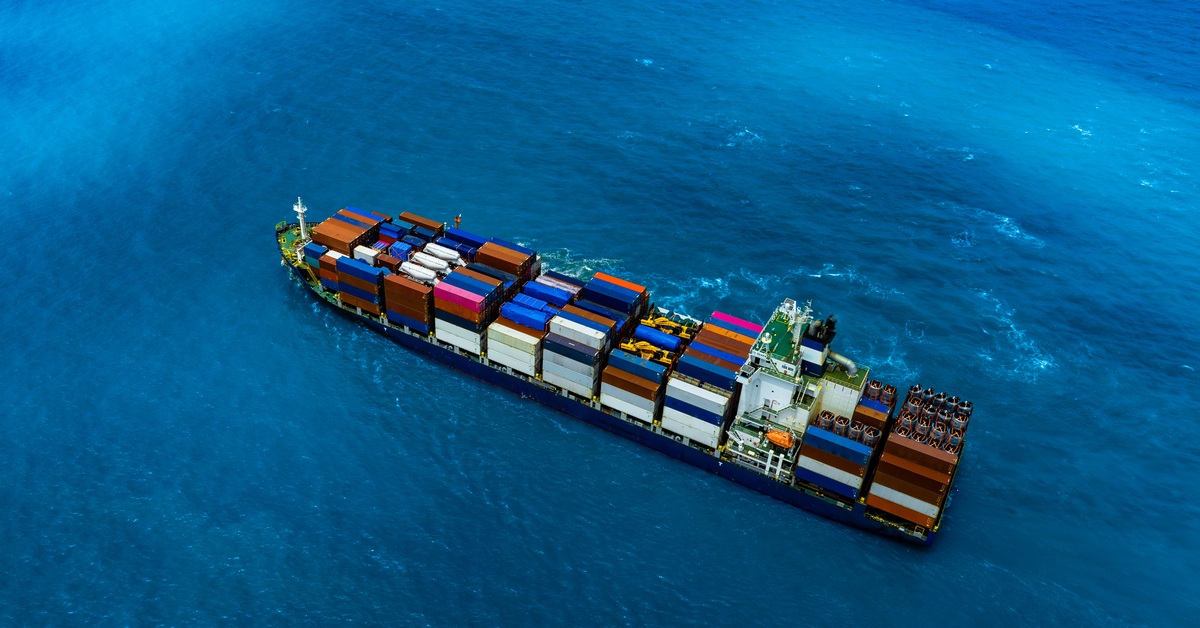
The maritime transportation and logistics sector is a cornerstone of European and global trade, responsible for moving approximately 90% of the EU’s external trade and 40% of its internal trade. However, according to IMO (International Maritime Organization) data, its environmental footprint is significant, contributing nearly 3% of global greenhouse gas (GHG) emissions. The sector faces increasing pressure to reduce the effects of air, water, noise, and shipbreaking pollution, as well as reduce waste and habitat destruction. For example, eutrophication mitigation is especially important for the Baltic Sea region. These skills implementation is necessary to adhere to stricter EU environmental regulations such as the European Green Deal and the Fit for 55 package, which encompasses the Zero Pollution Action Plan, the FuelEU Maritime Regulation, the Alternative Fuel Infrastructure Regulation and the extension of the Emissions Trading System (ETS) to maritime transport, and adopt sustainable practices. Addressing these challenges requires equipping maritime professionals with the necessary set of skills, enabling them to implement energy-efficient operations, reduce emissions, and comply with evolving EU and international regulations.
Despite the urgency, gaps remain in the education and training of maritime specialists regarding environmental sustainability. Many existing curricula in European higher education institutions (HEIs) still lack comprehensive modules on sustainability and environmental accountability set of skills, leaving graduates ill-prepared for the sustainable transition. This gap is especially visible when taking into account the future needs of the industry. Additionally, lifelong learning opportunities for professionals already in the industry are limited. Mainly because of the shortage of specialised programmes oriented on maritime professionals, the high cost of training, which is not easy to get for smaller companies or individuals, separate role plays a lack of standardisation and gaps in regulations and policies, as well as limited support from the companies behalf, who are looking for a short-term efficiency over a long-term investments in education.To successfully integrate sustainability and environmental accountability skills into maritime education, European HEIs need to undergo curricular transformation more efficiently. Current programs focus mainly on traditional supply chains, logistics and maritime commerce, and navigation, often sidelining sustainability. A paradigm shift is necessary, embedding planetary sustainability and environmental accountability competencies into core maritime studies.
HEIs could incorporate modules on sustainable shipping technologies, alternative fuels, carbon footprint reduction strategies, systems thinking, logistics optimisation, and circular economy principles in alignment with EU climate policies. Collaboration with industry stakeholders ensures that educational programs align with real-world sustainability challenges. Institutions such as the World Maritime University (WMU), with their last year Summer Academy course on Maritime Decarbonization, and the European Maritime Safety Agency (EMSA) with offering a toolbox of pollution response services, have already taken steps by offering specialised programs in maritime sustainability, serving as a model for others to follow. However, resistance to change in educational institutions, logistical constraints and shipping industry itself pose challenges. Faculty training, curriculum redesign, and securing industry partnerships require significant investment in both time and resources. Despite these hurdles, the long-term benefits of equipping students with green skills – ensuring compliance with the EU’s ETS for shipping and IMO sustainability regulations – outweigh the initial costs.
Due to technological advancements and regulatory changes, the European maritime industry is rapidly evolving, requiring continuous learning among professionals. Traditional degree programs alone cannot suffice, so professionals must engage in lifelong learning to stay updated on sustainable practices. Short-term certification courses, online learning platforms, and professional development workshops play a principal part in bridging knowledge gaps, as well as enabling independent and multiform learning to reach a desired professional set of skills. Initiatives such as the European Green Deal, the EU’s Skills Agenda, and the IMO’s Maritime Training Program promote lifelong learning by providing resources and structured training programs. Luckily, more and more companies are starting to increase their investment in sustainability training for their workforce, recognising that continuous education promotes compliance and improves work efficiency, which hopefully will make changes in this direction.
EU policymakers, HEIs, and industry leaders must collaborate more to create policies that integrate sustainability into maritime curricula and professional training. For example, in Finland, the Ministry of Economic Affairs and Employment has launched a development programme for sustainable maritime industry in 2022 in cooperation with Business Finland. The programme’s coordinated measures aim to use resources more efficiently and increase leverage. Furthermore, standardising green skills training across HEIs in EU member states can create a uniform benchmark, ensuring that maritime professionals possess comparable sustainability competencies.
A multi-stakeholder approach, continued efforts in policy development and industry collaboration are vital for effective sustainability skills implementation into education of maritime specialists.
Olena de Andres Gonzalez
Specialist researcher, Ph.D.
Satakunta University of Applied Sciences
Finland

Researcher, Lecturer, BEng
Satakunta University of Applied Sciences