
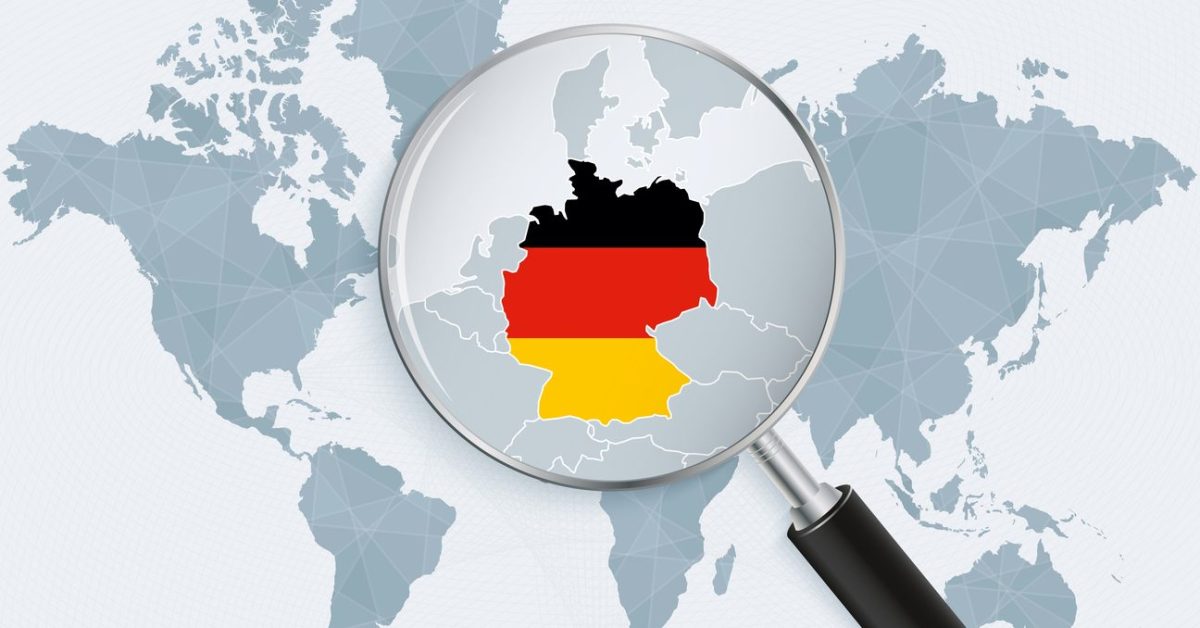
Germany and its foreign and security policy are in a transitional phase. The governing coalition of Social Democrats, Greens, and Liberals collapsed in November 2024 due to disagreements over the federal budget and the constitutional debt brake, in the context of ongoing financial and military support for Ukraine. General elections are scheduled for February 2025. In this politically charged environment, core aspects of the Zeitenwende, along with broader foreign and security policy issues, are expected to be points of contention in the election campaign.
This trend was already evident in recent regional elections in Brandenburg, Saxony, and Thuringia, where the far-right Alternative für Deutschland (AfD) and the new populist Bündnis Sahra Wagenknecht (BSW) achieved significant electoral gains. The BSW successfully centered its electoral campaign on criticizing the government’s military support for Ukraine and the planned deployment of US medium-range missiles on German soil. Although both policy issues lay beyond the realm of regional politics, the BSW effectively tapped into public fears and frustrations, which were especially prevalent among East Germans.
Germany’s Zeitenwende, or “watershed,” was first articulated by Chancellor Scholz on February 27, 2022, just three days after Russia’s full-scale invasion of Ukraine. In a special session of the Bundestag, Scholz described Russia’s aggression as a historical turning point, announcing sweeping changes to German foreign policy. These included weapons deliveries to Ukraine, substantial increases in defense spending—including a €100 billion surplus budget requiring constitutional adjustments—procurement of new military capabilities like armed drones and F-35 fighter jets, the initiation of European defense projects, and strengthened NATO deployments on the eastern flank.
The Zeitenwende became emblematic of a broader transformation in Germany’s foreign policy, as I described in more detail elsewhere. Scholz’s address and subsequent statements signaled a departure from the country’s traditional role as a civilian power, characterized by skepticism toward military force and restraint in military interventions. Instead, Germany embraced a shift toward hard security and deterrence, with Scholz declaring his country “willing, together with its allies, to defend every square meter of NATO territory” and aspiring to become “a guarantor of European security.” Foreign Minister Annalena Baerbock echoed this sentiment, advocating for Germany to abandon its long-standing “unique restraint” in foreign and security policy.
The coalition of SPD, Greens, and FDP moved to end long-standing debates on issues such as procuring armed drones, Germany’s participation in NATO’s nuclear sharing, exceptions to the principle of not delivering weapons into conflict zones, and meeting NATO’s 2 percent defense spending target (the Wales pledge). However, the implementation of the Zeitenwende has fallen short of its ambitious rhetoric. Many proclaimed changes either failed to materialize or were diluted during the political process. Party-political contestation hindered progress, while bureaucratic routines and administrative inefficiencies failed to adapt to the urgency of the moment, causing delays and obstruction.
Nevertheless, Germany has made significant strides in a comparatively short timeframe. Material changes include a shift from providing non-lethal assistance to supplying Ukraine with heavy weaponry, including howitzers, battle tanks, and air defense systems. The defense budget has seen drastic increases, supported by the €100 billion surplus fund, and the Bundeswehr has committed to permanently stationing a brigade in Lithuania to bolster NATO’s eastern flank. Beyond defense, Germany has enacted significant policy changes in other areas. The decision to halt the Nord Stream 2 pipeline marked a reversal for the SPD, which had long defended the project as a “purely economic” enterprise. In response to the Russian invasion, Germany diversified its energy imports and implemented substantial changes in the energy and trade sectors. Refugee policy has also evolved, driven by the activation of the EU’s Temporary Protection Directive and adaptations at local levels. Lastly, Germany’s foreign policy self-conception is undergoing a transformation. This shift is reflected, among others, in Scholz’s Zeitenwende speech, the adoption of a feminist foreign policy, championed by the Greens and Foreign Minister Baerbock, and in the new National Security Strategy—the first document of its kind for Germany.
As Germany stands at the twilight of its Zeitenwende, the question remains whether this transformative shift in foreign and security policy will endure amid domestic political upheaval and external pressures. The upcoming general elections will play a decisive role in shaping the future of this pivotal moment in German history, determining whether the policy changes that have been initiated since 2022 can be sustained or fade into twilight, overshadowed by competing domestic and international pressures.
Patrick A. Mello
Assistant Professor of International Security
Department of Political Science and Public Administration
Vrije Universiteit Amsterdam
The Netherlands
p.a.mello@vu.nl