
After three years of work, the CiNURGi project (Circular Nutrient Solutions for the Baltic Sea Region) has come to an end. Centrum Balticum is proud to have been part of the project, responsible for project communication and for the EU-level and international events and contacts. CiNURGi brought companies into symbioses to recycle nutrient-rich biomass from agricultural, municipal and industrial sources into safe fertilisers. It also gave authorities roadmaps for reducing nutrient losses in the future.
Recycled fertilisers can partially replace mineral fertilisers
The project helped turn the HELCOM Baltic Sea Regional Nutrient Recycling Strategy into practice. It mapped recyclable biomasses, evaluated the markets for recycled fertilisers and drafted a report on industry standards. Field trials around the Baltic Sea showed that recycled fertilisers can replace part of the mineral fertilisers used today.
The most important results are the policy recommendations and the pilots of new technologies. In the pilots, several companies across the region planned, procured and implemented innovative solutions. They range from a sensor that continuously measures the nutrient content of slurry, and technology that turns urine into fertiliser, to a mobile production unit for recycled fertilisers. Many are now ready for wider implementation.
Results shared both regionally and across Europe
For Centrum Balticum, the task was to make sure these results were distributed to different stakeholders. The policy recommendations were delivered to i.e. HELCOM, Policy Area Nutri of the EU Strategy for the Baltic Sea Region and other policy makers. Participation in the European Sustainable Phosphorus Platform (ESPP) helped spread the innovations at the European level. Our communication work and EU-level contacts brought the project’s messages to policymakers in Brussels, for example at the project’s own seminar at the ESNI-NERM conference in 2026. We also had nutrient recycling as a theme in our Baltic Sea Region Forum and in Baltic Rim Economies.
Connections helped to achieve the objectives
“CiNURGi was based on a long line of earlier agri-environmental Interreg Baltic Sea Region projects, so there was already a lot of knowledge to build on. This made CiNURGi effective. We already had good connections at a strategic level and worked in close cooperation with EUSBSR PA Nutri. What made me especially happy was how actively the partners carried out their local and national communication and gave us content to deliver in the project’s communication channels”, says Paula Biveson, Communication Manager of the CiNURGi project.
Taking part in projects like CiNURGi supports our mission to promote the cohesion, competitiveness and sustainable development of the whole Baltic Sea Region. The next step is implementation, and we look forward to seeing these results put to work around the Baltic Sea.
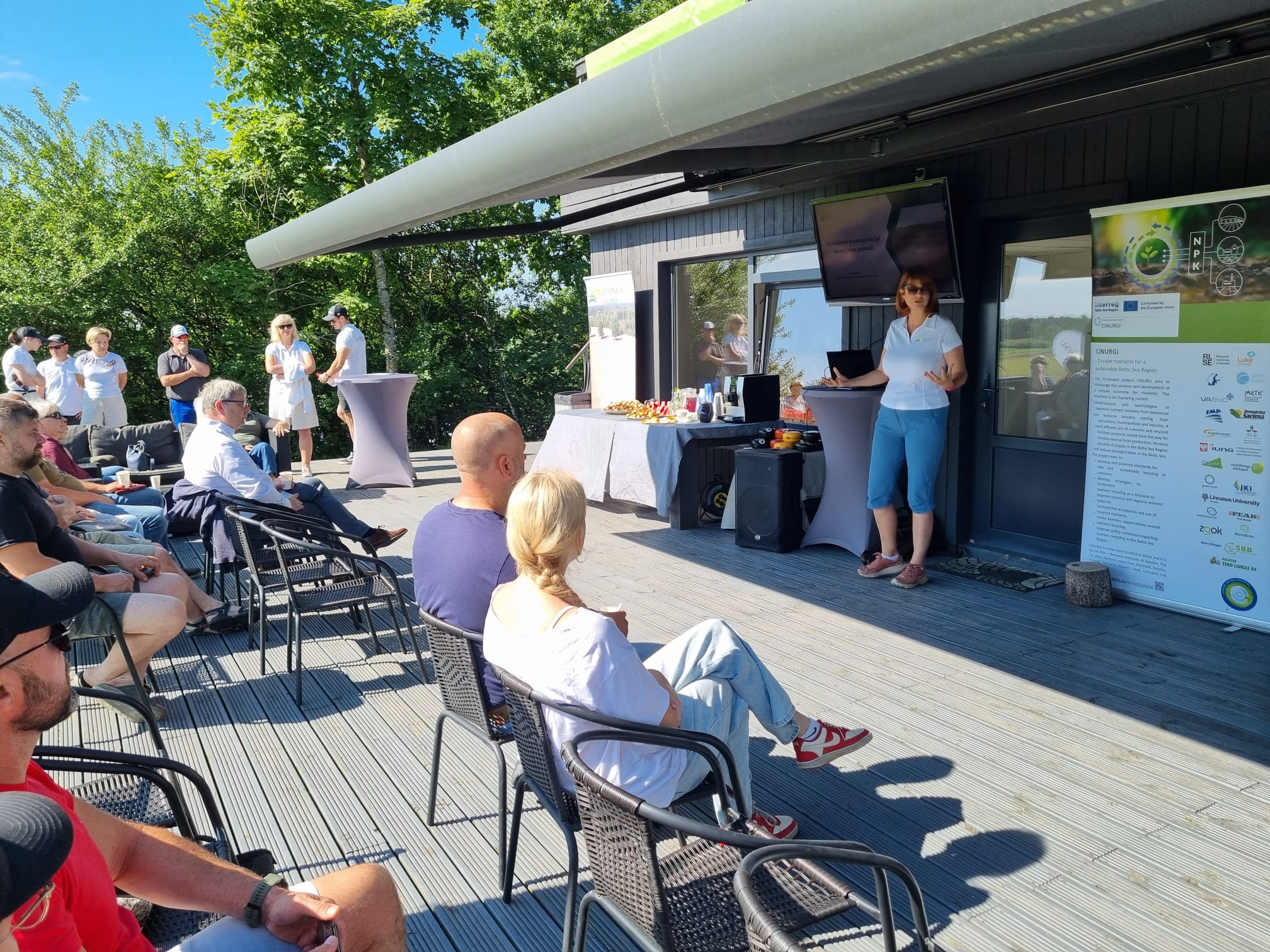
The photo presents communication coordination in practice. The CiNURGi partner Latvian Farmers’ Parliament (ZSA) organised two field days for farmers during summer 2026. The results of the project were presented by the ZSA expert Iveta Grudovska together with the deputy board chairwoman Maira Dzelzkalēja-Burmistre (ZSA) (in the picture).
