
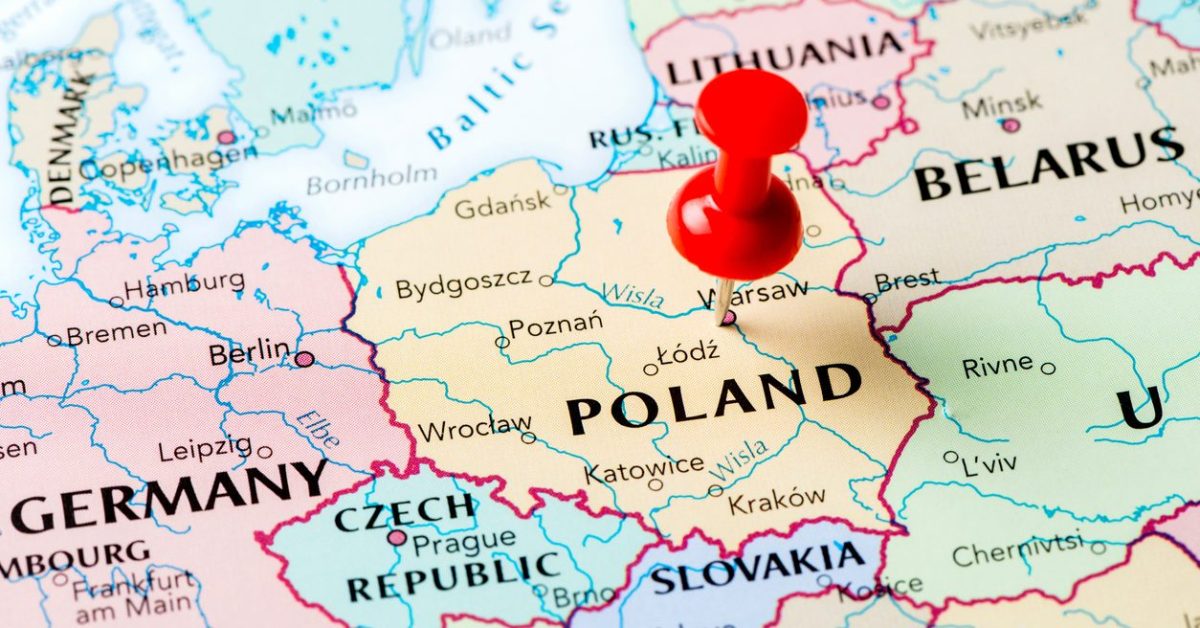
As stated in the Polish Nuclear Energy Program, part of Poland’s energy transition policy involves building two nuclear power plants. The first will be located near the seashore in Lubiatowo-Kopalino. The second is planned in central Poland, though the exact location has not yet been decided. However, it is certain that the pre-selected sites are all in the proximity to existing coal-fired power plants that are going to be shut down. This provides several advantages, including access to the existing power grid and a skilled workforce that will be available locally for construction and maintenance.
Assuming an 85% capacity factor, two nuclear power plants could generate between 44 and 67 TWh annually. This would cover around 26–39% of Poland’s present electricity demand (approximately 170 TWh). However, demand is expected to grow in the upcoming decades. According to the Polish Transmission System Operator, electricity demand is expected to rise to 215–231 TWh by 2040. A less conservative forecast by McKinsey suggests demand could increase by up to 60%, reaching 250–273 TWh in 2040 and potentially doubling by 2050 (330–363 TWh). These differences largely stem from varying assumptions about electrification of transport, heating, and industry. For example, full electrification of the Polish metallurgy sector could increase its electricity demand from about 6 TWh today to 30–32 TWh.
In advanced electrification scenarios, the share of demand met by two nuclear power plants would fall to just 12–20%. This implies that over 80% of electricity would have to come from renewable sources. Poland’s geography is unsuitable for large-scale hydropower, leaving mainly three options: biogas (including biomethane), wind, and solar. However, the latter two are non-dispatchable and require balancing. This could be problematic, as Poland—like Germany—experiences Dunkelflaute conditions, when for 7–10 days in a row both wind and solar capacity factors drop below 20%. This means that once renewable penetration exceeds 40–50%, alternative cost indicators such as System LCOE or Levelized Full System Costs of Electricity show a steep rise in overall system costs.
One possible solution could be small modular reactors (SMRs). The public–private conglomerate Orlen Synthos Green Energy plans to begin construction of the first BWRX reactor in 2028. The company already has at least six potential SMR locations with Decisions in Principle issued, which could provide up to 1800 MW of additional capacity. However, uncertainties remain around the final cost of SMRs and whether first-of-a-kind deployment issues could make them less attractive for industry.
This is why Poland should begin working on a third nuclear power plant after 2028, when the first “nuclear concrete” is poured at Lubiatowo-Kopalino. Experience gained by both Polish authorities in planning and construction, as well as by general contractors with technologies such as AP1000, EPR, or CANDU, should help reduce costs compared to the first plant. Further savings would be possible if the third plant, like the second, were located on a coal plant site, benefiting from existing infrastructure and supporting local communities during the transition. A third power plant can also benefit from the growing share of local companies acquiring the necessary experience and certifications during earlier projects.
Poland’s cautious but ambitious nuclear policy is understandable. The country is one of the few in the region without an operating nuclear plant, and the last attempt—at Żarnowiec in the 1980s and 1990s—was abandoned during construction. However, since restarting its nuclear program a few years ago, Poland has made steady progress, and public support is among the highest in the world (92.5% acceptance according to a Ministry of Industry poll in November 2024). This provides a strong foundation for expanding nuclear capacity in Poland’s future energy mix.
Adam Juszczak
Ph.D., Senior Advisor
Climate and Energy Team
Polish Economic Institute
Poland
Assistant Professor
Kozminski University
Poland
Adam.juszczak@pie.net.pl