
Can business ever bridge the divide between democracy and totalitarianism that lies between Finland and Russia?
This question came to my mind while writing my nonfiction book Ruble Princes (Ruplaruhtinaat), published in the summer of 2025. It explores the real estate deals and business activities of wealthy, influential, and well-connected Russians in Finland.
When Finland in 2000 opened its property market to buyers from outside the European Economic Area, Russians quickly and unexpectedly became the largest group of foreign purchasers. For affluent Russians, Finland was a nearby, stable, safe, efficient, and friendly country.
Before long, however, the real estate purchases and business ventures of these “luxury Russians” began to attract negative attention. Some of the properties they acquired were located in strategically sensitive areas, certain buyers’ backgrounds raised suspicion, and their business operations often seemed to involve money of unclear origin. Such property transactions were increasingly viewed as a potential security threat to Finland.
In 2020, buyers from outside the EEA were required to obtain permission from Finland’s Ministry of Defence before purchasing property. In July 2025, property purchases by Russian and Belarusian citizens were banned altogether. By then, however, Russians had already acquired thousands of properties across Finland—particularly in the southeast and eastern parts of the country.
As a journalist, I have investigated Russian property deals and business activities since the early 2000s. Among the buyers I found, for example, executives from the gas and oil giant Gazprom and Russia’s state television, IT tycoons with KGB backgrounds, and even an Orthodox oligarch reputed to have been Putin’s personal masseur.
The grand business plans of these wealthy Russians ended, time and again, in disappointment. Promised investments never materialized, and loss-making enterprises were kept alive with funds channeled from Cyprus or the Virgin Islands. Wages and contract payments often had to be recovered through legal action.
These Russians showed little inclination to adapt to Finnish values, principles, or ways of doing things. They rarely spent time with native Finns or spoke Finnish. Instead, they used Finland as a base for financial transactions, a safe haven for assets, a support for their home-country businesses, and a destination for leisure. EU residence permits and citizenships facilitated their children’s education and employment in the West. Western journalistic practices were alien to them—critical questions about the origins of their funds were met with silence or threats of lawsuits.
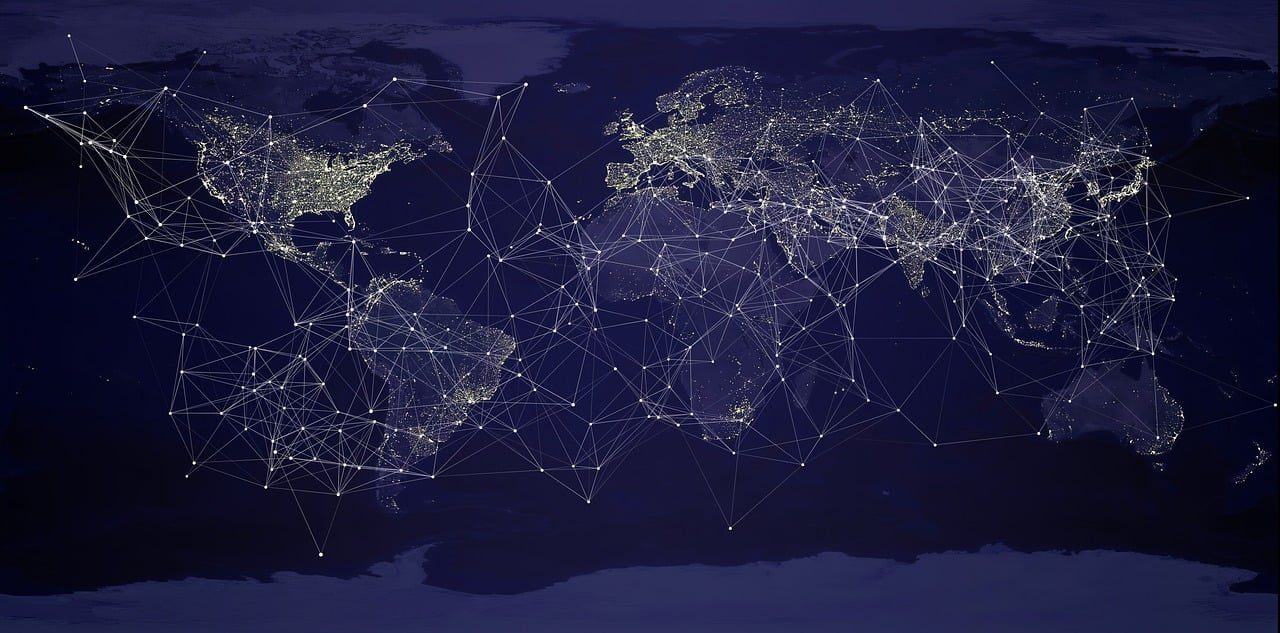
In my book, I describe the world of wealthy Russians as a vast spider’s web of power, business, and money flows stretching across Russia and beyond, with the Kremlin at its center. The closer one gets to the middle of the web, the better the positions available in companies, ministries, municipal administrations, universities, customs offices, schools, museums, foundations, associations, and other organizations – either state-controlled or nominally private – under Kremlin influence. And the closer one is to the center, the more one can siphon from the Russian taxpayers’ purse. Russia is not called a kleptocracy for nothing.
Unlike Finns, Russians have learned through history that honesty, trust, and adherence to laws and rules do not lead to success. These wealthy and ruthless Russians were received by an open, trust-based Finland, a society that naively believed all newcomers would adopt Finnish values and the principles of a rules-based state. Like the rest of the European Union, Finland steadfastly believed it was fostering Russia’s democratization, even though everything Russia did proved otherwise. For the Kremlin, preserving and rebuilding the empire and achieving geopolitical goals regarding its neighbors have always taken precedence over all else.
From the Kremlin’s perspective, small nation-states have no right to independent decision-making—they are merely parts of great-power spheres of influence and vassals of the strong. Russia seeks to influence its neighboring states through affable intermediaries, whose charm has even drawn former Finnish prime ministers into the company of Kremlin insiders – lobbying for Gazprom’s Nord Stream gas pipeline or sitting on the board of the Sberbank bank.
Russia does not seek international trust, dialogue, or interdependence that might prevent crises. It seeks only to build dependencies on Russia – while simultaneously eroding and destabilizing democracies.
The more wealthy and influential Russians are networked into Finnish society through business, property ownership, cultural connections, or political ties, the more effectively Russian authorities can influence Finnish society, including the shaping of public opinion. At worst, this could lead to an unlawful and improper erosion of Finland’s sovereignty.
Finland must reconcile its own democratic and rule-of-law principles – such as openness and non-discrimination – while protecting itself from exploitation by a neighbor representing opposite values, whether through espionage, murky business dealings, or various forms of hybrid influence.
When Russia’s war of aggression in Ukraine eventually ends and Western sanctions begin to ease, Finland’s eastern neighbor will be an even more totalitarian state than before. How, then, will Finland ensure its own interests and security in business and other dealings with Russia, when that was already difficult in the past?
Finland