
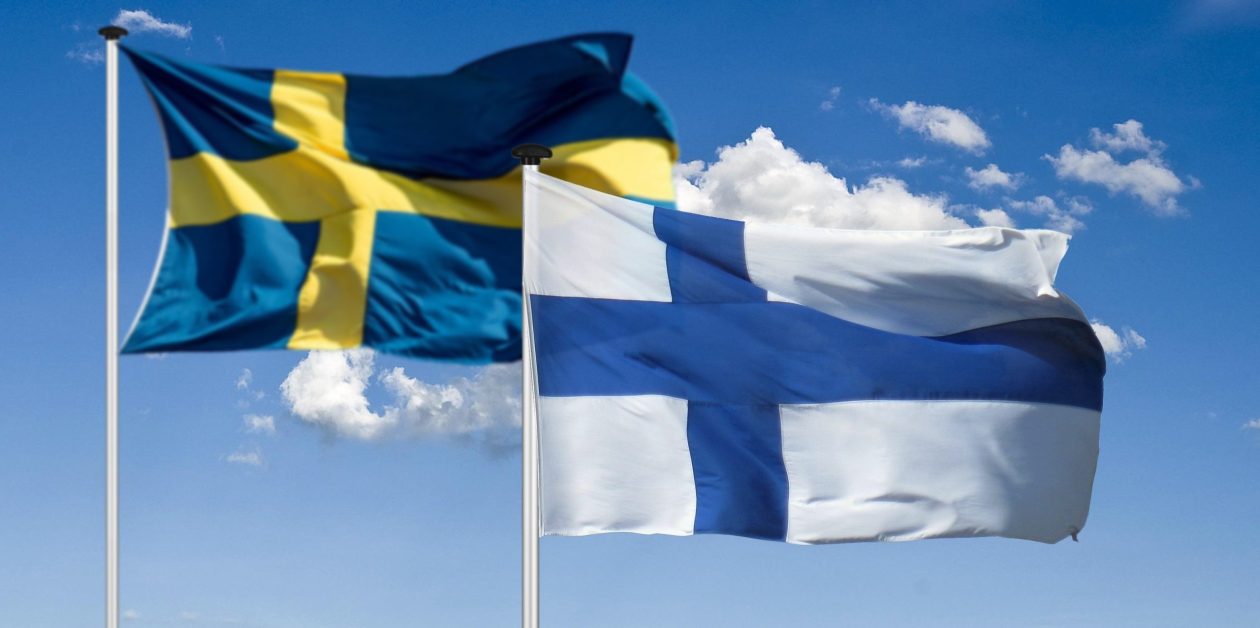
While Finland is a bilingual country and Finnish and Swedish are both national languages one could think that it could be equally easy to integrate either in Swedish or in Finnish, or that the information of both possibilities would be presented on equal matters. Unfortunately it is not really that easy. Swedish is a de facto minority language and some officials tend to have some doubts about integrating into “another minority”. Approximately 5% of Finland’s population consider Swedish as their mother tongue, they mostly live on Finland’s western and southern coasts. In the Capital Region; Helsinki, Espoo, Vantaa, and Kauniainen, which are all bilingual, over 65,000 are registered Swedish-speakers.
It is fairly common that newcomers don’t even get the information that you could integrate in either Swedish or Finnish.
Nevertheless the new Government has stated that 5 – 10 % of those moving into Finland should integrate via Swedish, so for the moment there are some positive signals about Swedish in that sense, though it remains to be seen what kind of action they will take to make this happen. At the moment there are no data on how many that have integrated either in Swedish or in Finnish, we really have no clue, and we don’t really know how they define the word integration, is it only those that have gone through an integration education or also those who have integrated and feel included in some other ways.
People are moving to Finland for several different reasons, some will come here for higher education (mainly delivered in English), some will move here for work, others are refugees or asylum seekers, Some are moving here as spouses and other family members. Depending on the circumstances for people moving in there are different kinds of support and different paths to integrate into the society, also different needs as well as different expectations.
While the authorities hardly ever actively propose Swedish as the integration language, I would like to point out some cornerstones when a language choice will be made and when it’s good to have an active role while choosing the language of integration.
First and foremost, if one has the right for an integration plan and the integration education, it could be good to ask for the integration education in Swedish. The integration education lasts for 1 ½ years and will give you a good knowledge in Swedish. The goal is that the level of language proficiency will be so high that one has reached the language knowledge that is required to apply for Finnish citizenship.
But integration education and language tests are just one part of integration, the other part is the surrounding society where you can come be a part of the Swedish speaking community.
A popular way to be included in a community is, at least if one has children, is to let the children attend the Swedish speaking daycare and education. Try to be active in the events and happenings that the school and the parent organization arranges. Usually the families are fairly open to newcomers, even if some can be a bit shy and not so talkative.
The Swedish community is rich in cultural activities where one can acquaint oneself with the Swedish culture and practice the language, such as theaters, literature, choirs, a Swedish TV and two radio channels and several newspapers. Within the Swedish community one can also find some hobbies, be brave, join an association that practices the hobby you are interested in, or start a new hobby. In most of the cities you can find adult education centers that will provide you with hobbies and activities in a wide range.
Even if you initially focus on Swedish-language integration training, you might want to explore Finnish in the future. There are job opportunities in Swedish, but since many jobs require proficiency in Finnish, you might need to study Finnish at some point. Knowing both Finnish and Swedish is a valuable asset in the Finnish job market that enhances your opportunities.
To integrate in Swedish is to integrate in the Nordics. Through the Swedish language, the entire Nordic region opens up to you.
As a conclusion one could say that the officials are not that eager to suggest the Swedish pathway for those moving into the country, and it might be good to know both Swedish and Finnish if one is about to stay in Finland for a longer period of time. The Swedish community is smaller but it might be easier to be a part of that community. Sometimes you have to be active and ask or find the Swedish option, as when you are looking for integration education, or are about to register your child education. Then it might also be easier and faster, at least for those that already master an indo european language to learn Swedish.
Veronica Hertzberg
Vice Head of the Organisation
Team Leader of the integration team
Föreningen Luckan rf.
Helsinki, Finland
veronica.hertzberg@luckan.fi
Back to Table of Contents