
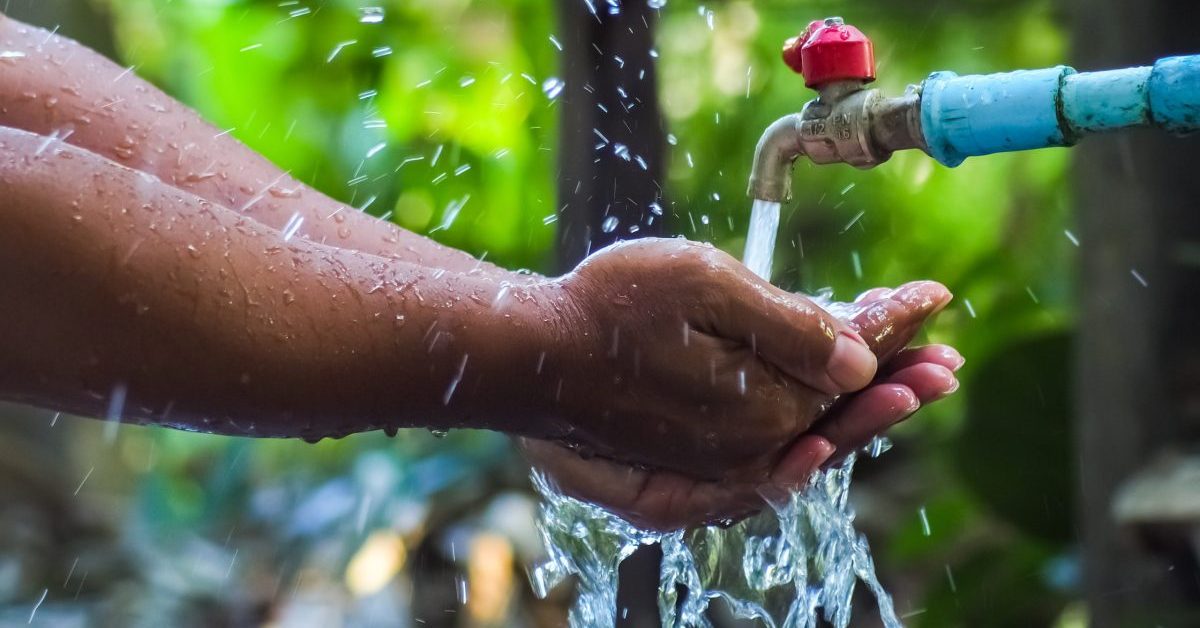
Finland is famous for abundant water sources, which form the basis for a high-quality and reliable water supply. We consistently rank at or near the top in international comparisons for both drinking water quality and sanitation. However, the security of water services can’t be taken for granted. The high security is a result of long term and continuous work and development at water utilities, different levels of governance and other stakeholders.
In Finland, municipalities are obliged to organise water services according to the needs of their population. Water services are delivered either by municipally owned water utilities or by water cooperatives owned by the water users themselves. Thus, water services are managed as a public good, which model will be further reinforced when the revised Water Services Act comes into force in 2026.
The foundation of continuous water services lies in proportionate risk management, which minimises the number of disturbances. Systematic risk assessment and management procedures are standard practice for ensuring both the quality and availability of drinking water. Nowadays, many water utilities also apply systematic risk management to areas such as cybersecurity, environmental impact, and economic viability.
In the context of risk management, the aim has always been to build redundant and flexible water supply systems. This includes, for example, utilising multiple water sources, relying on proven and secure processes, and duplicating functions and networks wherever feasible. Even robust infrastructure is put to the test during a crisis. That is why emergency preparedness and contingency management are essential for resilient water services. Water utilities have emergency plans covering a wide range of scenarios – from natural disasters, such as droughts and flooding, to technical or man-made failures like power outages, pipe bursts, and drinking water contamination.
Sound risk management, preparedness, and contingency measures are cornerstones for reliable water services, but the evolving threat landscape challenges us. Resilience requires continuous effort to ensure proportionate actions and sustained development. Challenges to water security include climate change and its effects on water quality and quantity, complex interdependencies, interruptions in the supply chains of critical materials and services, as well as digitalisation—both as a beneficial tool and as a target for cyber threats. In recent years, security authorities in Finland and across Europe have also noted an increased risk of intelligence activities and hybrid attacks targeting critical infrastructure, such as water services.
Threat awareness forms the basis for adapting to the current security landscape. This awareness is also crucial for motivating the adoption of more stringent physical, personnel, and cyber security measures, as well as enhanced data protection. In Finland, the Water Services Pool supports water utilities’ threat awareness by maintaining sector’s national situational awareness in broad co-operation with relevant stakeholders. Water utilities’ experiences in organising water services in Ukraine are also evaluated to assess our preparedness to provide services under any circumstances.
One of the greatest long-term challenges to resilient, 24/7 water services is aging infrastructure and the sector’s capacity to ensure sufficient resources for maintenance and renewal. To guarantee well-functioning infrastructure—from water abstraction and treatment to the distribution network and back to wastewater treatment and discharge—the ongoing reform of the Water Services Act aims to strengthen the financial stability and asset management of water utilities in Finland.
Similarly to the present Water Services Act reform, legislative requirements and best practices and operational procedures in Finland’s water sector have consistently evolved proactively to address emerging threats and in response to lessons learned from experienced crises situations. An excellent example of the latter is Nokia water crisis, where more than 8 000 people fell ill from waterborne outbreak in 2007. In the aftermath, contingency planning and disinfection preparedness became mandatory for all water utilities. The Nokia case also led to the development of new guidelines and best practices in crisis communication, alternative drinking water distribution, and contingency planning.
In addition to the preparedness and contingency measures taken by water utilities to ensure continuous services, it is crucial that societies are also prepared to cope with temporary interruptions to water services. In Finland, the 72-hour household preparedness recommendation advises every household to be equipped to manage independently for at least three days during various types of disruptions, such as extended power or water outages. This recommendation includes storing some liters of bottled water, as well as having a clean container for collecting and storing drinking water. Public services and private businesses should also be prepared to receive or collect alternative delivery of drinking water, or to close their water-related operations in a controlled manner.
Water resilience is a shared responsibility. All levels of governance, legislation and water suppliers as well as water users must play their part to ensure water is available and safe for all purposes, now and in the long term.
Riina Liikanen
D.Sc. (Tech.), Chief of Preparedness
Finnish Water Utilities Association
Finland
