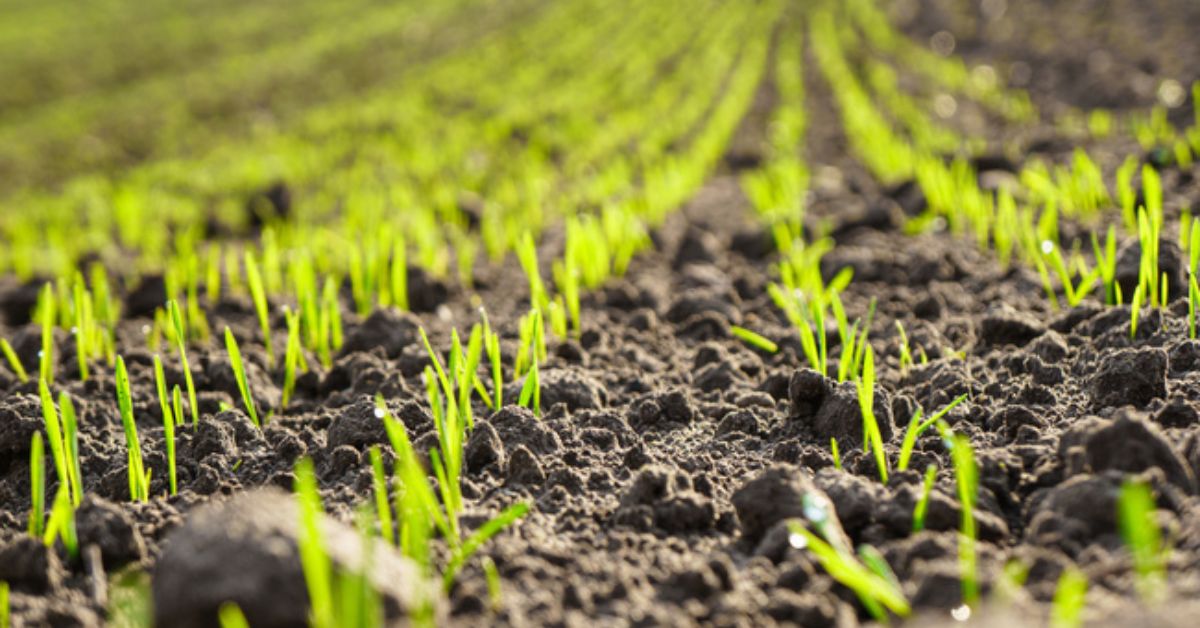
Eutrophication continues to choke the Baltic Sea as excess nutrients from agriculture fuel harmful algal blooms. But a wave of EU-funded projects is fighting back and transforming algae into a powerful tool to clean the water, create sustainable products, and build a blue bioeconomy.
It is no secret that the Baltic Sea suffers from eutrophication, a process in which excessive nutrients accumulate in the sea, leading to algal blooms that reduce light levels in the water, and ultimately deplete oxygen and harm marine life. Right now, the agriculture industry is the prime culprit, releasing large quantities of phosphorous and nitrogen into this stretch of water, largely in the form of surface run-off, which is enormously difficult to manage and control.
Help has been on hand from the Helsinki Convention (HELCOM), which keeps track of Baltic Sea health and implements environment policies via its Baltic Sea Action Plan – yet problems persist. In its latest ‘State of the Baltic Sea 2023’ publication, HELCOM simply reports: ‘The state of the Baltic Sea ecosystem has not improved’ and also outlines how the problem is worsened by climate change. However, numerous European Union-funded projects are now also tackling the issues head on. As part of these initiatives, scientists with backgrounds in algae research are working with industry to reduce industrial waste streams, and develop and market algae-based products, and eventually bring an end to eutrophication.
An algae economy
Julia Lange is the Coordinator of Germany’s Innovation Cluster, ‘Bioeconomy at Marine Sites’ at Kiel University, which currently funds 30 blue bio-economy projects, finding ways to make more of micro- and macroalgae. “We’re building a circular, sustainable economy that uses resources from the sea and other water bodies to create sustainable biomass for algae-based products,” she highlights.She is also involved in the EU-funded project, LOCALITY, brings industry players together to deliver algae-based products, including human food, animal feed, textile dyes and ingredients for medicines, to the marketplace. As part of this, the LOCALITY project members are working with macroalgae -seaweeds – grown and farmed in the Baltic Sea. “If we can take excess phosphorous and nitrogen from the water with the help of macroalgae, and then use the algal biomass for, say, human consumption, this will be a win-win for the environment and business,” says Lange. “[This] also contributes to a regional food supply, reducing reliance on imports.”
In a recent innovation, Lange highlights how teams within her Cluster ingeniously coat seeds with algal biomass and other bioactive components, which then serve as phosphorous- and nitrate-rich fertiliser for the growing plants. “These projects are really helping to restore the Baltic Sea and display potential to transform the traditional agriculture sector,” she says.
Michael Stöckler, Senior Innovation Manager of the Food and Bio Cluster Denmark, which helps businesses to accelerate sustainable innovation, also takes part in LOCALITY. He highlights how farming macroalgae in the Baltic Sea spells good news for sea-life. “When you grow algae like this, you’re reducing nutrients but also introducing new habitats and shelter for the higher-trophic-level animals, higher up the food chain, such as shrimp and fish,” he says. “The higher-trophic fish will also have more food, so in fact, [farming algae] can also help to increase biodiversity in the sea.”
Algae innovation
Professor Yagut Allahverdiyeva-Rinne and Dr Sema Sirin, are from Molecular Plant Biology at the University of Turku, Finland, and take part in ‘REALM’. The project is pioneering ways to grow microalgae – photosynthetic micro-organisms – in the drain water from Europe’s massive, soil-free greenhouses, which is rich in phosphorous and nitrogen. The resulting algal biomass can be transformed into bio-stimulants and products like plant-protection agents and additives for fish feed with the cleaned wastewater then re-used or released to the environment.Allahverdiyeva-Rinne highlights how Baltic nations and beyond need more biomass, as recently outlined by the European Commission – she is confident microalgae can play a critical role here. “Algae are what we call a third-generation biomass source as we can generate much more biomass [from these organisms] than plants,” she says. “So, by growing microalgae, we can use their biomass and also clean the wastewater before it reaches the environment… Also, the necessary technologies for this are relatively mature, so this is going to be important in the short-term.”
Allahverdiyeva-Rinne’s colleague, Sirin, believes that REALM’s decentralised approach suits Finland and other Baltic states in Northern Europe with sparsely distributed population densities. She and colleagues are currently collecting the data from trials at the project’s facilities, assessing the feasibility to grow microalgae in this way. If all goes well, operations can eventually be scaled.
“We’re dealing with a large amount of water and a continuous discharge, so we really need to make our processes efficient,” says Sirin. “Seasons change, discharges changes, but the data from REALM will provide predictability when growing microalgae like this.”
And with predictability, comes solid results. “If we can show farmers and growers that producing biomass from greenhouse drain water is not only good for the environment but also provides value and an income, then we have a real solution,” she adds.
Rising to challenges
Still, multiple barriers to progress exist. For starters, navigating the complex legal frameworks associated with growing and farming algae on land and in the sea is not always easy. “You know, on the one hand humanity dumps a lot into the oceans, and while we’re providing solutions to remove the problems we have to deal with tricky legislation,” says Lange. “Still, we’re always monitoring the situation, and it is important for algal biomass to be removed in a sustainable way.”Sirin firmly believes that appropriate legislation and ongoing investment will be critical to create a successful algae economy. “Maybe we’re not going to solve the Baltic Seas eutrophication problem today,” she says. “We’re always competing with products from conventional and established industries, but with more investment and [the right] legislation, we will have the opportunity to better-compete and bring new algae-based products to the market.”
Beyond legislation, market demand for the products that will be made from the algal biomass remains low. Then there’s the hurdle of getting, and keeping, your product into the supermarkets – pain-points that the EU projects are racing to address.
According to Lange, raising public awareness on the massive potential of the algae and the Blue Bioeconomy whilst informing different stakeholders and politicians, is critical. “People need to get to know about the great products, technologies and services that are invented,” she says. “We support, for example, education on how to extract a product from the algal biomass and then bring this to market.”
However, she is excited to see how algae biomass and products can help to reduce eutrophication in the Baltic Sea. “The results from these projects are so important to communicate what we can do with algae to the outside world, including the public and politicians,” she says. “We’re now seeing so many passionate people around Europe involved in this topic, which really gives me hope that we can use this momentum and really make a change.”Eutrophication continues to choke the Baltic Sea as excess nutrients from agriculture fuel harmful algal blooms. But a wave of EU-funded projects is fighting back and transforming algae into a powerful tool to clean the water, create sustainable products, and build a blue bioeconomy.
Rebecca Pool
Freelance Science and Technology Journalist
Germany