
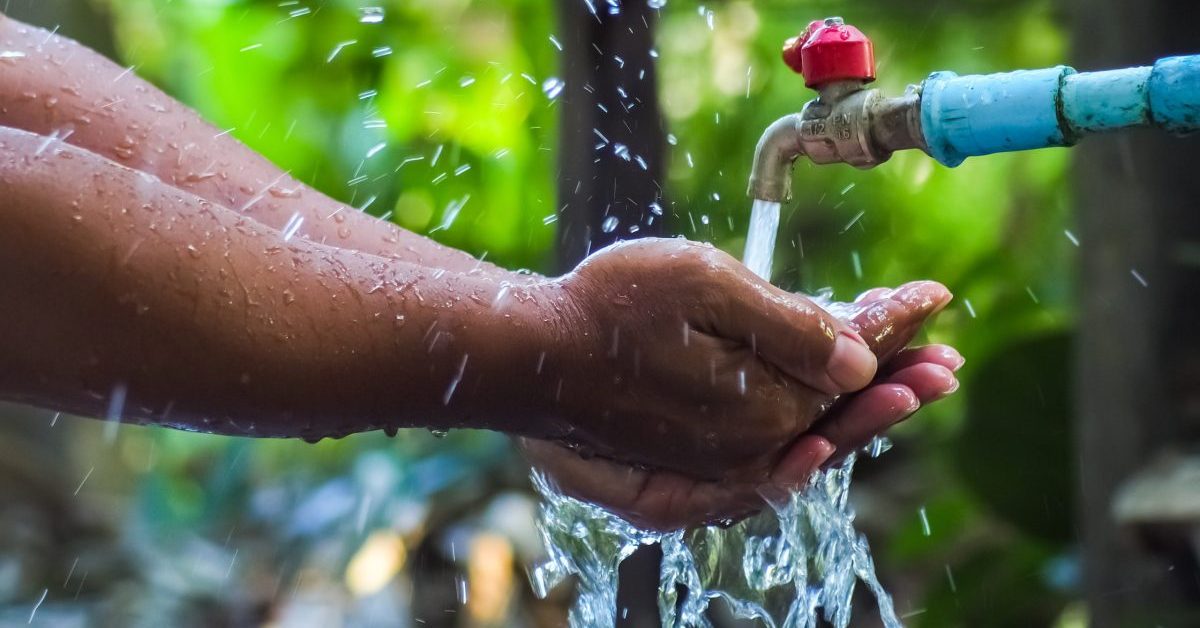
Water is a foundational natural resource essential to global sustainability; it underlies all human activities and the functioning of natural systems. Yet globally the strain on freshwater resources has intensified to critical levels as global population increases and economic activity accelerates, albeit unevenly across geographic space. The United Nations projects that by 2030 global water demand may exceed available supply by as much as 40%. It is likely that without significant reforms to global water management and governance, in the context of climate change, demand will intensify competition for water resources, potentially elevating water scarcity as a source of geopolitical tension and conflict. To avert a widespread crisis, nations must look beyond conventional freshwater sources toward sustainable alternatives capable of supporting both domestic and industrial consumption. Among these, water reuse, particularly potable reuse, has emerged as one of the most promising solutions.
Addressing the global water challenge necessitates a paradigm shift in how societies conceptualize and manage water, moving from a linear model of extraction and disposal to a circular framework centered on recovery and reuse. This transition also requires a structural reimagining of the human–water relationship and reevaluating the systems that govern water use and management. Importantly, recent technological advances now permit the production of recycled water that satisfies or exceeds international drinking standards.
Successful large-scale implementations in countries such as Singapore, Australia, Namibia, and the United States have demonstrated the technical feasibility, cost-effectiveness, and long-term sustainability of recycled water systems, showing that water reuse can safely augment or even replace conventional sources, thereby strengthening both water security and ecological balance. These schemes illustrate that the obstacles to widespread adoption of water reuse are socio-institutional rather than technical: they are rooted in how societies understand, communicate about, and ultimately trust recycled water as a safe and legitimate resource. Global adoption of water reuse, particularly forms that involve close personal contact, such as direct potable reuse remains limited, with public perception representing the primary obstacle to scaling water reuse worldwide.
Public resistance to water reuse persists despite rigorous empirical evidence supporting the safety of purified recycled water. Many communities remain opposed, driven both by psychological and cultural aversion, often referred to as the “yuck factor,” which stems from deep-seated feelings of disgust and limited understanding of advanced treatment processes, as well as by ongoing concerns about potential health risks from pathogens and pollutants of emerging concern. Compounding this challenge is the erosion of public trust in institutions responsible for water governance. In many cases, communication from authorities has been highly technical, top-down, and detached from community realities, reinforcing skepticism rather than alleviating it. Consequently, even scientifically sound water reuse projects have faced resistance, delays, or outright rejection.
Conversely, where water reuse has been embraced, the success has been grounded in robust communication, education, and trust-building. Long-term public awareness campaigns that demystify treatment processes, community participation in decision-making, and transparent information-sharing have all proven effective in fostering legitimacy. Singapore’s NEWater program exemplifies this approach: decades of consistent education, open tours of treatment facilities, and the strategic framing of water reuse as a symbol of national resilience transformed public attitudes.
Replicating success across diverse global contexts requires sensitivity to local conditions and recognition that public acceptance of water reuse is shaped by distinct cultural, social, and environmental factors. This calls for a paradigm shift from prescriptive, one-size-fits-all policy frameworks toward adaptive, participatory models of governance that are responsive to local realities.
Potable reuse is no longer experimental, it is a proven, safe, and cost-effective solution when technology, governance, finance, and social legitimacy align. From Singapore’s NEWater and Orange County, California, indirect potable reuse systems, which laid the groundwork for public acceptance and technological confidence, to Windhoek, Namibia, and pioneering direct potable reuse programs in Big Spring and El Paso, Texas, the evidence shows that potable reuse can be scaled as a core pillar of twenty-first century water security.
The move toward widespread water reuse must therefore be understood as a transformative pathway, not a marginal adaptation, aligning with the broader transition toward circular resource economies in which waste streams are reconceptualized as sources of renewal. Clearly, technology is no longer the principal constraint; the real challenge lies in building social legitimacy and establishing supportive governance structures through transparent communication, trust-building, and cultural responsiveness.
This trajectory reflects a shift in environmental governance, from a narrow focus on technological fixes to a systems-based approach that integrates science, society, and policy. The future of global water security will depend not only on technological capability but also on our collective capacity to build trust, foster collaboration, and communicate effectively across scales.
Ultimately, scaling water reuse for global sustainability requires nations to move beyond reactive crisis management toward proactive stewardship of water resources. By embedding water reuse into the mainstream of policy, infrastructure, and culture, societies can transform it from a niche innovation into a bedrock of global water resilience, reducing vulnerability to scarcity and mitigating climate risks.
Peter R. Nkhoma
PhD, Geography Instructor
Delta College
Michigan
USA
peternkhoma@delta.edu