
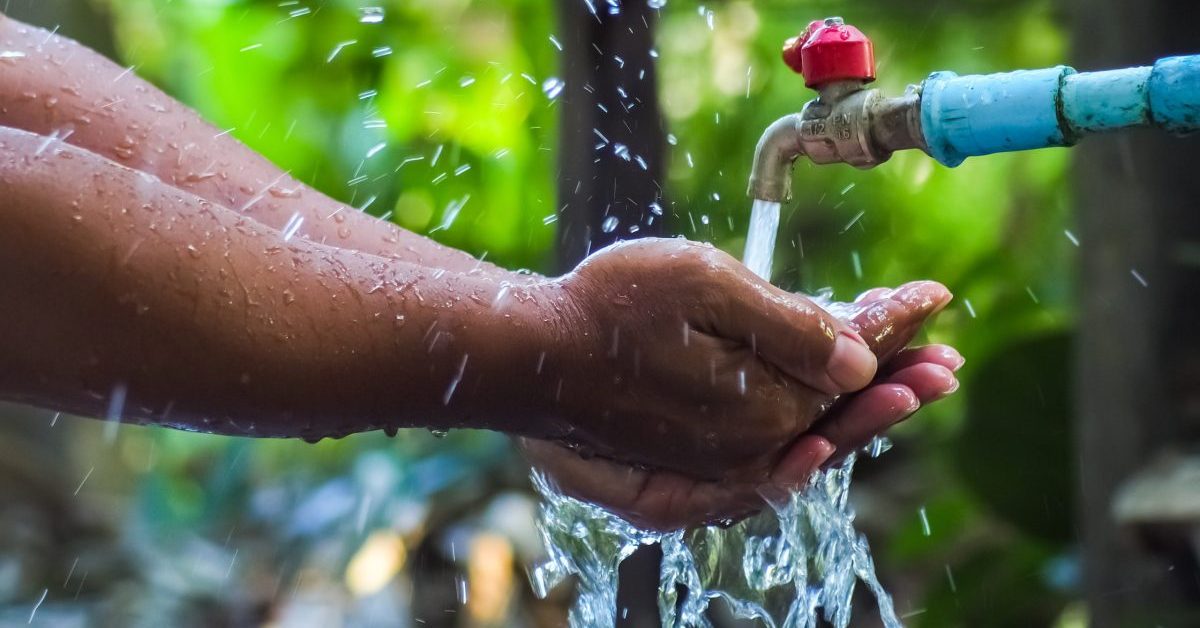
Fresh water is a resource without which human civilization, agriculture, industry, and cities cannot exist. Public well-being, health, and the natural environment all depend on it. Yet, water is still too often viewed solely as a component of municipal infrastructure or the exclusive domain of hydrologists or engineers. This narrow perspective leads to fragmented management and the loss of synergies that could strengthen local and regional actions.
Climate change and the growing pressures of civilization, which lead to the degradation of ecosystems, also force us to break free from conventional thinking. Water is not a problem, but a shared resource of politicians, urban planners, farmers, doctors, economists, sociologists, and engineers. Integrating multiple perspectives is a necessary condition for ensuring long-term social and economic security in the context of access to sufficient and clean water resources.
The traditional urban wastewater management model, derived from a 1991 EU Urban Wastewater Treatment Directive, was based on a simple triad: collect-treat-discharge. This approach was one of Europe’s greatest achievements in the 20th century, ensuring sanitary safety and reducing water pollution.
However, the 21st century requires a new paradigm. Today, wastewater is increasingly seen as a source of recoverable resources: clean water, nutrients, biomass, energy, cellulose, etc. This is the essence of a circular economy, where water is given a second life. The adoption of the recast EU Urban Wastewater Treatment Directive (2024/3019) legitimized this shift, emphasizing recovery and reuse as key objectives of European water policy.
Wastewater treatment plants can now evolve into bio factories – urban symbiosis hubs where reclaimed water is used for irrigation, street cleaning, or industrial cooling, where nutrients replace synthetic fertilizers, and wastewater heat supplies district heating systems.
The Baltic Sea Region is particularly vulnerable to climate change, eutrophication, and water scarcity. No country can face these challenges alone. International cooperation and exchange of experience are essential. Local governments can implement integrated approaches to water management that go far beyond drinking water supply and wastewater services. Water must not be treated as an isolated policy issue.
The ReNutriWater project, funded by Interreg Baltic Sea, provides practical guidance on scaling up water and nutrient recovery. It focused on the safe water reuse for irrigation and landscaping, reducing pressure on freshwater resources. It also addresses the recovery of nutrients (particularly nitrogen and phosphorus) to replace chemical fertilizers. Stakeholder engagement and education are crucial to ensure that local authorities, farmers, businesses, and citizens understand that reclaimed water is safe, beneficial, and aligned with the objectives of the Water Resilience Strategy and the European Green Deal. The solutions developed in the project offer municipalities guidance on adapting to local realities and building trust in circular water management practices. Pilot initiatives under ReNutriWater, such as small-scale nutrient recovery systems and demonstration sites for water reclamation, show that a circular water economy can be both cost-effective and socially acceptable when supported by knowledge-sharing platforms and strong networks.
Organizing urban and regional water symbioses requires cooperation between water utilities, energy producers, industries, farmers, and municipal authorities. It also presents an educational challenge: both officials and residents must be convinced that closed-loop water is an opportunity, not a threat. Local governments can act as integrators, working with schools, universities, NGOs, and community groups to foster innovation. Successful water projects in Europe prove that when various sectors join forces, solutions become more resilient, sustainable, and socially accepted. In BSR, we already have many interesting industrial symbioses, such as Kalundborg, Rotterdam, or Katowice (cooling water). But thanks to the ReNutriWarter project, urban solutions are also emerging, for example, in Kuopio, Jūrmala, Warsaw, Samsø, and Polańczyk.
Water knows no administrative boundaries, so neither can our policies or actions. It is time to break down institutional barriers, connect municipalities across the Baltic Sea Region, and develop common standards for reuse, recovery, and protection.
Local government officials and decision-makers face a choice today: either continue with fragmented actions and risk escalating water crises or boldly embrace cooperation that brings long-term benefits.
By adopting the principles demonstrated in projects like ReNutriWater, the Baltic community can transform water management into a driver of resilience, security, and innovation. Giving water a second life is not just an environmental necessity; it is a social and economic opportunity.
Klara Ramm
Expert
Chamber of Economy “Polish Waterworks”
Warsaw University of Technology
Poland
k.ramm@igwp.org.pl
Back to Table of Contents