
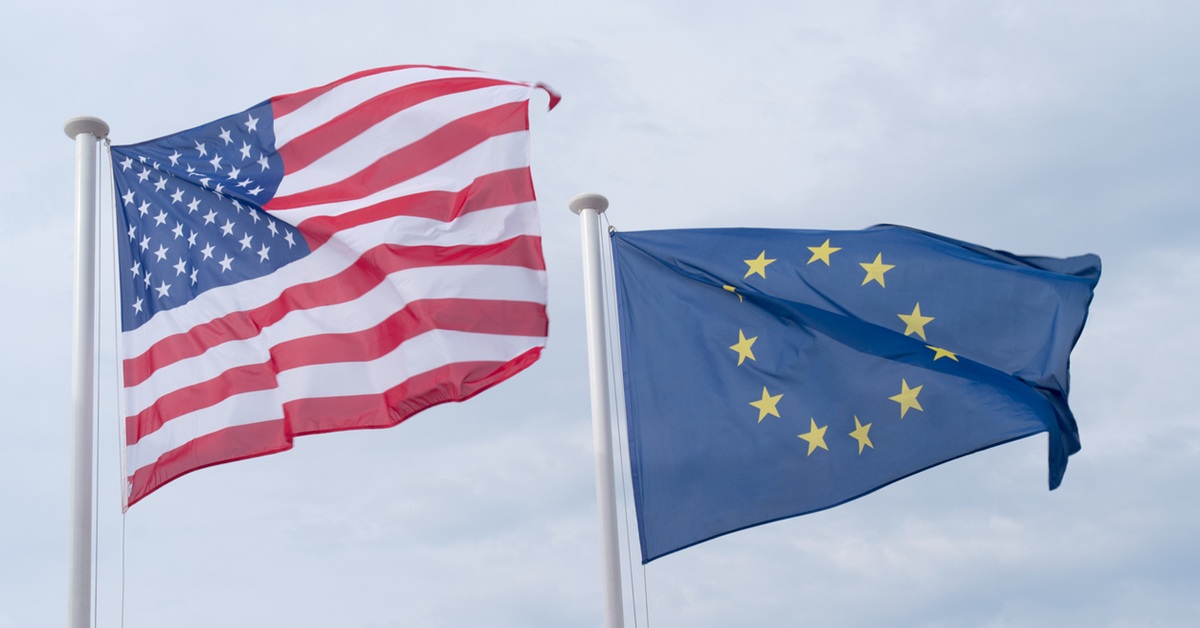
After years of increasing talk about rising global geo-economic competition, the notion of economic security became entrenched in the transatlantic security cooperation agenda in 2023. While it mostly takes place outside NATO, the discussion on economic security is profoundly transatlantic: the concepts and potential areas for cooperation were clarified at bilateral level among Alliance partners, in US-EU talks, and in G7 – of which six are NATO members. Regardless of the format, the transatlantic partners agree on the need to increase resilience of supply chains, protect critical infrastructure, control leakage of sensitive technology, address unfair competition, and counter economic coercion.
While these goals are mostly discussed without mentioning specific countries, it is clear that the conversation centres around risks posed by China and Russia. Russia’s weaponization of energy, China’s dominance of the supply chains of certain critical goods, and Beijing’s increasing use of civil-military fusion are key issues driving the debate. NATO Vilnius Summit declaration mentions Russia’s economic coercion and claims that China uses its economic leverage to create strategic dependencies. Washington’s recent decisions to expand export controls and review certain outbound investments, as well as the EU’s similar initiative to assess risks related to critical technologies, are motivated in large part by Beijing’s use of civil-military fusion strategies.
Economic security concerns related to Russia and China are neither new nor distant to the Baltic Sea region. Due to their proximity to Russia, some of Baltic Sea countries were among the most exposed to the economic fallout of the war, and many had historically faced significant energy dependence on Russia. Beijing’s backing has helped Huawei assume dominance in 5G technology, squeezing Swedish and Finnish 5G providers. Lithuania is arguably the most prominent case of China’s economic coercion against an EU member state.
More broadly, some of the Baltic Sea countries have long traditions of national economic security policy. Finland is known for its ‘comprehensive’ approach to encompasses economic and civil resilience: Helsinki mandates strict protection of critical national infrastructure and the maintenance of sufficient reserves of strategic goods. Historically, Sweden has also subscribed to a similar approach, although it had divested from security policy in recent decades. Lithuania, meanwhile, has had a dedicated economic security department within its Ministry of Foreign Affairs since the 1990s and was among the first EU member states to adopt a FDI screening framework.
Despite their experience, most Baltic Sea countries are wary of the growing language of economic security. Though all recognize that geo-economic concerns are gaining strength in the global economy, most Baltic Sea states remain strong proponents of free trade and economic openness. Given their structural position as small, largely export-oriented economies with limited fiscal capacity, the Baltic Sea countries are concerned that the growing use of restrictive instruments or the embrace of national industrial policies may fragment the multilateral trade system, escalate protectionist tendencies, and – in the EU – undermine the single market.
With the notable exception of Lithuania, which actively advocates for the adoption of further restrictive instruments, included on outbound investment, Baltic Sea countries have thus mostly focused on trade diversification and, in the EU context, the further deepening of the single market. Though these goals are prominent in the EU’s new economic security strategy, the EU has struggled both in concluding trade deals and in removing the remaining barriers in the single market – mostly due to domestic constraints in select member states. Given the adverse global environment and the upcoming elections in Europe, opportunities to advance on either front may be rare.
At the same time, it is highly likely that the transatlantic effort to strengthen economic security will continue to accelerate – especially as regards to building the West’s ‘technological edge’ over China through industrial policy. Faced with this prospect, there are several routes the Baltic Sea countries may take. First, they may follow Lithuania and embrace the economic security agenda focused on restraining China whilst expanding bilateral economic ties with other Indo-Pacific economies. Another is to hold the line: focus on defending free and fair multilateral trade and limiting the inevitable calls for state intervention. This position will have its backers among other export-oriented countries and the European Commission – but it will largely be a reactive one. More importantly, neither option guarantees that the Baltic Sea economies will successfully transition to the emerging geo-economic order.
A third potential path is to shape the wider debate on industrial policy and economic security by spearheading regional industrial policy suitable for the Baltic reality. As small economies with specialized strengths, the Baltic Sea countries can gain significantly from closer regional cooperation of their industrial, innovation, and research ecosystems: e.g., Finland and Latvia both exhibit considerable potential in quantum and, as they focus on different segments of the value chain, may find many opportunities for synergy. To avoid betting on the wrong technology, regional cooperation must be both forward looking and wide enough in scope: Estonia’s early decision to focus on a broad suite of digital technologies and pursue a collaboration-based model of industrial policy can offer instructive lessons in this regard.
Certainly, enhanced regional cooperation does not mean closing in from the rest of Europe or the world. Due to its size, any potential Baltic Sea industrial ecosystem would inevitably be a part of broader EU or global value chains. The point of moving fast with a regional industrial ecosystem, rather, is to strengthen the relative position of each Baltic Sea country in the debates on the future of geo-economic order, to minimize vulnerability of being ‘picked apart’ individually, and to fill the discursive space with examples of what kind of industrial policy can create sustainable value and economic security.
Justinas Mickus
Associate Analyst
Eastern Europe Studies Centre and the European Council on Foreign Relations
Lithuania
