
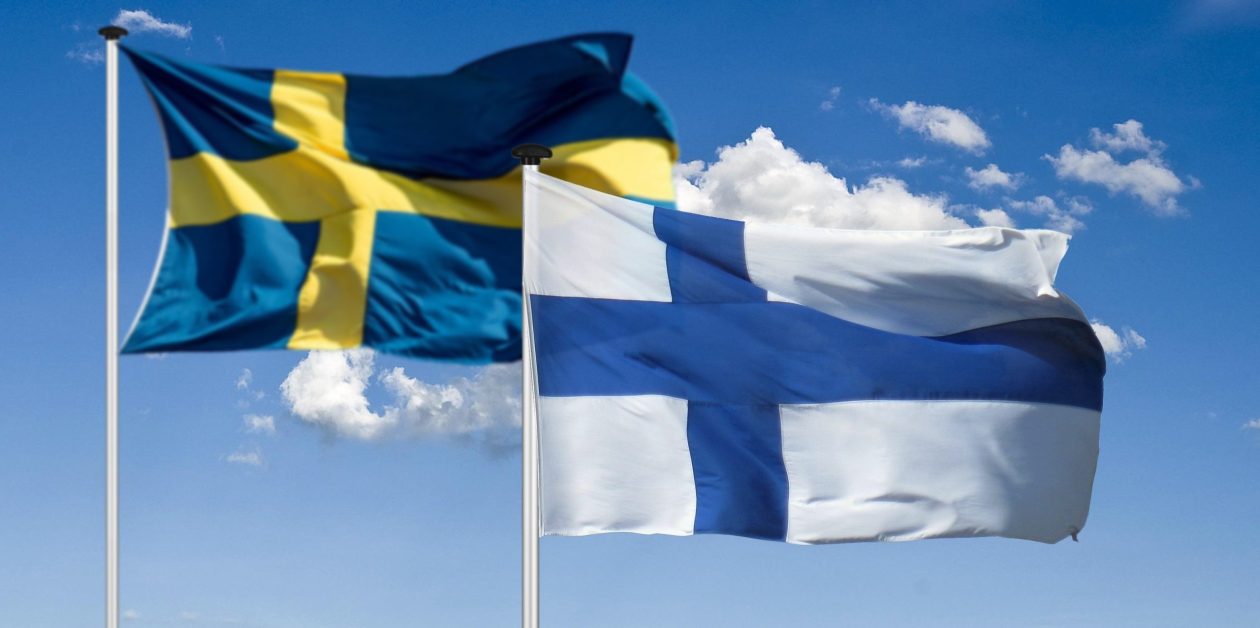
The bridge between Finland and Sweden in Tornio-Haparanda, often referred to as the world’s most peaceful border, serves as a testament to the idea that peace can flourish when nations prioritize diplomacy, communication, and the well-being of their citizens. For decades, this bridge in the heart of the Bothnian Arc region has symbolized how local communities and neighboring people from both sides of the Tornio River have come together, creating a common ground for cultural exchanges, collaborative projects, and commuting. Despite geopolitical shifts and border changes over time, the strong ties between the people on both sides of the Gulf of Bothnia persist.
The Bothnian Arc is a border area straddling the state border between Finland and Sweden, extending from the Swedish city of Skellefteå to Kalajoki in Finland, following the coastal territories, forming a horseshoe shape around the Gulf of Bothnia. Labor and skills supply vary significantly across the Bothnian Arc area. The two mid-sized cities, Oulu in Finland, and Luleå in Sweden, act as magnets for the region’s competences, attracting numerous global IT firms, manufacturing industries, and universities.
The formalization of cooperation between Finnish and Swedish municipalities in the Bothnian Arc began in the late 20th century with the establishment of cross-border cooperation organizations like the Bothnian Arc and Kvarken Councils, laying the foundation for more structured collaboration in the modern era. Thanks to the green transition taking place in the Bothnian Arc region and the evolving security situation around the Baltic Sea, this region has gained new significance, heightening the need for enhanced cooperation. The Russian invasion of Ukraine has amplified the urgency of the green transition throughout Europe, with a particular focus on raw materials such as rare minerals from northern regions, which now play an increasingly critical role in the European Union’s self-sufficiency and supply security. Lately, new areas of collaborations have been prioritized in the fields of sustainable tourism, transport systems including infrastructure development.
The Bothnian Arc region stands at the forefront of the green transition, with various industries shifting toward fossil-free production. Emission-heavy industries, including steel plants, are rapidly transitioning to fossil-free operations in Boden and Luleå. Major investments are underway to secure renewable energy sources, with Europe’s largest wind farm currently under construction in Markbygden, near Piteå. Finland is also actively contributing to these efforts with 40% of Finnish wind power is produced in the region of Norhern Ostbothnia where the Finnish part of Bothnian Arc is located. The Finnish city of Oulu, one of the largest cities in the world for its latitudes, is developing global level digital tools to contribute to the green and digital transition providing better public services and bringing high value to everyday life of citizens and societies the whole region.
Furthermore, dedicated initiatives have been launched to protect the rich marine environment of the Bothnian Bay and promote a sustainable fishing industry. This transition is generating new job opportunities in renewable energy, green technology, and sustainability sectors, with the local workforce adapting through education and skills development. The ongoing green transition in the Bothnian Bay requires collaboration among government entities, businesses, and society at large. By prioritizing sustainability and environmentally conscious development, the Bothnian Bay can preserve its natural beauty, enhance its economy, and contribute to global climate change mitigation efforts.
The next era of local and municipal collaboration in the Bothnian Arc holds promise. By further collaboration and dialogue within the Bothnian Arc region, we contribute to the realization of Nordic Councils of Ministers vision about the Nordic Region to be the most sustainable and integrated region in the world by 2030. However, it also demands further investments in roads, railways, ports, and digital integration to unlock the region’s full potential. Enhancing the area’s appeal includes investing in services, affordable housing, and the adaptation of foreign workers. Harmonizing road transport regulations, securing EU funding for cross-border projects, jointly promoting work-related immigration to Finland and Sweden, expediting green industry permit processes, and close cooperation on various political levels are all essential. With the right strategy, the bridge in Tornio-Haparanda will not only serve as an example of local collaboration but also as a symbol of the creation of a modern, sustainable, and prosperous future.
Daniel Smirat
Chair
Municipal Assembly in the City of Luleå and the Finnish-Swedish Bothnian Arc Association
Sweden
