
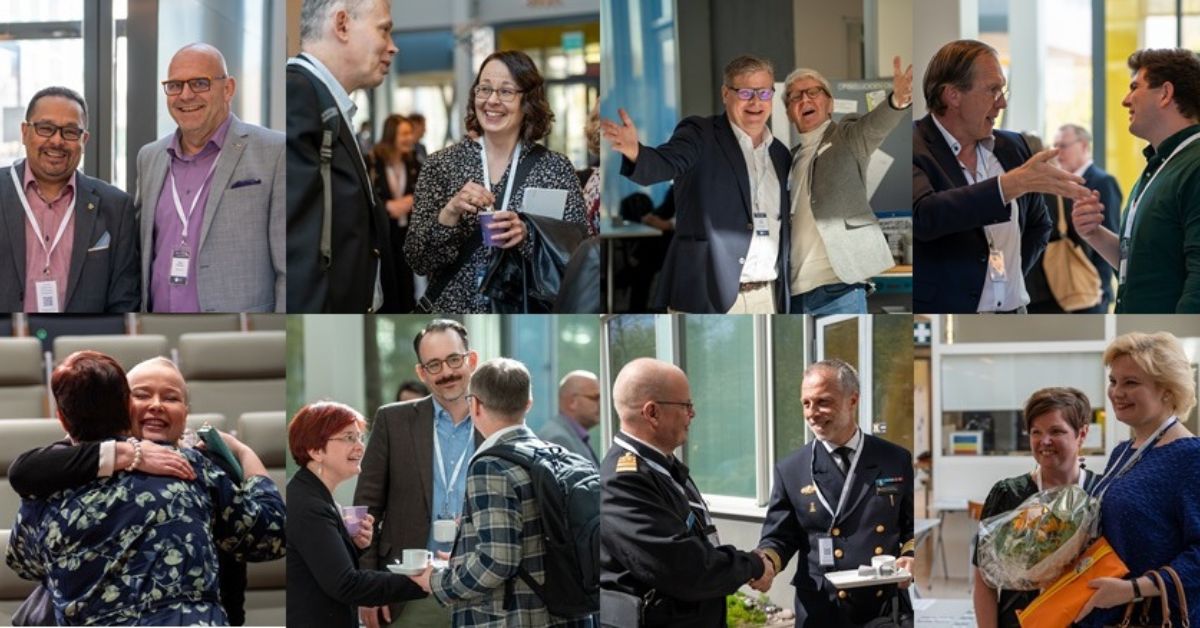
Security of maritime transport in the Baltic Sea, sustainable maritime industry and nutrient recycling in the Baltic Sea Region were on the agenda at the Baltic Sea Region Forum that was organized in Turku on 12th May. The event attracted almost 500 participants, half of them in person and half online. It’s possible to return to the event by watching the recording on YouTube.
Russia’s aggression is a threat to democracy
Olga Dibrova, the Ukrainian Ambassador to Finland, delivered a compelling greeting speech emphasizing the urgent need for continued international support in the face of Russia’s ongoing war against Ukraine. Dibrova underlined that Russia’s aggression is not only a threat to Ukraine but to democracy and European stability as a whole. Dibrova praised the resilience and unity of the Ukrainian people and underscored Ukraine’s commitment to sovereignty, European integration, and lasting peace.
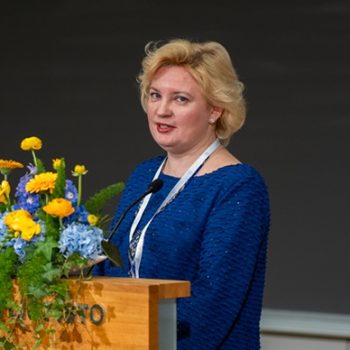
Olga Dibrova expressed gratitude for the assistance that democratic allies have provided for Ukraine.
We can save the Baltic Sea
Keynote speaker Pauli Aalto-Setälä, member of Finnish Parliament, focused the audience’s attention to the environmental state of the Baltic Sea. The sea is in distress: excess nutrients are choking the sea and there are large dead, oxygen-depleted areas at the seabed. But things are taking a slow turn for the better. Due to improved wastewater treatment, phosphorus levels in the sea are decreasing. Last year the Finnish Parliament approved a bill prohibiting the discharge of ship wastewater into the Baltic Sea within Finland’s territorial waters and Sweden and Denmark are also expected to pass the same law. In Finland the state is providing a free gypsum treatment for agricultural fields that binds phosphorus and also improves soil structure. However, legislation is only one part, and everybody should change their behavior. Consumers, politicians, farmers, companies, we are all part of the challenge of saving the Baltic Sea, Aalto-Setälä reminded.
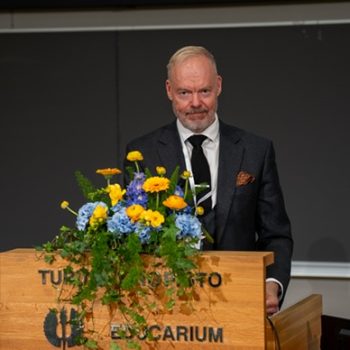
Sea sustains life, culture, and communities across the nations that surround it, Aalto-Setälä noted in his keynote speech.
Rising hybrid threats and shadow fleets challenge maritime safety
The first panel examined the complex security landscape of maritime transport in the Baltic Sea, highlighting both environmental and geopolitical risks. As one of the world’s busiest and most strategically significant waterways, the Baltic requires high operational readiness due to its shallow depths, ice conditions, and dense traffic.
A key concern is the rise of unregulated, Russia-linked “shadow fleet” vessels transporting sanctioned oil, many operating under obscure or stateless flags and often lacking proper safety standards. These ships increase the risk of accidents and environmental damage. Hybrid threats, including GNSS interference and disruptions to undersea infrastructure, were also noted as growing concerns. While some of these risks are linked to state actors, including Russia, the discussion stressed the broader need for vigilance, legal adaptability, and rapid information exchange. “We need political will – to stop shadow fleets, to stop buying gas from aggressors, and to stop undersea disruptions, and to reform the legal frameworks that currently bind our hands”, urged Artis Pabriks from Northern Europe Policy Centre.
Despite strong regional cooperation, existing international regulations were deemed outdated and insufficient. Panelists stressed the urgent need for better maritime domain awareness, faster data-sharing, more robust implementation of legal tools, and political will to enforce sanctions and defend values. Strengthened collaboration, early threat detection, and a shared understanding of hybrid risks were seen as essential for safeguarding the Baltic Sea’s maritime transport and environmental integrity.
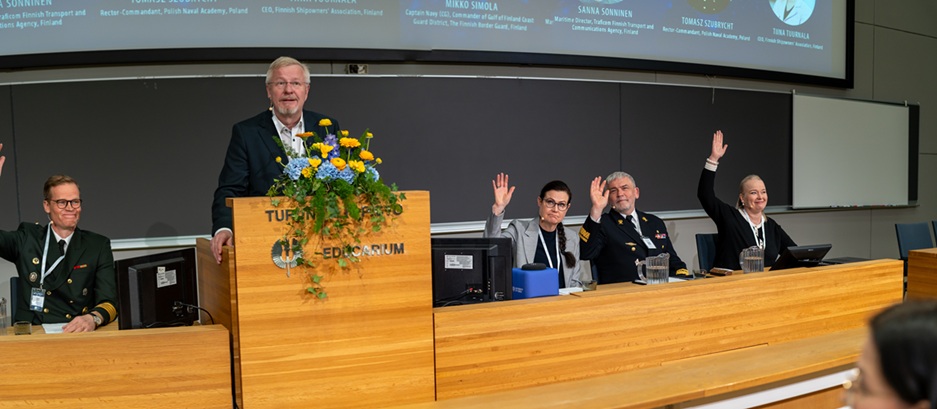
The panel chair Lauri Ojala asked the participants to raise their hand if they think that regular shipping is still safe in the Baltic Sea. From left: Mikko Simola, Lauri Ojala, Sanna Sonninen, Tomasz Szubrycht and Tiina Tuurnala.
Navigating the green transition
The second panel explored the green transition of the maritime industry. The industry is moving toward a multi-fuel future, where no single alternative can replace fossil fuels. Technological innovation, energy efficiency, and major investments in infrastructure, especially in ports are key enablers of this transition.
Regulation at both global and EU levels is a strong driver of change, but the panel stressed that it must be matched by customer demand, access to finance, and sector-wide collaboration. Panelists noted that while some segments, like the cruise industry, are already adopting green technologies such as onshore power, cost sensitivity in other sectors remains a barrier. “Perhaps 90% of container sector customers aren’t yet willing to pay the premium for green shipping”, Associate Professor Niels Rytter from University of Southern Denmark noted.
Challenges include adapting to rapidly evolving regulation, defining clear sustainability goals, and distributing the high costs of green solutions. The panel called for better cooperation across the entire maritime value chain and for innovation that meets not only direct customer needs but also those of end users. Despite the long road ahead, speakers expressed cautious optimism that decarbonizing shipping by 2050 is achievable.
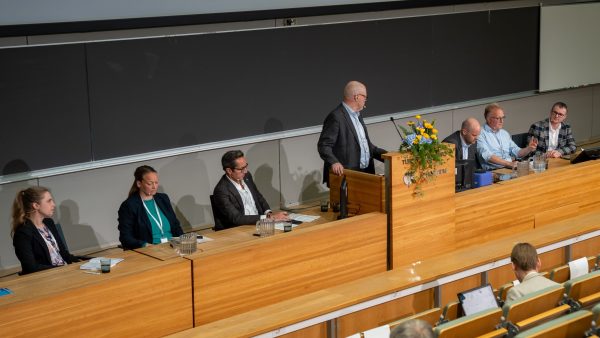
Panelists agreed that there is no single solution for making the industry sustainable. From left: Eini Haaja, Kiki Larsen, Simone Maraschi, Veijo Hyvönen, Tim Meyer, Niels Rytter and Andrius Sutnikas.
Scaling up nutrient recycling
The third panel highlighted nutrient recycling as a cornerstone of sustainability, resilience, and security. “It’s not only about environmental protection – it’s about societal resilience”, noted Senior Researcher Erik Sindhöj from the Research Institutes of Sweden. Panelists emphasized that while many technological solutions are already available, the real barriers lie in costs, fragmented efforts, and a lack of political will.
The discussion called for stronger policy leadership, reform of the Common Agricultural Policy, clear national targets, and better coordination between projects and financial instruments. Incentives for farmers are essential. If they are expected to deliver ecosystem services, they must be compensated.
Industry is beginning to shift toward circular practices, and private companies were seen as important partners, though they cannot drive the transition alone. The panel also stressed the need to align environmental goals with agricultural and economic policies. Importantly, nutrient recycling was also framed as a geopolitical issue, reducing dependency on imported mineral fertilizers enhances self-sufficiency and stability.
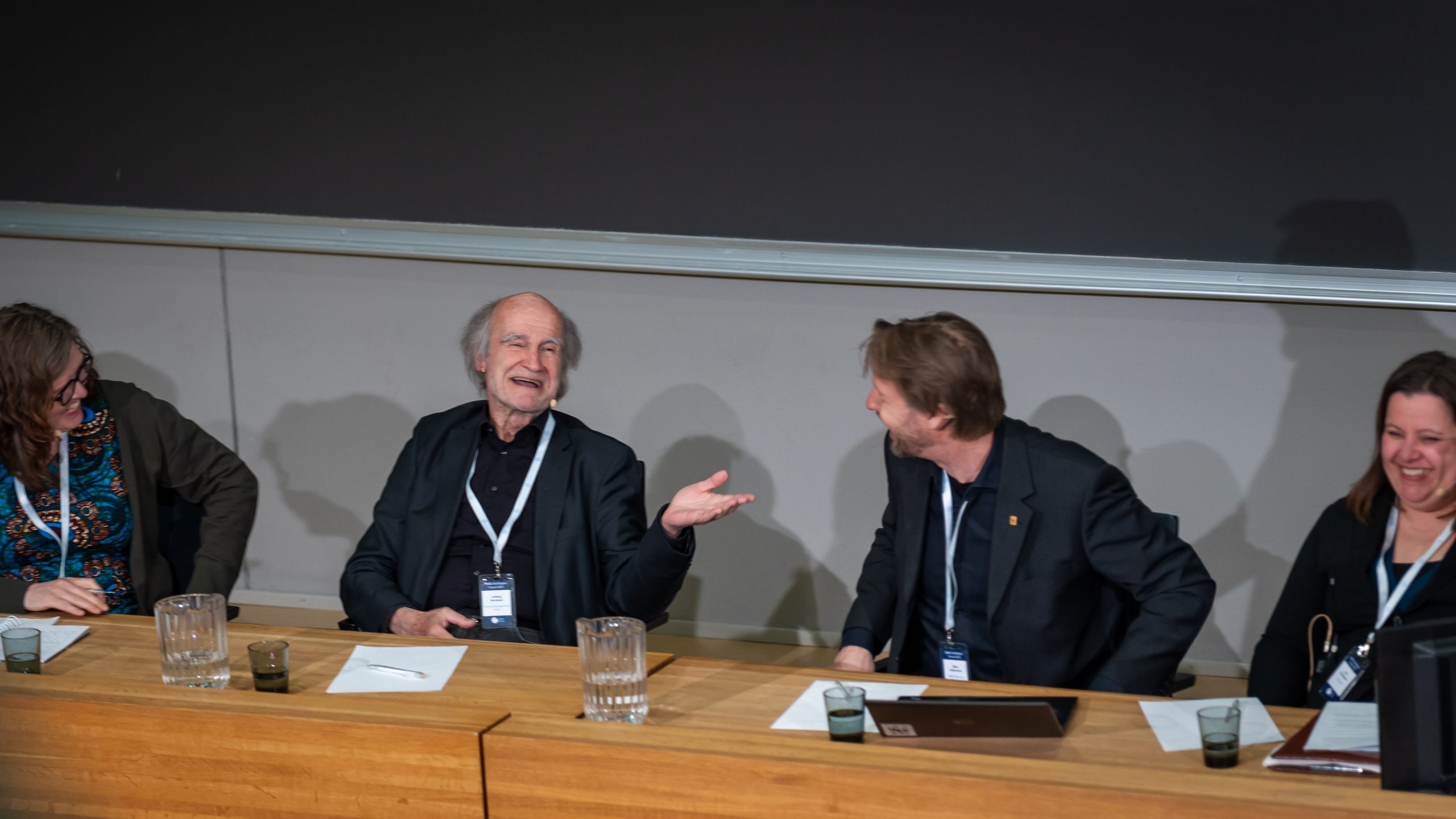
Nutrient recycling is a tricky question, but the conversation also had its funny moments. From left: Eija Hagelberg, Ludwig Hermann, Mats Johansson and Elsi Kauppinen.
Support for Ukraine key to Baltic Sea stability
In her concluding remarks, Member of the European Parliament Merja Kyllönen emphasized the growing security and environmental challenges in the Baltic Sea Region, driven by Russia’s aggression, hybrid threats, and climate change. She called for stronger regional cooperation, especially among Nordic and Baltic countries, to address military risks, cyber threats, and pollution.
Kyllönen also highlighted the geopolitical importance of the Arctic, noting its direct impact on the Baltic Sea. Key priorities include improving defense readiness, protecting the marine environment, combating illegal maritime activities like shadow fleets, and strengthening EU-NATO coordination. Supporting Ukraine, she stressed, is essential for ensuring a stable and sustainable future for the region.
Merja Kyllönen called for deeper cooperation between the Nordic and Baltic countries in the areas of defense, environmental protection, and hybrid threat management.
More information about the Forum programme and speakers can be found on the event website.
