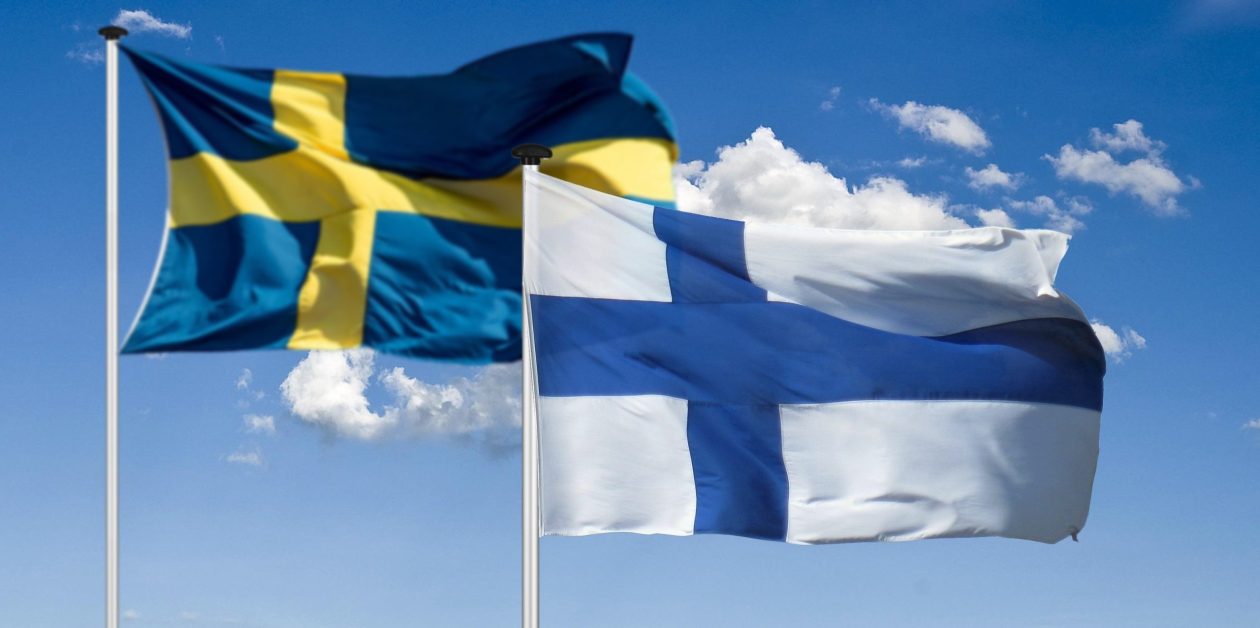
My home and the cultural heritage I manage is located in one of Östergötland’s beautiful archipelagos, where the sea meets the mainland. Across the waters of the Baltic Sea, it is not very far to Åland and Finland. Once one country, today two countries and sovereign states, but with a common history and close ties. We are two countries with a common mission; to protect our home on earth, our common values, our culture and our languages, one of which we share. We are two countries that protect our freedom and our self-determination in a new security policy environment in Europe, where our countries are considered by Russia to belong to their sphere of interest and where, if the Russian regime prevails, we do not have the right to control our security policy choices ourselves. In short, we are two countries with the common mission to protect our way of life.
As spokesperson of foreign policy for the Sweden Democrats and since the 2022 election as chairman of the foreign affairs committee, I spend much of my waking hours analyzing and commenting on the security policy situation. This is from a conservative perspective as a representative of my party combined with a Swedish and Nordic perspective in general as a representative of the committee. Basic questions I believe we should ask ourselves are: Who are we as people? What are we defending? Who are we defending ourselves against and how do we become stronger together?
As a true Nordicist and after eight years in the Nordic Council in various capacities, it is clear to me that we are a family and a family takes care of each other. Ice-cold winds are blowing from our great neighbor to the east, which since 2014 has waged a war against Ukraine, and which since February 24th, 2022 is waging a full-scale invasion against the same country. This means that we now face the most serious security situation since the Second World War and the most serious and most large-scale war in Europe since the same time. In this situation, Nordic gathering and coordination is required.
There are good conditions for further strengthening and deepening our defense and security cooperation and to look after our common home at a time when a new security policy architecture is emerging in Europe. There are also good conditions for writing the next chapter in Swedish-Finnish cooperation. It is no coincidence that Sweden and Finland have the closest and deepest defense cooperation, which has proven to work well and has been successful. We will have to deepen and refine that, now in a new time and era, with neo-Stalinist Russia as a neighbor and within the Nordic dimension of NATO.
The next chapter should not float freely without context, but be part of the broad catalog of security policy reports with its analyzes and proposals, such as the Bjarnason report with a focus on the broad total defense, including civil defense and crisis preparedness. The Hague Declarations are central there. They are aimed at the ability to deal with serious accidents and crises and the restoration of functionality. At the same time, the Hague declarations are not alone sufficient to meet today’s threats and needs, which was illustrated, among other things, in connection with the Corona pandemic and on that occasion, moreover, it was a time of peace. Next time there may be a different condition.
In a state of crisis or war, cross-border cooperation and resilience need to function fully. Declarations and reports need to be taken care of by active political will in both our countries and ambassadorships in order to be gradually translated into practice and functional work that can be felt on the ground and in the daily work between authorities. It needs to apply to joint Nordic infrastructure investments, supply lines of food, medicine and critical spare parts where at least Sweden for the moment are used to and dependent on “just in time” imports outside the Nordic outer border. In this regard Sweden can learn from Finland. Our common resilience and endurance need to be strengthened, especially when normal trading patterns do not work. There we can assist each other, collaborate and coordinate our assets. Our countries are a family of values that share a long history and borders and our joint assets are of great significance. Our defense industry is unique and at the international forefront through, for example, the vital capabilities of underwater, aircraft and combat vehicles.
The Sweden Democrats have put forward a motion that the regulations and the possibilities for strategic export and export control of military equipment need to be reformed and modernized in a new security policy environment and era of acts of war in our immediate area. Old regulations are outdated. In recent years, I have visited a large part of the Swedish defense industry and I´m always struck by the innovation capacity and high-quality production and how it forms a foundation worldwide, in the Nordic dimension of NATO and for Ukraine’s fight against Russia. In our northernmost city, Kiruna, the space base Esrange is located, a unique capability for the Nordics and Europe, which can be developed in our common interest.
The vision of the Nordic region as the world’s most integrated region must not stop at rhetoric, but needs to become effective political practice. Sweden and Finland can be pioneering here. We are two states with the right to choose our own security policy choices. A responsibility to our ancestors and towards our children. The naive years of closing down the civil defense and disarmament of the military defense in Sweden are thankfully over and hopefully consigned to history. A new era of awareness has begun and the Nordic-Baltic family where Sweden and Finland have a special kinship can go far. We can go from ideas to practice, impact and true integration of operability in times of peace as well as in times of crisis and war. Both of us in NATO. Two countries with one mission. Resilience and freedom.
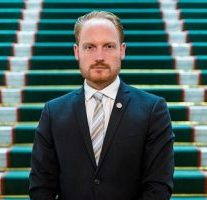
Aron Emilsson
Member of the Swedish Parliament (SD), Foreign Policy Spokesperson for the Sweden Democrats, Chairman of the Committee on Foreign Affairs
Riksdagen, Parliament of Sweden
Sweden
aron.emilsson@riksdagen.se