
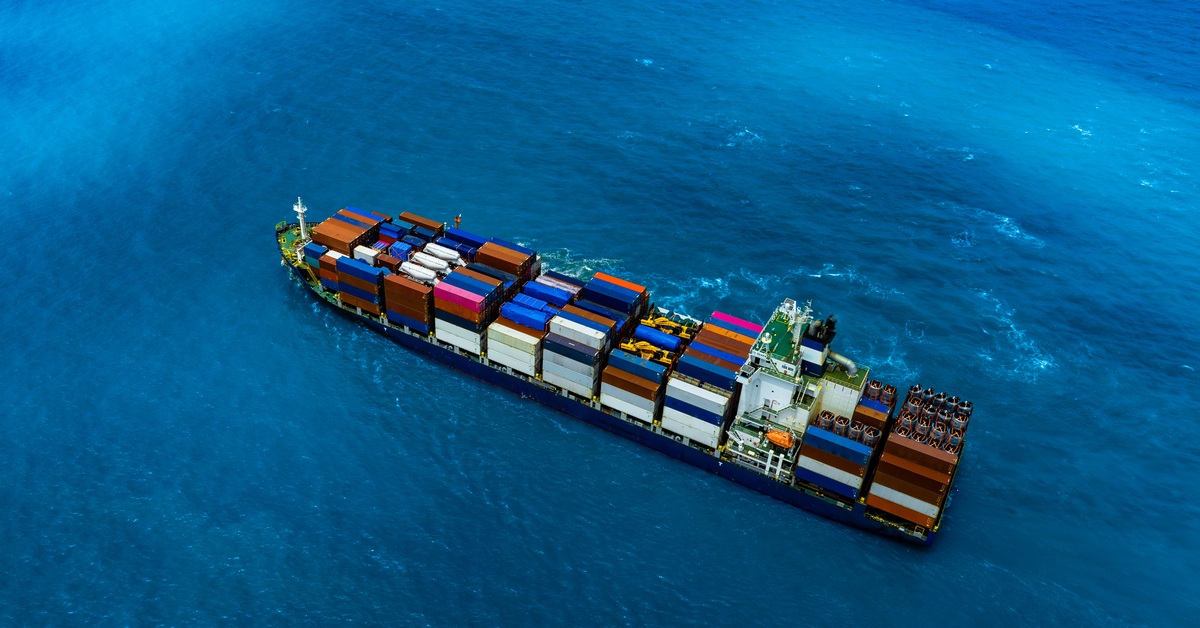
The current surge in disruptions to the global supply chain have lengthened vessel trade routes, endangered the safety of navigation, and compromised the security of seafarers. In an interconnected world, this has implications on economics and development in all regions of the world.
Since late 2023 the Houthis have deployed drones and missiles against maritime targets, ostensibly as a campaign to prevent Israel-linked ships from passing through the Indian Ocean. More than a hundred vessels have reported being attacked. A number of ships have been hit. At least one ship has sunk and another has suffered a loss of lives. On yet another ship, 25 seafarers continue to be kept as hostages after more than a year.
In the Black Sea, no less than three vessels were hit by missiles in 24-25 February 2022, the first two days of the Russian invasion of Ukraine. Ships trading in the northern part of the Black Sea continue to be on heightened alert today and recent months have still seen sporadic missile attacks against merchant shipping.
Somali piracy, largely dormant for more than a decade, showed a resurgence last year. In the first quarter of 2024, no less than five incidents related to Somali piracy have been reported, compared to zero in the same period the previous year. Close to two dozen seafarers were held hostage by Somali pirates before finally being released in April 2024.
Aside from the horrific risk of injury, and sometimes death, suffered by seafarers, the disruption to the global supply chain is having a catastrophic cumulative effect. A 42% decrease in trade volumes have been noted in the Red Sea region. Regional ports have seen a ‘double-digit’ decline. One transhipment hub saw a 90% drop in capacity calling at the port. Ships are diverting around the Cape of Good Hope, trebling bunker consumption, adding 18 days of transit time, and representing a threefold increase in carbon credit costs under the EU emissions trading system this year.
In the Black Sea, even with the opening of the new Black Sea corridor, maritime traffic volumes are still more than 50% down on pre-war levels. Russia continues to disrupt Ukraine’s seaborne trade, targeting the infrastructure of both the Black Sea ports and Danube river ports, and has also hit several merchant ships. Some Ukrainian farmers are at the verge of bankruptcy and create further disincentives to plant for the next crop year. As Ukraine typically accounted for about 10% of global wheat exports before the war, the effect on global markets is akin to back-to-back droughts over three years in a major wheat-producing region. Tight stocks means continued high prices and volatile markets. Both Russia and Ukraine are major producers of staple food items and they provide 90% of the wheat supply to many low income countries in Eastern Europe, Asia, and Africa. The impact of this war on the global supply chain has been linked to food shortages around the world.
Indeed, the Lloyd’s List Outlook 2025 report indicates that geopolitical risk is seen as the number one worry for shipping businesses over the next two years. This is the third consecutive Lloyd’s List Outlook report with this finding.
Among others, this begs the questions, “How resilient is the global maritime system?” and “How readily can it recover from setbacks?” While, for lack of material time, this article mentions only the Red Sea, Horn of Africa, and the Black Sea, the above questions are posed in the context of current geopolitical upheavals in other regions – of which there seems to be an abundance in both quantity and level of threat to security. A simplified response would underscore how shipping has always demonstrated resilience in the past and it always will. Shipping has centuries of experience in adapting to change and disruption. Adaptation and resilience are in fact not choices, because trade must go on no matter the challenges. Shipping continues to be the most efficient and environmentally efficient way to move international cargo. One need only recall the COVID-19 pandemic of the distant past; when all the airports were closed and road frontiers between states were locked down, who carried world trade? Ships and seafarers!
Fuel needs to be transported and basic essentials need to be delivered. There is simply no viable alternative to maritime transport in terms of the volumes in world trade. Fortunately, the maritime industry is resilient. Having said that, there is a price to resilience. Rerouting, risk to life and limb, captivity, additional operating expenses, increased uncertainty, etc., are only a few in what would seem to be an endless list.
Our modern-day heroes, the seafarers still save the day for us. Thanks to them, in spite of all the geopolitical, environmental, and other challenges that come our way, the shipping industry delivers. They bring us our food, our clothing, our fuel, even allowing us — often less admirably — to pander to our indulgent consumption habits.
World Maritime University
Malmö
op@wmu.se