
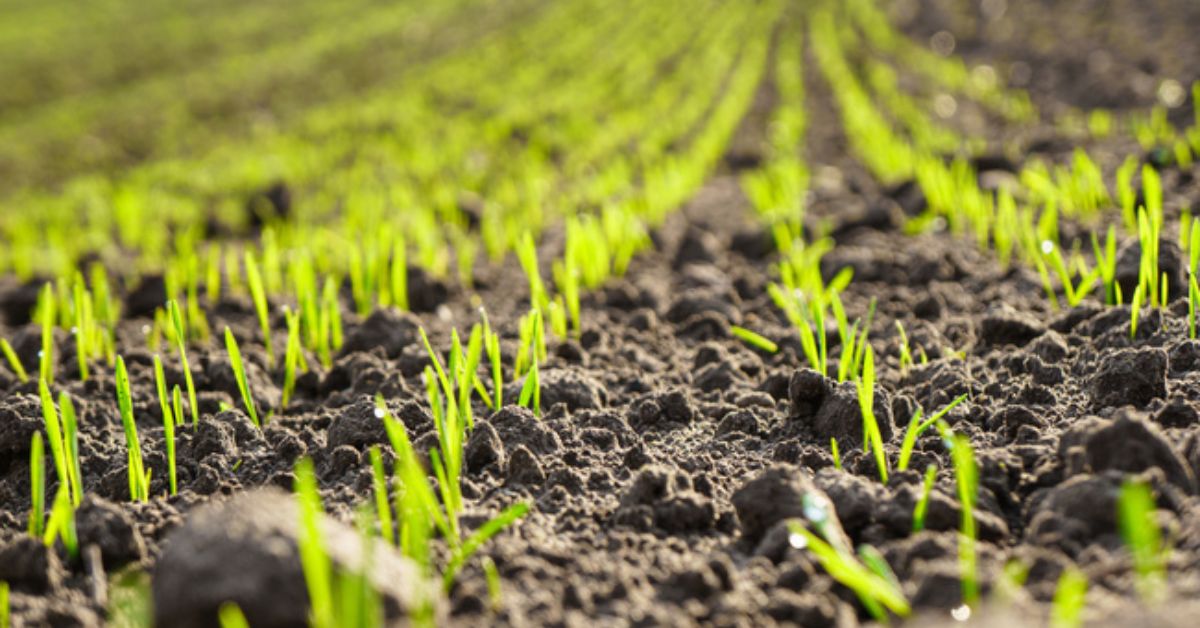
Nutrient recycling aims at reusing nutrients already utilized in human activities. This approach reduces the need to use mineral resources, such as phosphorus, or to bind atmospheric nitrogen, thereby minimizing related environmental impacts. These actions are expected to improve overall nutrient use efficiency.
Agriculture is a major nutrient user as the crops produced need especially nitrogen and phosphorus for their growth. The entire food system, including also food processing and consumption, utilizes and transports nutrients, with the majority eventually ending up in various side streams or being lost to the environment. To close the nutrient cycles, these side streams need to be recycled back to agriculture, and losses at each step of the system minimized. Additionally, side streams from other industries may contain nutrients that can be recovered.
The potential for nutrient recycling depends on where and how much of nutrient-rich side streams are produced. Mapping these side streams and their locations requires extensive data on production and consumption to quantify the different side streams and their nutrient content. This information is a prerequisite for planning measures to recover nutrients in a form usable for agricultural production.
The most significant nutrient-rich side stream is livestock manure. The nutrient content of manure can be calculated by multiplying the number of different animals produced in a country or region and coefficients of average nutrient content for each manure type per animal category. If the animal data includes farm information, the location of manure can be simultaneously identified.
Municipal source-sorted biowaste from households, restaurants, stores etc. is another significant waste fraction for nutrient recycling. EU member states around the Baltic Sea are required to monitor its production per capita and this data can be multiplied with population data to estimate the quantity and location of the biowaste. Using a coefficient of average nutrient content, the amount of nutrients to be recycled can be quantified.
Similarly, using per capita data on the production of sewage sludge per country, its quantity and location can be estimated. The nutrient content can be determined using information on its average nutrient coefficients.
Data on industrial nutrient-rich side streams vary among the countries surrounding the Baltic Sea, depending on the industrial production of each country. Significant nutrient contents are usually found in various side streams from the food processing industry. The location of origin can be identified per production plant.
When these different nutrient-rich side streams are aggregated, they provide an opportunity to compare their nutrient recycling potential to the fertilization need of a country or a region. In its simplest form, the total nutrients can be compared to the utilized agricultural area; e.g. kilograms of phosphorus per hectare. This comparison can be further amplified by considering also the crops grown and their fertilization requirements, along with the conditions and regulation of the region studied.
The higher the result per region, meaning the more recyclable nutrients available compared to the fertilization need, the more important it is to efficiently recycle the nutrients within that region. In cases of clear surplus, some nutrients need to be transported outside the region to areas in need. Such regions of surplus and deficit can be identified in all Baltic Sea countries, with surpluses typically found in areas of dense livestock production or high population density.
The comparison between the availability of recyclable nutrients and the need for fertilization forms the basis for planning and implementing practical measures to recycle nutrients. The available side streams and the need for transportation determine the types of technological processes and/or cooperative measures between actors that are required.
This data is also the basis for planning policy measures to enhance nutrient recycling. It indicates where and what types of incentives and regulation are needed. It also provides a means to monitor the progress of nutrient recycling within a country or region.
The more nationally collected and measured data available for mapping nutrient-rich side streams, the better the data describes the national situation, rather than providing a general indication. While general coefficients offer a good start for identifying, monitoring, and supporting nutrient recycling, statistics should be developed in all Baltic Sea countries to improve data collection for nutrient recycling purposes. Currently, there are many gaps that need to be filled.
Sari Luostarinen
Principal Specialist, Natural Resources Institute Finland (Luke)
Finland
