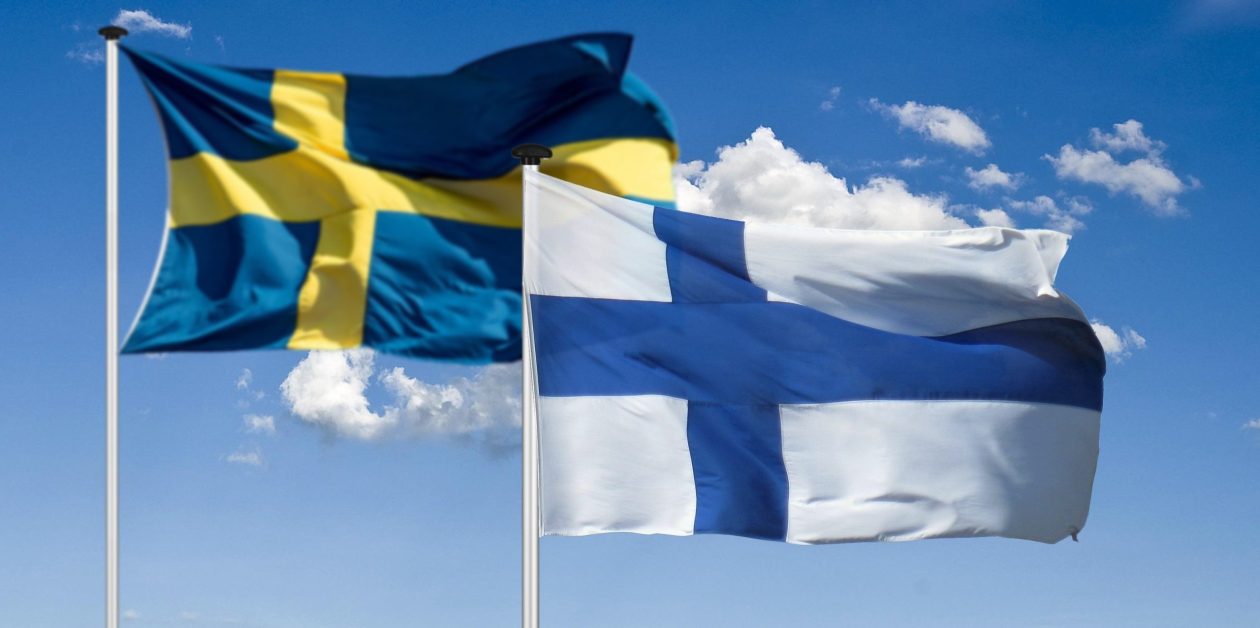
The concept of ‘Nordic added value’ is intriguing. A study funded by NordForsk recently set out to describe the concept in the light of Nordic research and innovation. In general terms, the concept is described as “strategic co-operation on areas where a Nordic approach generates added value for the countries and peoples of the region”. This raises a couple of interesting questions. What characterizes an area where co-operation should take place? How can added value be achieved that truly benefits all people?
One of the most obvious areas where Sweden and Finland have much in common is forestry and the developing bioeconomy. Both countries have very long traditions of using and managing their forests for a variety of purposes. Forest-based products and services are at the heart of the bioeconomy in both countries, with a large share being exported to the EU and beyond. The two countries have similar natural conditions and opportunities, but also share the same challenges. In several key aspects of how forests are managed and how the forest raw material is used in society, quite different development paths are possible.
Six years ago, when Finland celebrated 100 years of independence, Sweden’s official gift to Finland was a bronze sculpture and a bilateral research programme for young scientists in the field of forestry. This demonstrates the strong common ground between the two countries when it comes forest-related issues. The initiative attracted considerable academic interest in both Sweden and Finland and three joint calls have since then been launched. However, with a continuation being considered by our research council and our counterparts in Finland at the moment, it will be important to define and strengthen the purpose of the collaboration.
As regards bioeconomy, Finland has already adopted its second version of an official bioeconomy strategy, while Sweden is in the final stages of developing its first. The objectives of both strategies are centered on increasing the economic added value from biobased resources, decreasing the dependence on fossil-based energy and products, strengthening security of supply, as well as contributing to rural development, employment and social and ecological values. Both countries’ strategies thus focus on a range of different types of societal benefits. Both strategies also emphasize a strengthened knowledge basis as fundamental to development.
This, however, does not necessarily mean that efforts and initiatives into research and innovation to support knowledge development are, or should be, evenly distributed among these different clusters of societal benefits. When deciding how best to allocate the limited resources available for new research, the added value of investments can be argued to be greatest in areas where the shared challenges are complex, where the current state of knowledge is unstable and rapidly evolving, where effective sectoral policies are hampered by the lack a sufficiently robust basis, and where progress towards agreed national and global societal goals must be substantially accelerated.
In the context of forests and bioeconomy, such efforts may include areas such as policy instruments at different levels of governance, social innovation, changing markets, under-exploited symbioses between different sectors, land ownership issues, redistribution of opportunities to use resources and waste streams, and the potential to understand in depth the drivers, dynamics, power balances and interactions between different types of actors shaping the development. And, underpinning all of these, the issue of a fair distribution of all the benefits generated by forests and the bioeconomy.
Developing knowledge on the issues above requires a systems approach, often based on multi- or transdisciplinarity. In order to contribute to common goals across borders, collaboration must also be characterized by reciprocity and a genuine willingness to learn from each other. The EU is now developing several key policies and frameworks for how the use of forests and the development of the bioeconomy in the EU can contribute most effectively to shared international objectives. This requires an active and attentive exchange of knowledge where both Sweden and Finland would benefit from contributing openly and constructively to both research and policy development.
Thus, a meaningful and powerful interpretation of Nordic added value might be to focus most efforts of joint action towards shared challenges, where we have the most to learn, rather than shared areas of strength. The different development paths that are possible in these areas can most likely be far more easily navigated and paved together.
Karin Perhans
Deputy Head of Department and Senior Advisor
Formas – The Swedish Research Council for Environment, Agricultural Sciences and Spatial Planning
Sweden
karin.perhans@formas.se
Johan Kuylenstierna
Director General
Formas – The Swedish Research Council for Environment, Agricultural Sciences and Spatial Planning
Sweden
johan.kuylenstierna@formas.se