
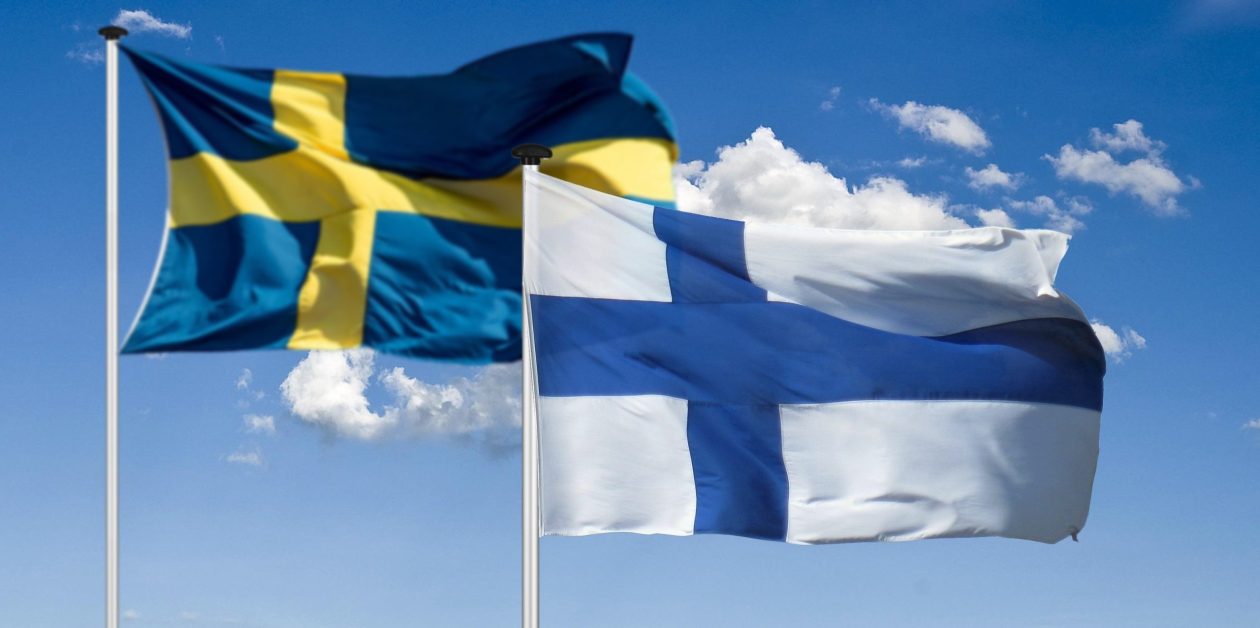
Sweden and Finland – a complicated relationship
The relationship between Sweden and Finland is both historically and culturally significant. And complicated. Johan Strang, professor at the Centre for Nordic Studies at the University of Helsinki, likens it to the dynamic between two siblings – with Finland as the ’youngster’ in the family. Strange calls it a kind of ’little brother syndrome’, i.e. an imbalanced relationship.
There are several explanations for why the countries share a special relationship. One is the fact that Finland was part of Sweden until 1809. Another factor is Sweden’s stance during World War II, where Finland, unlike Sweden, suffered heavy losses. A third factor is Sweden’s economic development during the post-war period, where Sweden emerged as one of Europe’s major industrialised nations. The imbalance in the relationship is also evident in how people in Finland tend to know significantly more about Sweden than vice versa.
Sweden and Finland’s relationship is especially relevant against the backdrop of the countries’ joint application to NATO. How strong is Sweden’s national brand in Finland today?
Signs of Sweden’s deteriorating image in Finland
According to the Swedish Institute’s studies of Sweden’s image, Finnish news coverage of Sweden is both in-depth and extensive. Sweden is mentioned in a variety of contexts, including the position of the Swedish language in Finland as well as military issues and the education system, all of which reflects the countries’ close relations. The studies also suggest that the Finnish general public has a deep knowledge of Sweden and that the Swedish national brand remains strong in Finland. Sweden is referenced as a model country in several areas, such as social economics and exports. Finns associate Sweden with openness, modernity, equality, and a high standard of living.
However, one aspect of Sweden’s image in Finland has significantly deteriorated: the perception of Sweden as a safe and secure country. Here, Sweden ranks substantially worse than neighbouring countries Norway and Denmark. The Swedish Institute’s EU study indicates a similar trend, with only 40 per cent of respondents in Finland stating that they believe Sweden is developing in the right direction. Twenty per cent report that they do not at all agree with the statement, which is a considerably higher percentage than in other EU countries. One reason may be the news coverage of Sweden in recent years, which has increasingly highlighted Sweden’s unique approach during the COVID-19 pandemic as well as the country’s societal challenges, among other things.
Challenges linked to crime – a growing focus
Regarding Finnish news coverage, we can observe a growing trend of highlighting and reporting on Swedish societal challenges, often those linked to crime and migration. There are also longer news articles offering in-depth details on developments in Sweden in recent years, often with the expressed desire to avoid similar developments in Finland. This increased focus on crime in Sweden is likely due to a combination of factors. Previously, the media image of Sweden as a country with extensive problems has primarily appeared in countries like Norway and Denmark. There, the term ’the Swedish condition’ is often used to reference the situation relating to migration and crime in certain Swedish suburbs. In Finland, a similar expression has come into use: ’the Swedish way’. Like ’the Swedish condition’, this new expression refers to a negative development tied to migration and crime. So far, the Swedish Institute’s analyses show only a limited use of ’the Swedish way’ in Finnish news coverage. Even on social media, its use seems limited to a relatively small group and, in those cases, extends only to issues around crime and migration. This is a narrower application than in Norway and Denmark, where the corresponding term has expanded to include a number of other areas.
The NATO process seems to have brought the countries closer
Russia’s full-scale war against Ukraine has redrawn the geopolitical map. Despite that Sweden’s strong national brand appears to have taken a hit, the two countries seem more closely aligned now than they have been in a long while. Sweden’s somewhat weakened image in Finland has not impacted Finnish willingness to visit, do business with, or otherwise cooperate with Sweden. The fact that Sweden and Finland jointly applied for NATO membership in 2022 shows close cooperation and a united foreign policy.
Just like at earlier points in history, outside circumstances are a reminder that Sweden and Finland share as many common interests and as strong a bond as ever – but now with a significantly more equal relationship.
Madeleine Sjöstedt
Director-General
Swedish Institute
Sweden
